Owner’s manual
 Error Codes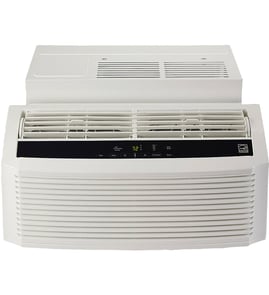


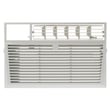

What are the most common issues with AEL05LXL1?
The most common issues we see with the GE AEL05LXL1 room air conditioner are weak cooling from restricted airflow, water leaking from poor drainage or an unlevel install, and control problems like a nonresponsive remote. Regular cleaning and basic checks in the AEL05LXL1 owner's manual prevent many of these problems.
Common problems and what usually causes them
- Not cooling well: dirty or clogged air filter, blocked grille, dirty coils, incorrect mode or temperature setting
- Water leaking indoors: unit not tilted slightly outward, clogged drain path, ice melt from restricted airflow
- Icing on the front or coils: dirty filter, low airflow, running on low fan in humid conditions
- No power or intermittent operation: loose plug, tripped breaker, GFCI outlet tripped, damaged cord
- Remote not working: weak batteries, blocked sensor line-of-sight, failed remote
Quick checks we recommend first
- Set to Cool and lower the set temperature; set fan to High for faster pull-down.
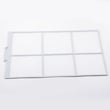
- Remove and wash or replace the filter; a clogged filter is the top cause of poor cooling. If you need a replacement, use the model-correct room air conditioner air filter WJ85X10173.
- Make sure the front intake and discharge are not blocked by curtains, furniture, or a dirty grille.
- Confirm the unit is installed level side-to-side and slightly tilted outward so condensate drains outside.
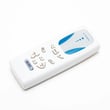
- If the remote is dead, replace batteries; if it still fails, replace the room air conditioner remote control WJ26X20522.
Symptoms, likely causes, and best next step
| Symptom | Most likely cause | Best next step |
|---|---|---|
| Runs but barely cools | Dirty filter or blocked airflow | Clean/replace filter; verify vents are clear |
| Water drips inside | Drainage issue or unit not tilted | Re-level with slight outward tilt; clear drain path |
| Ice buildup | Low airflow | Clean filter; run higher fan; let ice melt |
| Won’t turn on | Power supply issue | Check breaker/GFCI; reseat plug |
| Remote won’t control | Batteries or failed remote | Replace batteries; replace remote if needed |
Why it matters
Airflow and drainage issues make the AEL05LXL1 work harder, cool less, and can lead to icing or water damage. Keeping the filter clean and the unit properly pitched protects performance and comfort.
Last updated: March 2026
What size generator to run a 14000 BTU air conditioner?
A 14,000 BTU room or window air conditioner typically needs a generator that can handle about 1,500 to 2,000 running watts and 3,000 to 3,500 starting (surge) watts for compressor startup. Your GE AEL05LXL1 is an AEL05 series (5,000 BTU class) unit, so it normally needs a much smaller generator.
Generator sizing steps (works for any BTU rating)
Use the air conditioner’s electrical rating label and match both running load and startup surge.
- Read volts (V) and amps (A) on the unit rating label
- Calculate running watts: watts = volts × amps
- Plan for compressor startup surge: 2 to 3× running watts
- Choose a generator with enough surge (starting) watts plus headroom
- Plug into a properly grounded outlet; never remove the ground prong
For model-specific electrical requirements and grounding guidance, follow the AEL05LXL1 owner’s manual.
Typical generator targets by air conditioner size
These ranges cover most modern room and window air conditioners.
| Air conditioner size | Typical running watts | Typical starting watts | Practical generator target (surge) |
|---|---|---|---|
| 5,000 BTU | 450 to 700 | 900 to 1,400 | 1,500 to 2,000 |
| 8,000 to 10,000 BTU | 700 to 1,200 | 1,500 to 2,500 | 2,500 to 3,000 |
| 12,000 to 14,000 BTU | 1,500 to 2,000 | 3,000 to 3,500 | 3,500 to 4,500 |
Important note for GE AEL05LXL1 owners
GE AEL05LXL1 is a 5,000 BTU class room air conditioner, so use the 5,000 BTU row above as your planning range, then confirm the exact volts and amps on the rating label.
If the unit will not start, trips power, or shows a code, check GE error codes to rule out a control or sensor issue before upsizing the generator.
Why it matters
An undersized generator can cause low voltage during compressor startup, leading to hard starts, overheating, and nuisance tripping. Correct sizing protects the compressor and keeps cooling steady.
Last updated: January 2026
What size room will a 10,000 BTU AC cool?
A 10,000 BTU room air conditioner cools about 400 to 450 square feet in average conditions. Your GE AEL05LXL1 is a different-capacity model, so use this 10,000 BTU range only as a sizing reference and confirm your unit’s ratings in the AEL05LXL1 manual.
Quick sizing guide for 10,000 BTU
Start with square footage, then adjust for real-world heat load:
- Typical room size: 400 to 450 sq ft
- Strong sun exposure: subtract 10% to 20%
- Poor insulation or drafty windows: subtract 10% to 20%
- Ceilings over 8 ft: subtract 10% to 15%
- Kitchen or heat-producing equipment: subtract 10% to 20%
Adjustments that change the “right” BTU
These factors often matter as much as the room’s square footage:
| Room condition | Effect on cooling | What to do |
|---|---|---|
| West-facing windows, afternoon sun | Higher heat load | Plan for the lower end of coverage |
| Open floor plan | Cooling spreads out | Treat it like a larger space |
| Many occupants | Adds body heat | Expect less coverage |
| Leaky doors/windows | Loses cooled air | Seal gaps, close doors |
How to get the most cooling from a GE room air conditioner
Even with the correct BTU size, setup and airflow control comfort:
- Start with Cool and a higher fan speed to pull the temperature down faster
- Keep doors closed so cooled air stays in the target room
- Clean the filter regularly; restricted airflow reduces cooling
- If cooling performance drops, check and clean the room air conditioner air filter WJ85X10173
Why it matters
Correct BTU sizing prevents constant run time (undersized) and short cycling with poor humidity removal (oversized). Matching capacity to the room’s heat load improves comfort, efficiency, and compressor life.
Last updated: January 2026