Owner’s manual
 Error Codes



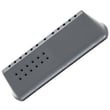
Where is the filter on my GE Deep Fill washing machine?
On the GE WSSH300G1WW, the user-cleanable “filter” most people mean is the drain pump filter, which is accessed from the lower front of the washer behind the small access panel. You open the panel, place a towel or shallow pan, then turn the filter cap counterclockwise slowly to control water flow.
How to find and open the drain pump filter
- Unplug the washer to prevent an accidental start.
- Look at the lower front of the cabinet for the small access door or panel.
- Put towels down and use a shallow pan; some water will drain out.
- Turn the filter cap slowly counterclockwise to let water drain in a controlled way.
- Pull the filter out and remove lint, coins, and debris.
- Reinstall the filter, tighten it firmly by hand, and close the access panel.
What to check while the filter is out
| What you see | What it usually means | What to do next |
|---|---|---|
| Coins, hair pins, lint | Normal blockage | Clean filter and retry a drain/spin |
| Buttons, small socks | Load-related obstruction | Check the pump inlet area for remaining debris |
| Grit or sand | Sediment from laundry | Rinse filter thoroughly and wipe the housing |
| Damaged O-ring or cracked cap | Seal problem | Replace the filter/cap assembly if it will not seal |
Why it matters
A partially clogged pump filter can cause slow draining, standing water, odors, and spin problems. Cleaning it also helps prevent leaks at the front of the washer after a drain cycle.
Related help and parts
- Use the WSSH300G1WW owner’s manual for model-specific care and cleaning guidance.
- If you are troubleshooting drain or control symptoms after cleaning the filter, the GE front load washer error codes guide helps you match symptoms to likely causes.
- For electrical or control-related drain issues, a failed main control can be involved; the washer electronic control board WH20X10038 is a common replacement part for this model.
- You can order replacement parts from the parts list for your model, or search by model number on Sears PartsDirect.
Last updated: February 2026
How to force GE washer to drain and spin?
To force your GE WSSH300G1WW washer to drain and spin, select the Drain/Spin cycle and press START with the door fully closed. If the washer is overfilled or not draining, this cycle is the correct way to remove water and complete a spin.
Quick steps to start Drain/Spin
- Press POWER to wake the control.
- Close the door firmly (the washer will not run with the door open).
- Turn the cycle selector to Drain/Spin.
- Press START (or START/PAUSE depending on the panel labeling).
- If you need to stop the cycle, press PAUSE/CANCEL, then press START to resume.
If it still will not drain or spin
These checks fix the most common causes on this style of GE front-load washer:
- Door not fully closed or locked: re-close the door; the door lock must engage.
- Drain hose issue: straighten kinks; make sure the standpipe height is at least 24 inches.
- Household drain problem: clear a slow or clogged standpipe or laundry sink drain.
- Oversudsing: use HE (high efficiency) detergent and reduce the amount.
- Unbalanced or too-small load: add 1 to 2 similar items, then restart Drain/Spin.
What to expect (normal vs. problem)
| What you see | What it usually means | What we recommend |
|---|---|---|
| Door locks and pump runs, then spins | Normal Drain/Spin operation | Let the cycle finish |
| Hums but drains slowly | Partial drain restriction or hose kink | Check hose routing and household drain |
| Stops before spinning | Door lock issue, oversuds, or load balance problem | Reduce suds, rebalance load, restart |
| No drain sound at all | Possible control or motor-related failure | Check wiring connections; consider control diagnostics |
Why it matters
Running Drain/Spin is the safest way to remove water without forcing the door or interrupting the control logic. It also helps prevent oversudsing, leaks, and repeated out-of-balance shutdowns.
For cycle details, control panel behavior, and troubleshooting tips specific to this washer, use the owner's manual. If you are diagnosing a no-drain or no-spin condition that points to an electronic issue, the washer electronic control board WH20X10038 is a common part involved in cycle control. You can also look up fault patterns using GE front load washer error codes. For additional parts and diagrams for GE WSSH300G1WW, search by model on Sears PartsDirect.
Last updated: February 2026
Is a 4.5 cu ft washer big?
Yes. A 4.5 cu ft washer is considered large capacity; it is designed to handle bulky items (like comforters) and bigger mixed loads with fewer cycles. For your GE WSSH300G1WW, load size still matters for cleaning and spin performance, so follow the capacity and loading guidance in the WSSH300G1WW owner's manual.
What “4.5 cu ft” means in real-world loads
A 4.5 cu ft drum is typically “family size” capacity. In practical terms, it is well-suited for:
- A large mixed load of everyday clothes
- Bulky items (comforters, blankets, jackets) when loaded loosely
- Multiple bath towels in one cycle
- Fewer loads per week compared with smaller-capacity washers
How to load a large-capacity washer for best results
Even with a big tub, overloading is the most common cause of poor cleaning, vibration, and long drain times.
- Load items loosely; do not pack them down
- Keep the top of the load below the door opening area so the door seals and locks correctly
- Mix large and small items to help balance during spin
- Use the right cycle and options for the fabric type and soil level
- Use the correct detergent amount; too much can cause oversudsing and performance issues
Quick comparison: is 4.5 cu ft “big”?
| Washer capacity | Common description | Best for |
|---|---|---|
| 3.0 to 3.8 cu ft | Medium | Couples, smaller loads |
| 4.0 to 4.5 cu ft | Large | Families, towels, bulky items |
| 4.6+ cu ft | Extra-large | Frequent bulky loads, fewer cycles |
Why it matters
A larger capacity like 4.5 cu ft can save time and energy by reducing the number of loads, but only if loads are sized correctly. Proper loading helps your GE WSSH300G1WW drain, spin, and rinse effectively, which also reduces wear on components like the washer drive motor WH20X10039.
You can order model-specific replacement parts for GE WSSH300G1WW from the parts list for this model, or search by model number on Sears PartsDirect.
Last updated: February 2026