Owner’s manual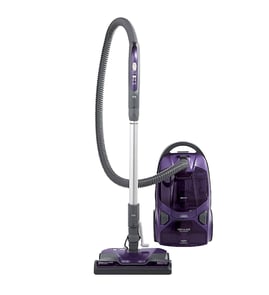

What is the best canister vacuum under $100?
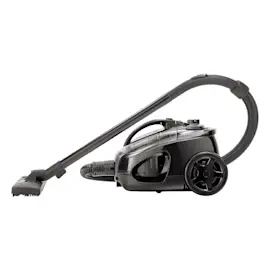
If you need a canister vacuum under $100, the best choice is usually a basic, bagless canister with strong suction, a sealed filter, and simple attachments; it will handle hard floors and low-pile rugs well, but it will not match the deep-cleaning performance of a full-size Kenmore canister like model 11623613300. For safe operation and best cleaning results on your Kenmore, follow the 11623613300 owner's manual.
- Floor type match: prioritize hard floors and low-pile carpet; avoid “deep-pile specialist” claims at this price.
- Filtration: look for a sealed system and a HEPA-style exhaust filter if allergies matter.
- Cord and hose usability: longer cord, smooth hose swivel, and easy cord rewind reduce frustration.
- Attachments included: crevice tool and dusting brush are more useful than niche tools.
- Consumables cost: check filter replacement cost and availability.
Your Kenmore canister vacuum is designed for controlled cleaning on different carpet heights and includes operating features like suction control and cord rewind guidance in the manual.
| Feature | Under $100 canister (typical) | Kenmore 11623613300 (typical for this class) |
|---|---|---|
| Deep carpet cleaning | Fair on low pile | Stronger on more surfaces with height settings |
| Filtration | Varies widely | Uses filters and a bag system (maintenance matters) |
| Durability | Light-duty | More serviceable with routine care |
| Best use case | Apartments, hard floors | Whole-home cleaning mix of floors |
- Confirm it has adjustable suction or a vent to prevent rug “sticking.”
- Make sure the wand locks securely and does not wobble.
- Check that the return policy is easy (noise and handling are personal).
- Avoid units with proprietary, hard-to-find filters.
Most sub-$100 canister vacuums are built for light cleaning. If you expect thick-carpet performance, you will end up re-vacuuming and stressing the motor. Using the correct pile height and suction practices on your Kenmore improves cleaning and helps prevent tip-overs, cord damage, and clogs.
Last updated: February 2026
Who makes the best canister vacuum?
“Best” depends on what you need most (deep carpet cleaning, hard-floor pickup, allergies, or durability). For Kenmore canister vacuums like model 11623613300, the best choice is the one that matches your home’s flooring and filtration needs, and that you can maintain easily using the 11623613300 owner's manual.
- Flooring mix: Homes with lots of carpet benefit from a powered nozzle and correct pile-height settings.
- Filtration needs: If allergies are a concern, prioritize sealed filtration and high-efficiency exhaust filtration.
- Suction control: A suction control helps protect delicate rugs and improves tool performance.
- Maintenance simplicity: Easy bag changes, filter access, and brush roll service matter long-term.
- Cord and hose handling: Smooth swivel hose movement and safe cord rewind reduce daily frustration.
| Your priority | What to look for in a canister vacuum | Why it helps |
|---|---|---|
| Deep carpet cleaning | Powered floor nozzle, adjustable pile height | Improves agitation and pickup on carpet fibers |
| Hard floors | Bare-floor setting and stable suction control | Prevents scattering and improves fine dust pickup |
| Pet hair | Strong airflow plus a brush roll designed to resist tangles | Reduces hair wrap and boosts pickup |
| Allergies | High-efficiency exhaust filtration and tight seals | Helps keep fine dust from re-entering the room |
The manual for this series highlights practical items that directly affect cleaning results and safety:
- Use the pile height setting that matches your carpet (HI, MED, LO, XLO) to prevent shutdowns and improve pickup.
- Keep airflow paths open; check for clogs periodically and unplug before inspecting.
- Use slow, gliding strokes on carpet; fast, jerky strokes reduce cleaning.
- Use the suction control to tune performance, especially on stairs and delicate surfaces.
- Rewind the cord safely: unplug first and hold the plug while rewinding.
A canister vacuum can look “powerful” but still clean poorly if the pile height is wrong, airflow is restricted, or filters and bags are overdue. Matching features to your floors and keeping up with routine care is what makes a vacuum perform like the “best” one in real homes.
Last updated: February 2026
How long do Kenmore canister vacuums last?
A Kenmore canister vacuum like model 11623613300 typically lasts 8 to 12 years with normal household use when it is maintained on schedule (bags, filters, and brush/belt care). Regular cleaning and timely replacement of wear items is what most directly extends service life.
Most canister vacuums reach the longer end of their lifespan when airflow stays strong and the motor is protected from dust.
| Usage pattern | Typical lifespan | What usually ends it |
|---|---|---|
| Light (small areas, 1 to 2x/week) | 10 to 12 years | Hose/wand wear, cord rewind issues |
| Average (whole home, 1 to 3x/week) | 8 to 10 years | Motor wear from restricted airflow |
| Heavy (pets, daily use) | 6 to 8 years | Brush roll/belt wear, clogs, motor strain |
Follow the care intervals and procedures in the 11623613300 owner's manual. Focus on these high-impact items:
- Change the vacuum bag before it is overfull; a packed bag reduces airflow and overheats the motor.
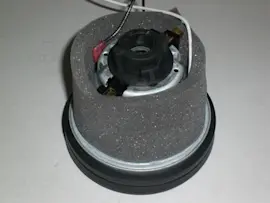
- Replace the motor safety filter and exhaust filter on schedule to keep fine dust out of the motor.
- Clear clogs in the hose, wand, and floor nozzle as soon as suction drops.
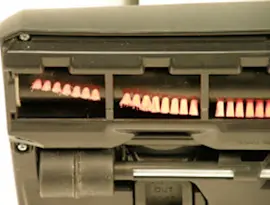
- Keep the Power-Mate brush roll area clean; remove hair and string so the agitator spins freely.
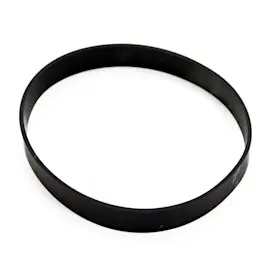
- Replace worn belts promptly; a slipping belt reduces cleaning and increases heat.
These symptoms usually point to a repair or a major wear condition:
- Burning smell or repeated thermal shutoff
- Noticeably weaker suction even with a new bag and clean filters
- Loud grinding/squealing from the nozzle or motor area
- Cord rewind stops working or power cuts in and out
- Cracked hose or loose wand connections that leak air
A canister vacuum’s motor depends on steady airflow for cooling. When bags, filters, or clogs restrict airflow, the vacuum runs hotter, parts wear faster, and overall lifespan drops.
Last updated: February 2026
Why is my Kenmore vacuum not suctioning?
Your Kenmore canister vacuum model 11623613300 usually loses suction because airflow is restricted (full bag, clogged hose/wand, dirty filters) or the floor nozzle is not picking up (brush roll or belt issue). Start with the quickest airflow checks, then move to the Power-Mate nozzle.
- Replace the vacuum bag if it is more than about 1/2 to 2/3 full.
- Check the hose and wands for a clog; remove the wands and look through them toward a light.
- Clean or replace the motor safety filter (pre-motor filter).
- Clean or replace the exhaust filter.
- Make sure all connections are fully seated (hose to canister, wands snapped together, wand into Power-Mate).
- If suction is fine at the hose but weak at the floor, focus on the Power-Mate (belt, brush roll, blockage).
- Test suction at the hose handle (no attachments). If it is weak here, the issue is in the canister, bag, filters, or hose.
- Test with the wand attached. If suction drops, the wand is likely clogged or not fully latched.
- Test at the Power-Mate. If suction is good until the floor nozzle, look for a nozzle clog, worn belt, or brush roll problem.
Even with good airflow, the vacuum can seem like it has no suction on carpet when the brush roll is not agitating.
| Symptom | Most likely cause | What to do |
|---|---|---|
| Picks up on hard floors, not carpet | Worn/broken belt or brush roll not turning | Inspect belt and brush roll; clear hair/debris |
| Loud pitch change, then poor pickup | Nozzle clog | Check intake path and remove blockage |
| Suction OK at hose, weak at nozzle | Connection leak or clog | Reseat wands; check for cracks and clogs |
A restricted bag, clogged hose, or dirty filters makes the motor work harder and reduces cleaning performance. Fixing airflow first restores suction fastest and helps prevent overheating.
For model-specific filter locations, bag access, and Power-Mate care steps, follow the 11623613300 owner's manual.
Last updated: February 2026