Owner’s manual
 View engine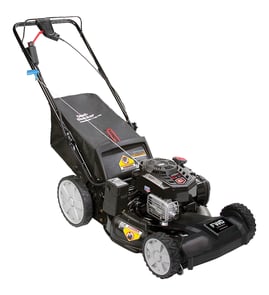


Are gas lawn mowers being phased out?
Gas lawn mowers are not being phased out everywhere, but some states and cities are restricting or planning to restrict certain gasoline-powered outdoor equipment. Your Craftsman 917371671 is still a standard internal-combustion walk-behind mower; always follow local rules and the safety guidance in the Craftsman 917371671 owner's manual.
What “phased out” usually means
Most changes are policy-driven (sales bans, fleet rules, or seasonal use limits), not a sudden end to owning a gas mower. Common approaches include:
- Restrictions on selling new gas-powered equipment after a certain date
- Rules for government or commercial fleets (landscapers, municipalities)
- Limits on use during high-smog days or in specific districts
- Incentives or rebates to switch to battery-powered equipment
- Noise or emissions ordinances that affect operating hours
What to do if you own a gas mower now
If you plan to keep using a gas mower like model 917371671, good maintenance keeps it reliable and reduces smoke, odor, and starting problems.
- Use fresh fuel and avoid storing gasoline from one season to the next
- Keep the air filter clean and replace it when dirty
- Check the spark plug condition if starting becomes difficult
- Keep the blade sharp; a dull blade makes the engine work harder
- Clean grass buildup from the deck and drive wheel areas
For blade service safety and general operating guidance, follow the Craftsman 917371671 owner's manual.
Quick comparison: gas vs battery (typical)
| Feature | Gas walk-behind mower | Battery walk-behind mower |
|---|---|---|
| Runtime | As long as you have fuel | Limited by battery capacity |
| Maintenance | Fuel, oil, spark plug, air filter | Mostly blade and deck cleaning |
| Storage | Fuel stability matters | Battery storage and charging habits matter |
| Noise and exhaust | Louder, has exhaust | Quieter, no exhaust |
Why it matters
Local restrictions can affect whether you can buy a new gas mower in your area or when you can use it. Separately, proper upkeep helps your Craftsman mower start easier and run cleaner, which is especially important if your area has air-quality rules.
Last updated: January 2026
Should I use 87 or 93 for lawn mower?
For the Craftsman 917371671 gas walk-behind mower, use fresh regular unleaded gasoline with a minimum of 87 octane (AKI). Using 93 octane does not improve power or reliability in a properly running small engine; fuel freshness and correct operation matter more.
What to use (and what to avoid)
- Use clean, fresh unleaded gasoline (87 AKI minimum).
- Buy fuel in small quantities; gas can start degrading in about 30 days.
- Avoid old fuel, especially if the mower has been sitting.
- Do not try to “tune” performance by changing engine speed; the manual notes the engine speed is factory set and not adjustable.
- If you suspect carburetor issues, follow the manual guidance and have the mower serviced; the carburetor is not adjustable.
Quick comparison: 87 vs 93
| Fuel choice | Works in this mower? | When it makes sense | What you will notice |
|---|---|---|---|
| 87 octane (regular) | Yes (recommended minimum) | Normal mowing, most conditions | Normal starting and power when fuel is fresh |
| 93 octane (premium) | Yes, but unnecessary | Only if it is the only fresh fuel available | Typically no performance gain |
If the mower runs rough after refueling
Old fuel and varnish buildup cause more “bad gas” symptoms than octane choice. Check these common items first:
- Drain and replace old gasoline with fresh 87 octane.
- Inspect the blade and underside of the deck for heavy grass buildup (it can overload the engine).
- Make sure you are not over-priming when starting; over-priming can flood the engine.
- Verify the operator presence control bar is held down during starting and operation.
- If drive performance is also poor, inspect the drive system components for wear.
Why it matters
Using the right fuel is mainly about protecting the fuel system and ensuring easy starting. Fresh 87 octane helps prevent hard-starting, surging, and stalling, while premium fuel usually just costs more without improving mowing results.
For model-specific operating and starting guidance, follow the Craftsman 917371671 owner’s manual.
Last updated: January 2026
What are the most common issues with 917371671?
The most common issues we see with the Craftsman 917371671 gas walk-behind mower involve drive and cutting performance: the mower will not self-propel, it leaves an uneven cut, or it has poor bagging and discharge. The 917371671 owner's manual covers operating checks and adjustments that prevent many of these problems.
Common symptoms and what usually causes them
- No self-propel or weak drive: worn or stretched drive belt, worn drive pawls, damaged drive wheel, or a failing transmission.
- Uneven cut or poor cutting: dull or bent blade, debris packed under the deck, or incorrect cutting height.
- Poor bagging or clumping: wet grass, clogged deck/discharge area, or a damaged rear door or deflector.
- Excess vibration: bent blade, loose blade hardware, or debris wrapped around the blade adapter area.
- Hard to control drive: stretched or binding drive control cable, or a misadjusted drive control bar.
Parts that commonly fix these problems
If your symptom matches, these model-specific parts are frequent solutions:
| Symptom | Common fix | Example part for 917371671 |
|---|---|---|
| Won’t self-propel | Replace worn belt | Belt 532157769 |
| Won’t self-propel | Restore wheel engagement | Drive pawl 532404845 |
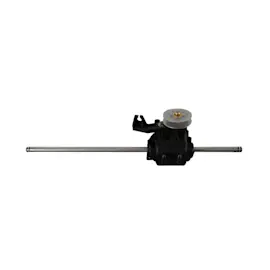
| Weak/erratic drive | Replace worn transmission | Lawn mower transmission assembly 532415226 |
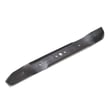
| Poor cut quality | Replace blade | Lawn mower 22-in deck mulching blade 532406713 |
| Poor bagging/discharge | Replace damaged flap/door | Rear door 532401813 |
Quick checks we recommend before replacing parts
- Tip the mower safely (spark plug wire disconnected) and clean packed grass from under the deck.
- Inspect the blade for dull edges, bends, or cracks.
- Check the drive system for a loose belt and worn wheel components.
- Confirm the drive control bar fully engages and the cable moves smoothly.
- Tighten visible fasteners and verify nothing is rubbing the blade.
Why it matters
Drive and cutting issues usually get worse quickly; a slipping belt or worn drive pawl can overload the transmission, and a damaged blade can cause vibration that loosens hardware and reduces cut quality.
Last updated: March 2026