 Installation guide
 Owner’s manual
 Error Codes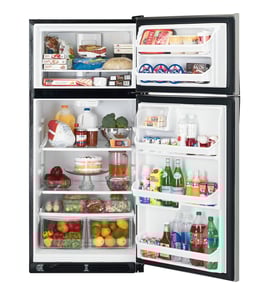


Are top mount or bottom mount fridges better?
It depends on how you use your refrigerator. A top-mount model like the Frigidaire FFTR1835VS3 puts the freezer at eye level and is typically a simpler, budget-friendly layout; bottom-mount models make fresh-food access easier because the refrigerator section sits higher.
Quick comparison: top mount vs bottom mount
| Feature | Top mount (like FFTR1835VS3) | Bottom mount |
|---|---|---|
| Most-used section height | Fresh food is lower | Fresh food is higher |
| Freezer access | Easier (higher) | Requires bending less for fridge, more for freezer |
| Typical complexity | Simpler controls and airflow | Often more features and parts |
| Best for | Frozen-food heavy households | Fresh-food heavy households |
How to choose what is “better” for your kitchen
- Choose top mount if you use the freezer a lot, want a straightforward design, or prefer fewer features to maintain.
- Choose bottom mount if you access fresh food constantly and want less bending for everyday items.
- If you have tight cabinetry, compare required clearances and ventilation space before deciding.
- If you have kids, consider which section you want them reaching most easily.
- If you meal prep, a bottom mount can be more comfortable for frequent fridge access.
Installation and performance details that matter
Even the “better” style will disappoint if it is installed poorly. For FFTR1835VS3, proper leveling and airflow clearances help the doors seal and the compressor cool efficiently. Use the FFTR1835VS3 installation guide for clearance targets, leveling (including the slight front-to-back tilt), and final checks like confirming the door seals on all sides.
Why it matters
Your refrigerator style affects daily ergonomics (bending and reaching), how well food stays organized, and long-term reliability. A good door seal and correct leveling reduce warm air leaks, frost buildup, and temperature swings, which protects food and helps the unit run efficiently.
Last updated: February 2026
Is FFTR1835VS3 garage ready?
Yes. The Frigidaire FFTR1835VS3 is designed to run in a garage, and our setup guidance for cold garages is to adjust the freezer control colder when the surrounding temperature drops below 50°F (see the FFTR1835VS3 owner's manual).
How to set it up for garage temperatures
- Start with both controls at Recommended.
- If the garage temperature is below 50°F, set the freezer control to the coldest setting to improve performance.
- Keep the doors closed as much as possible; warm, humid air adds frost load.
- Allow at least 8 hours of cool-down time before loading food after first start.
- Make small temperature changes and wait for temperatures to stabilize.
Quick settings guide
| Garage condition | What we recommend | What you may notice |
|---|---|---|
| 50°F and above | Leave controls at Recommended first | Normal cycling and stable temps |
| Below 50°F | Set freezer control to Coldest | Better freezer performance in cold ambient temps |
| Any temp | Avoid setting refrigerator control to OFF unless unplugging | “OFF” stops cooling but does not cut power to lights |
Why it matters
Cold garages can reduce how often the compressor runs. When run time drops, the freezer can warm up and food quality can suffer. Setting the freezer control colder helps the FFTR1835VS3 maintain safe storage temperatures in low ambient conditions.
Last updated: February 2026
What are the disadvantages of a top mount fridge?
Top-mount refrigerators like the Frigidaire FFTR1835VS3 put the freezer on top and the fresh-food section below, so the biggest drawbacks are bending more to reach everyday items, fewer premium convenience features, and less flexible organization compared with many bottom-freezer designs. See the FFTR1835VS3 owner’s manual for model-specific use and setup details.
Common disadvantages (what most owners notice)
- Fresh-food access is lower: you bend more for produce drawers, deli items, and drinks.
- Organization can feel simpler: many top-mounts have fewer adjustable bins and specialty zones than higher-end layouts.
- Less “feature-heavy”: through-the-door ice and water is less common on basic top-mount platforms.
- Freezer is at eye level: great for frozen foods, but it can make the refrigerator section feel less convenient.
- Door swing and clearance needs: you still need proper spacing for doors and airflow.
Setup details that affect day-to-day convenience
Even when the layout is the main “disadvantage,” correct installation reduces annoyances like doors not sealing or shelves shifting.
| Setup item | What we recommend | Why it matters |
|---|---|---|
| Leveling | Level side-to-side; tilt about 1/4 in. (6 mm) front-to-back | Helps doors self-close and seal consistently |
| Clearances | 3/8 in. at sides and top; 1 in. at rear | Improves airflow and cooling performance |
| Room temperature | Keep the room between 55°F and 110°F | Extreme temps can reduce cooling ability |
Why it matters
Most “top-mount disadvantages” are really convenience tradeoffs. If your kitchen layout, budget, or freezer access is the priority, a top-mount like the FFTR1835VS3 can be a strong fit; if you want easier fresh-food access and more premium storage features, a bottom-freezer style often feels better.
Helpful resources
- Use the FFTR1835VS3 installation guide to confirm leveling, clearances, and final checks.
Last updated: February 2026
What is the most common problem with a Frigidaire refrigerator?
The most common Frigidaire refrigerator problem is a cooling complaint (too warm in the fresh food section, freezer, or both). On the Frigidaire FFTR1835VS3, this is often tied to airflow and temperature settings, so we start by confirming controls are set correctly and vents are not blocked using the FFTR1835VS3 owner's manual.
Most common causes of “not cooling” symptoms
Cooling issues usually come from one of these conditions:
- Temperature controls set too warm, or changed too quickly (adjust in small increments and allow time to stabilize)
- Food packages blocking cold air vents, reducing circulation between compartments
- Frost buildup on the evaporator area (can restrict airflow and mimic a weak-cooling problem)
- Evaporator fan not moving air (you may hear unusual noise or notice warm refrigerator temps)
- Door not sealing well, letting warm air in (gasket gaps, torn gasket, or door not closing fully)
Quick checks we recommend first (no tools)
These steps solve a large share of “warm fridge” calls:
- Set the refrigerator control slightly colder; wait 24 hours for temperatures to stabilize
- Make sure air vents inside both compartments are clear of food containers
- Listen for the evaporator fan when the compressor is running (freezer area)
- Check that doors close easily and stay shut; look for gasket gaps along the perimeter
- If the unit seems off, confirm the control is not set to OFF and the outlet has power
Common symptoms and what they usually point to
| Symptom | Most likely direction | Parts that commonly relate |
|---|---|---|
| Freezer cold, refrigerator warm | Airflow problem between compartments | Evaporator fan components, frost/defrost issue |
| Both sections warm | Cooling system not running or poor heat removal | Compressor circuit, condenser airflow |
| Frost on back freezer panel | Defrost system problem | Defrost components |
| Door pops open or won’t stay sealed | Door alignment or gasket issue | Door gasket |
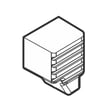
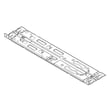
If you’re chasing a frost-related cooling problem, the refrigerator defrost heater and thermostat 5304522340 and refrigerator defrost timer 5304526183 are two model-matched parts that often come into play.
Why it matters
A refrigerator that cannot circulate cold air properly will run longer, struggle to hold safe food temperatures, and can develop frost or moisture problems. Getting the controls and airflow right first prevents unnecessary part replacement.
Last updated: February 2026





