 Owner’s manual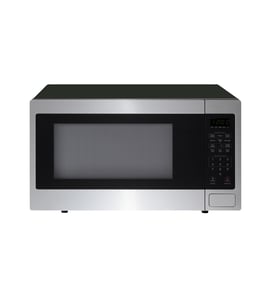

What are the most common issues with R-426HS?
The most common problems we see with the Sharp R-426HS countertop microwave are no heat, no power, sparking or arcing, and turntable or door issues. Many symptoms trace back to a failed fuse, door interlock switches, or a worn waveguide cover; use the R-426HS owner's manual for model-specific operating and care details.
Common symptoms and what they usually mean
- Runs but does not heat: often a high-voltage component issue (diode, capacitor, magnetron) or a door-switch problem that prevents heating.
- Dead, no display: commonly a blown fuse, loose power cord connection, or a tripped household breaker.
- Starts then stops, or blows breaker: frequently a shorted high-voltage part, failing door interlock switch, or wiring fault.
- Sparking or burning smell: typically food splatter and carbon tracking, damaged waveguide cover, or metal in the cavity.
- Turntable not rotating: usually the turntable motor, coupler/roller ring alignment, or debris under the tray.
Quick checks we recommend first
- Confirm the outlet works by testing another small appliance.
- Inspect the door for proper closing; do not slam it (misaligned latches can affect interlock switches).
- Clean the cavity and the area around the waveguide cover; baked-on splatter can cause arcing.
- Test with a cup of water for 60 seconds; note whether the sound changes and whether steam forms.
- If the unit is completely dead, focus on power supply and fuse-related diagnostics.
Symptom-to-likely-cause guide
| Symptom | Most likely area | Typical next step |
|---|---|---|
| Runs, no heat | High-voltage circuit, door switches | Stop using; have a technician test components |
| No power | Fuse, outlet, cord, control | Check outlet/breaker; then fuse diagnosis |
| Sparking | Waveguide cover, cavity contamination | Clean; replace damaged cover if needed |
| Turntable not moving | Turntable motor/coupler | Check for binding; inspect motor |
Why it matters
Microwaves contain a high-voltage system that can store dangerous energy even when unplugged. Symptoms like no heat, breaker trips, or arcing should be handled carefully to prevent further damage and to keep operation safe.
For step-by-step troubleshooting, we also use guides like why is my microwave not heating and how to replace a microwave fuse when the symptoms match.
Last updated: March 2026
What is the average lifespan of R-426HS?
A Sharp countertop microwave like model R-426HS typically lasts 9 to 10 years with normal household use. Lifespan depends most on how often you run it, keeping the door seals clean, and avoiding overheating from running empty.
Typical lifespan and what affects it
Most countertop microwaves fail from high-voltage heating components, door/interlock switch wear, or control issues.
- Daily run time: multiple long heat cycles per day shortens life
- Ventilation: blocked side or rear vents increases heat stress
- Door use: slamming the door wears latches and interlock switches
- Running empty: overheats the magnetron and waveguide area
- Cleaning habits: grease and food buildup can lead to arcing and corrosion
Quick “replace vs repair” guide
Use this as a practical rule of thumb for a countertop microwave.
| Situation | What we recommend | Why |
|---|---|---|
| Under 5 years old | Repair is usually worth it | More remaining service life |
| 5 to 9 years old | Compare repair cost to replacement | Value depends on the part and labor |
| 10+ years old | Replacement is usually the better value | Major parts often cost more than the unit |
How to help your R-426HS reach the high end of its lifespan
- Keep at least a few inches of clearance around vents
- Clean the cavity and door area regularly; wipe the door seals gently
- Use microwave-safe containers; avoid metal trim or foil
- Stop use if you see sparks or burn marks; address the cause promptly
- Follow the care and operating guidance in the R-426HS owner’s manual
Why it matters
Microwaves contain high-voltage components; when wear shows up as weak heating, arcing, or intermittent power, continuing to use the unit can quickly turn a small issue into a major failure.
Last updated: March 2026
What is the difference between an over-the-range microwave and a countertop microwave?
A countertop microwave like the Sharp R-426HS sits on a counter and is used for cooking and reheating only, while an over-the-range microwave mounts above a range and also works as a hood vent to help remove smoke, steam, and odors from the cooktop.
Key differences that affect your kitchen
- Installation: Countertop units plug in and sit on a stable surface; over-the-range units mount to the wall and cabinet above the range.
- Ventilation: Over-the-range models include a vent fan and filters; countertop models do not.
- Space: Countertop models use counter space; over-the-range models free up counter space.
- Electrical needs: Many countertop microwaves use a standard grounded outlet; always follow the grounding and cord guidance in the R-426HS owner's manual.
- Airflow: Countertop models still need breathing room; vents on the back should not be blocked.
How to choose the right type
Use this quick comparison to match the microwave style to your needs.
| Feature | Countertop microwave (Sharp R-426HS) | Over-the-range microwave |
|---|---|---|
| Primary job | Microwave cooking | Microwave cooking + ventilation |
| Typical placement | Countertop | Above range |
| Ducting | None | Recirculating or ducted (varies) |
| Common maintenance | Keep vents clear, clean interior | Clean grease filters, maintain fan |
Why it matters
Choosing the right configuration helps you avoid common performance issues. For example, blocking airflow around a countertop microwave can lead to overheating or poor performance, and using the oven cavity for storage can create a fire risk if items are left inside.
Safety and use tips for either style
- Always keep food in the microwave when it is running to absorb microwave energy.
- Do not store paper products, utensils, or food in the cavity when not in use.
- Avoid overheating liquids; let them stand briefly before removing.
- Use a properly grounded outlet; use only a correctly rated 3-wire extension cord if one is truly necessary.
Last updated: January 2026


