 Owner’s manual



What is the life expectancy of a Whirlpool washing machine?
A Whirlpool washing machine typically lasts 10 to 14 years. For your Whirlpool GHW9400SU0 washer, consistent care (correct detergent, no overloading, and routine cleaning) is what most directly determines whether you land closer to 10 years or closer to 14 years; see the care and maintenance guidance in the GHW9400SU0 owner's manual.
Typical lifespan by washer type
Most households see these ranges when the washer is installed correctly and used normally:
| Washer type | Typical life expectancy | What usually ends it first |
|---|---|---|
| Front-load washer (like many Whirlpool Duet-style units) | 10 to 12 years | Leaks, bearing wear, drain issues |
| Top-load washer | 11 to 14 years | Suspension wear, transmission/drive issues |
What helps your GHW9400SU0 reach the high end of the range
We see these habits make the biggest difference in real-world longevity:
- Use HE detergent and avoid overdosing (too much soap accelerates residue and odor).
- Keep loads balanced; avoid chronic overloading (it stresses the tub, shocks, and bearings).
- Leave the door ajar between loads to reduce moisture and odor.
- Inspect for small leaks early, especially around the door seal area.
- Address door-closing and locking issues promptly to prevent cycle interruptions.
Parts that commonly affect longevity (and what symptoms look like)
On front-load washers, a few wear items often decide whether the machine stays reliable:
- Door seal leaks or mildew: consider the washer door boot WP8182119.
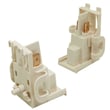
- Door won’t latch, won’t start, or unlock errors: check the washer door lock assembly WP8182634 and the washer door strike WP8181651.
- Excessive shaking or banging: worn dampening can point to the washer shock absorber W10822553.
Why it matters
A washer that is nearing end-of-life usually shows warning signs (leaks, vibration, repeated drain or door errors) before a major failure. Catching those symptoms early often turns a disruptive breakdown into a straightforward repair and helps protect surrounding flooring and cabinetry.
Last updated: February 2026
What is the most common problem with Whirlpool washers?
For Whirlpool washers like model GHW9400SU0, the most common problems we see are drain and fill issues, leaks, and won’t spin complaints. Many of these trace back to simple causes such as kinked hoses, clogged inlet screens, excess suds, or a worn door seal; see the GHW9400SU0 owner's manual for model-specific troubleshooting steps.
Most common symptoms and what usually causes them
- Won’t fill or fills slowly: closed faucets, kinked fill hoses, clogged inlet screens
- Won’t drain or won’t spin: kinked or clogged drain hose, drain height too high, excess suds
- Leaks at the door: torn or misshapen door boot (bellows)
- Stops mid-cycle: power supply issue, tripped breaker, or excess suds routine
- Vibration or walking: washer not level, load imbalance, weak suspension components
Quick checks we recommend first (fast, no parts)
- Confirm hot and cold faucets are fully open.
- Check fill hoses for kinks; clean inlet screens if clogged.
- Inspect the drain hose for kinks or clogs; keep the drain outlet under 96 in. (2.4 m) above the floor.
- Reduce detergent if you see SUD behavior; use HE detergent and the correct dose.
- Level the washer and redistribute bulky items to prevent imbalance.
When it’s likely a part problem
| Symptom | Common part area | Example part for this model |
|---|---|---|
| Water on floor near door | Door seal area | Washer door boot WP8182119 |
| Door won’t lock or won’t start | Door latch/lock system | Washer door lock assembly WP8182634 |
| Excessive shaking or banging | Suspension/damping | Washer shock absorber W10822553 |
Why it matters
Fill and drain problems can stop a cycle and leave clothes wet; leaks can damage flooring; vibration can stress the tub and suspension. Catching the root cause early helps prevent repeat breakdowns and reduces the chance of secondary damage.
If you’re seeing an error code, we use the code to narrow the failure quickly; the Whirlpool duet alpha front load washer error codes guide is a good next step.
You can order replacement parts for Whirlpool GHW9400SU0 from the parts list for this model, or search by model number on Sears PartsDirect.
Last updated: February 2026
What is the capacity of the Whirlpool GHW9400SU0?
The Whirlpool GHW9400SU0 washer has a 3.8 cu. ft. capacity, which is the usable drum volume for washing and spinning a typical household load. For cycle-specific loading guidance (bulky items, HE detergent amounts), use the GHW9400SU0 owner's manual.
What 3.8 cu. ft. means for everyday loads
A 3.8 cu. ft. front-load washer capacity is designed for medium-to-large loads when you load loosely and allow room for tumbling.
- Wash mixed loads without packing items tightly
- For towels and jeans, split into smaller loads to improve rinsing
- For bulky items, use the cycle recommended in the manual and avoid overfilling
- Use HE (High Efficiency) detergent only; too much detergent reduces cleaning and can cause excess suds
Quick load guidance (practical rule of thumb)
Use this simple approach to avoid overload and poor performance.
| Load type | How full to load the drum | What to watch for |
|---|---|---|
| Everyday mixed load | About 1/2 to 2/3 full | Clothes should tumble freely |
| Towels/denim | About 1/2 full | Heavy items can unbalance |
| Bulky items (comforter) | One large item plus a few smalls | Door boot area should not be compressed |
Why it matters
Correct loading protects key components and improves results. Overloading increases vibration and can strain suspension parts such as the washer shock absorber W10822553, and it can also contribute to leaks by stressing the door seal area (the washer door boot WP8182119).
Ordering parts for your washer
If you are matching parts to your washer size and load demands, order replacement parts for GHW9400SU0 from the parts list for this model, or search by model number on Sears PartsDirect.
Last updated: February 2026
How to fix Whirlpool front load over sud?
On the Whirlpool GHW9400SU0 front-load washer, over-sudsing triggers the built-in SUDs routine; it removes extra suds and can extend the cycle time. Fix it by using HE detergent in the right amount, then checking for drain or pressure-sensing issues that keep suds from clearing.
What to do right now
- Let the cycle finish if you see SUD; the washer is actively rinsing out suds.
- If you must stop it, press PAUSE/CANCEL twice to cancel.
- If there is standing water, run DRAIN/SPIN.
- Rewash the load with no detergent if you still see soap residue.
Most common causes
- Non-HE detergent used in a high-efficiency front-load washer
- Too much detergent (especially with small loads)
- Detergent buildup in the dispenser or tub
- Drain restriction (kinked/clogged drain hose, slow pump-out)
- Restricted pressure hose affecting water-level sensing
Key checks (prevents repeat SUD events)
- Detergent: Use only HE; reduce dose (many loads clean well with 1 to 2 tablespoons, depending on concentration and soil level).
- Drain hose setup: Confirm the drain hose is not kinked/clogged and is not routed higher than 96 in. (2.4 m) above the floor.
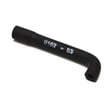
- Pressure hose: Inspect and clear the water-level pressure switch hose; replace it if it is soft, pinched, or packed with residue.
Parts that can help (when symptoms match)
| Symptom | What to inspect | Example part |
|---|---|---|
| Suds plus door-area leaking | Door seal surface | Washer door boot WP8182119 |
| Suds plus water-level sensing issues | Pressure hose | Hose WPW10004260 |
| Suds plus intermittent fill problems | Inlet flow sensing | Flow meter WPW10110225 |
Why it matters
Over-sudsing reduces rinsing performance and often forces extra rinses to protect the pump and maintain proper water-level control.
For the exact SUD display behavior and control-panel steps, use the GHW9400SU0 owner's manual. To order parts by model number, use the parts list for GHW9400SU0 or search on Sears PartsDirect.
Last updated: February 2026


