 Error Codes



Is a bottom mounted refrigerator good?
Yes. A bottom-mount refrigerator like the Whirlpool WRQC7836RZ00 is a great choice when you want everyday fresh-food items at eye level and a freezer you access less often. It typically improves convenience and organization, with the main tradeoff being a higher purchase price than basic top-freezer designs.
Why many people prefer bottom-mount designs
- Fresh-food section sits higher, so you bend less for daily items
- Wide refrigerator shelves make it easier to see and organize groceries
- Freezer drawers/bins help separate frozen foods by type
- French door and bottom-freezer layouts often fit large platters and meal prep containers
- Better day-to-day ergonomics for most kitchens
Common tradeoffs to consider
Bottom-mount refrigerators are “good” for most households, but these points matter:
- Freezer access can be slower because you pull out drawers instead of opening a door
- Drawer tracks and baskets add parts that can wear over time
- Ice maker and water dispenser features add maintenance (filters, valves, occasional clogs)
- They often cost more than top-freezer models with similar capacity
Quick comparison
| Feature | Bottom-mount refrigerator | Top-freezer refrigerator |
|---|---|---|
| Fresh-food access | Easier (eye level) | Harder (lower shelves) |
| Freezer access | Drawer style | Door style |
| Organization | Strong (wide shelves, drawers) | Basic |
| Typical cost | Higher | Lower |
Maintenance tips that keep performance “good”
- Replace the water filter on schedule; a restricted filter can reduce water flow and ice production (see how to replace the water filter in a Whirlpool refrigerator).
- If you notice slow dispensing or sputtering after a filter change, purge air from the line (see how to purge air from a refrigerator water dispenser video).
- If the door does not seal well, fix alignment or gasket issues early to prevent temperature swings and frost (see how to fix a fridge door seal).
Why it matters
Bottom-mount refrigerators are designed around how most people use a fridge: frequent access to fresh food and less frequent access to frozen items. When the doors seal well and the water system is maintained, you get better daily usability and more consistent cooling.
Last updated: February 2026
How do I remove the base grille on my Whirlpool refrigerator?
To remove the base grille on your Whirlpool WRQC7836RZ00 bottom-mount refrigerator, grasp the grille at the ends and pull it straight forward to release the retaining clips. If your grille is secured with screws, remove the screws first, then pull the grille forward.
Before you start
- Unplug the refrigerator or switch off power at the breaker (recommended if you will reach near wiring).
- Pull the refrigerator forward slightly if you need more room.
- Protect the floor with cardboard or a towel to prevent scratches.
Steps to remove the base grille
- Look along the top edge and both ends of the grille for screws.
- If screws are present, remove them and set them aside.
- Hold the grille near the left and right ends (not the center).
- Pull straight outward to pop the grille off the clips.
- If it feels stuck, wiggle gently side-to-side while pulling forward.
Reinstalling the base grille
Align the grille ends with the leveling assemblies, then press until the clips snap into place. If your model uses screws, reinstall and tighten them snugly (do not overtighten).
Quick troubleshooting if it will not come off
- Check again for hidden screws at the ends or underneath.
- Make sure you are pulling straight out, not down.
- If the grille is warped or cracked, replacement is often the cleanest fix.
| What you see | Most likely attachment | What to do |
|---|---|---|
| No visible screws | Snap-in clips | Pull straight forward at both ends |
| Screws at ends/bottom | Screw + clip | Remove screws first, then pull forward |
Why it matters
Removing the base grille gives access to the leveling legs and the lower front area for cleaning dust buildup, checking for water leaks, and improving airflow around the compressor.
For other common Whirlpool refrigerator issues (including display or cooling-related codes), use our Whirlpool refrigerator error codes guide.
Last updated: February 2026
What is the bottom part of a refrigerator called?
On a Whirlpool WRQC7836RZ00 bottom-mount refrigerator, the “bottom part” most people mean is the compressor area (the machinery compartment at the lower rear). That compartment typically houses the compressor and related cooling-system components.
What you will usually find in the bottom compartment
Depending on the exact design, the lower rear compartment commonly includes:
- Compressor (pumps refrigerant through the sealed system)
- Condenser fan and condenser coils (remove heat)
- Drain pan (catches defrost water)
- Electrical/control components and wiring
- Sealed-system service parts (tubing, drier)
Common “bottom” parts for this model
If you are identifying a noise, vibration, or cooling issue, these WRQC7836RZ00 parts are examples of components associated with the lower machinery area:
| What you are looking at | What it is usually called | What it affects |
|---|---|---|
| Large black metal canister | Compressor | Cooling performance, humming/buzzing sounds |
| Fan near coils | Condenser fan | Heat removal, warm cabinet sides |
| Shallow plastic tray | Drain pan | Water under/behind fridge |
Why it matters
Using the right name helps you match symptoms to the correct part category. For example, a “bottom back hum” often points to the compressor or condenser fan area, while “water on the floor” often points to the drain system and pan.
Quick safety and access tips
Before inspecting the bottom rear area:
- Unplug the refrigerator.
- Pull the unit straight out to avoid damaging the water line.
- Remove the lower rear access cover (if equipped) and use a flashlight.
- Keep hands clear of fan blades and sharp metal edges.
Last updated: February 2026
What is the most common problem with whirlpool refrigerators?
The most common Whirlpool refrigerator problem is a cooling complaint (fridge too warm, freezer too warm, or temps that swing). On the Whirlpool WRQC7836RZ00, the fastest wins are airflow and heat removal checks, then moving to fan, sensor, and door-seal related causes.
Most common symptoms we see
- Fresh food section warms up while the freezer seems OK
- Freezer warms up and ice production slows or stops
- Frost buildup on the back wall of the freezer
- Water under the crisper drawers or on the floor
- Doors do not close tightly or you feel warm air at the gasket
Quick checks that fix many “not cooling” calls
- Condenser airflow: Make sure the grille and rear area are not blocked; clean dust from coils if accessible.
- Air vents: Do not pack food against vents; blocked vents cause warm spots.
- Temperature settings: Set to normal recommended temps and give it 24 hours to stabilize.
- Door seal test: Close a dollar bill in the door; if it slips out easily, the seal or alignment needs attention.
- Defrost drain: If you see puddles, check for a clogged drain and clear ice/debris.
Parts that commonly relate to these problems
If the basic checks do not solve it, these parts are often involved on modern bottom-mount designs:
| Problem area | What it affects | Example part on this model |
|---|---|---|
| Temperature sensing | Erratic temps, short cycling | Thermistor, W11679636 |
| Door sealing/alignment | Warm air leaks, frost, sweating | Mullion, door W11455378 |
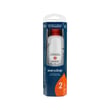
| Water filtration flow | Slow dispenser, poor ice fill | Refrigerator cartridge wrap assembly EDR2RXD1 |
Why it matters
Cooling issues can snowball into food spoilage, heavy frost that blocks airflow, and extra compressor run time. Catching a simple airflow restriction or a weak door seal early often prevents bigger repairs later.
Helpful DIY guidance
- Use our troubleshooting steps in Whirlpool refrigerator error codes if your display shows an error or you suspect a sensor/control issue.
- If your issue is water or ice related, prevention steps in how to prevent water dispenser and ice maker problems help reduce repeat clogs and low-flow complaints.
Last updated: February 2026





