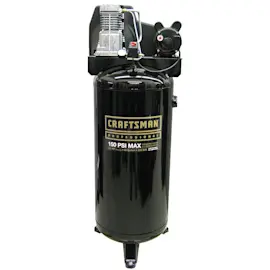
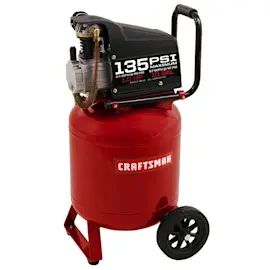
Owner’s manual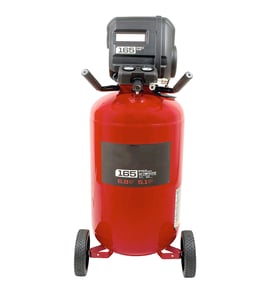

What is the average lifespan of an air compressor?
Most homeowner and light shop piston air compressors like the Craftsman 919165520 typically last 10 years with normal use and routine care; heavy use, heat, and moisture shorten life, while staying within the recommended duty cycle and maintenance schedule extends it. See the owner's manual for model-specific operating and care guidance.
| Compressor type | Typical lifespan | Notes |
|---|---|---|
| DIY/light-duty piston (portable) | 10 years | Most common in garages and home shops |
| Prosumer/shop piston (higher duty) | 15 years | Better cooling and components help |
| Rotary screw (commercial/industrial) | 20 years | Built for continuous operation |
The manual calls out two big life-extenders: proper cooling/ventilation and not exceeding a 50% duty cycle (maximum 30 minutes of pumping per hour). Those two items prevent overheating and premature pump and motor wear.
- Operate at 50% duty cycle max (30 minutes pumping per hour)
- Keep the unit in a clean, dry, well-ventilated area with clearance for airflow
- Keep the air filter clean so the pump can breathe and run cooler
- Drain the tank regularly to reduce internal corrosion and water carryover
- Follow the routine checks (including the safety valve) on schedule
Use this as a practical checklist based on the manual’s routine maintenance guidance.
- Before each use: check the safety valve; verify cords/plug condition; confirm regulator setting
- After each use: drain the tank; listen for new leaks or unusual noise
- Every 40 hours: clean the air filter (more often in dusty or humid areas)
- Every 100 hours: inspect for loose fasteners, vibration issues, and heat-related wear
- Yearly: have a trained technician check pump intake and exhaust valves
Air compressors usually fail early from overheating (over-duty-cycle use, blocked ventilation) or moisture damage (not draining the tank, humid storage). Controlling those two factors is the most reliable way to hit the full expected lifespan.
For troubleshooting that can prevent premature wear, use how to maintain an oil free air compressor.
Last updated: February 2026
What is the most common cause of air compressor failure?
The most common cause of air compressor failure is poor maintenance that leads to overheating, restricted airflow, and accelerated wear. On the Craftsman 919165520 air compressor, blocked ventilation openings and neglected routine care can overheat the motor and pump and shorten the life of key components.
- Restricted ventilation or airflow (items placed against the unit, dusty location), which causes overheating
- Not draining the tank regularly, which promotes internal rust and tank weakening
- Air leaks at fittings, hoses, or valves that force longer run times and extra heat
- Dirty or restricted air intake filter, which reduces output and strains the pump
- Pressure control problems (pressure switch not shutting off at cut-out), which can over-pressurize the tank
Before any inspection or service, unplug the compressor and bleed all air pressure from the tank.
- Confirm the compressor has open clearance around it (keep ventilation openings unobstructed)
- Listen for hissing at fittings and check with soapy water; tighten gently (do not overtighten)
- If you hear a constant leak at the pressure release valve after shutdown, the check valve is a common culprit
- If the safety valve pops, move the On/Auto/Off lever to OFF immediately; pressure control needs service
- Drain condensed water from the tank daily or after each use
| What you notice | What it usually points to | Why it leads to failure |
|---|---|---|
| Unit runs hot or trips out | Poor ventilation, restricted airflow | Heat damages motor and pump parts faster |
| Won’t build/hold pressure | Air leaks, restricted intake filter | Longer run time increases wear and heat |
| Safety valve pops | Pressure switch issue, cut-out too high | Overpressure stresses tank and controls |
| Constant leak after shutdown | Check valve not sealing | Frequent cycling and extra run time |
Overheating and overpressure are the fastest ways to turn a small issue (like a dirty filter or minor leak) into a major motor, pump, or tank problem. Routine draining and keeping airflow clear prevents rust, reduces run time, and protects the pressure system.
For model-specific operating and maintenance steps, follow the 919165520 owner's manual.
Last updated: February 2026
What does 4.0 SCFM at 90 psi mean?
On a Craftsman 919165520 air compressor, “SCFM at 90 PSIG” tells you how much air the compressor can deliver while maintaining about 90 psi at the outlet. Higher SCFM at a given pressure means the compressor can run more air tools without the tank pressure dropping quickly.
- SCFM: “Standard cubic feet per minute”, a standardized airflow rating used to compare compressors.
- CFM: Cubic feet per minute; airflow without standardizing conditions.
- PSIG: “Pounds per square inch gauge”, the pressure reading on the gauge.
- Cut-in / cut-out: The tank pressure range where the motor starts and stops.
You can see these definitions and your model’s performance ratings in the owner's manual.
Air tools need both pressure and airflow. If a tool needs more SCFM than the compressor can supply at that pressure, you will see pressure drop, weaker tool performance, and longer run time.
- If your tool requires 4.0 SCFM at 90 PSI, the compressor must be able to supply at least that much at 90 PSIG.
- For the Craftsman 919165520, the manual lists 6.4 SCFM @ 90 PSIG (and 8.6 SCFM @ 40 PSIG), so it can support a 4.0 SCFM @ 90 PSI tool under normal conditions.
| Rating on a tool/compressor | What you’re comparing | What to do |
|---|---|---|
| SCFM @ 90 PSIG | Airflow at a common working pressure | Compressor SCFM should meet or exceed tool SCFM |
| SCFM @ 40 PSIG | Airflow at lower pressure (often higher number) | Useful for some tools; do not substitute for 90 PSIG needs |
| Cut-in / cut-out | When the motor starts/stops | Helps you understand cycling and recovery |
Matching SCFM to your tool’s demand prevents constant running, overheating, and slow recovery. Many compressors are intended for limited run time; the manual also notes a 50% duty cycle guideline (about 30 minutes of pumping per hour) to avoid overworking the unit.
- Set the regulator while air is flowing (tool running), not with the trigger released.
- Check for air leaks at fittings, hose, and quick-connects.
- Clean or replace a restricted intake filter.
- If pressure drops only when using a specific tool, compare that tool’s SCFM requirement to the compressor rating.
Last updated: February 2026
What company makes Craftsman air compressors?
Craftsman air compressors (including model 919.165520) have been produced by more than one manufacturer over the years; the maker depends on the specific model series and production era. For this unit, the 919 model series is commonly associated with DeVilbiss Air Power-built compressors sold under the Craftsman brand.
The most reliable way is to match the model number and the parts breakdown in the documentation.
- Use the full model number on the data plate: 919.165520
- Check the repair parts section and diagrams in the owner's manual
- Compare the pump, regulator, and pressure switch layout to the manual illustrations
- Use the manual’s troubleshooting section to confirm the control style (cut-in/cut-out behavior)
- When ordering parts, always match by model number first, not by tank size or PSI claims
Craftsman is a brand name; different OEMs (original equipment manufacturers) have built tools for Craftsman across different years and product lines. That is why two Craftsman air compressors can look different even if they share similar specs.
| What you see | What it usually indicates | What to do next |
|---|---|---|
| Model number starts with 919 | Often tied to DeVilbiss Air Power-era builds | Confirm using the owner's manual parts list |
| Different model prefix (varies by era) | A different OEM may have built it | Use the exact model number to match parts |
Knowing the OEM behind your Craftsman 919.165520 helps you match the correct repair parts and service procedures. Even small differences in pressure switch settings, regulator style, or check valve design can change which parts fit and how the compressor operates.
Last updated: February 2026
What are the 4 types of compressors?
The four main compressor types are reciprocating (piston), rotary screw, centrifugal, and axial. Your Craftsman 919165520 is a reciprocating-style air compressor (it uses a pump to compress air into the tank), which is the most common design for home and shop use; see the owner's manual for component names and operating basics.
- Reciprocating (piston): Uses a piston and cylinder to compress air; common in portable and stationary shop compressors.
- Rotary screw: Uses two intermeshing screws for continuous airflow; common in commercial and industrial settings.
- Centrifugal: Uses a high-speed impeller to add velocity and convert it to pressure; used for high-volume plant air.
- Axial: Uses rotating blades (like a turbine) to compress air in stages; used in specialized high-flow applications.
| Type | How it compresses | Typical use case | What you notice most |
|---|---|---|---|
| Reciprocating (piston) | Piston strokes | DIY, garage, intermittent tools | Cycles on and off; louder |
| Rotary screw | Twin screws | Shops needing steady air | Runs more continuously; smoother |
| Centrifugal | Impeller | Large facilities | High airflow; complex system |
| Axial | Blade stages | Specialized industrial | Very high flow; uncommon for shops |
Knowing the compressor type helps you set expectations for duty cycle, noise, and how pressure is controlled. For example, this model builds tank pressure until it reaches cut-out pressure, then shuts off automatically; it is also intended to run at no more than a 50% duty cycle (about 30 minutes of pumping per hour) for typical use.
- Let the unit cycle normally; frequent starts and stops are expected.
- Drain condensation from the tank after use (use the drain valve at the base of the tank).
- Use the regulator to set outlet pressure for your air tools.
- If it struggles to restart with pressure in the tank, check the pressure release function and related valves.
Last updated: February 2026