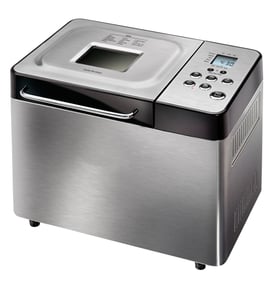

What is one drawback of using a bread machine?
One common drawback of using a bread machine like the Panasonic SD-YD150 is that it limits loaf shape and crust control; you typically get a standard pan-shaped loaf, and the kneading paddle often leaves a hole in the bottom that some people dislike.
Common drawbacks (what most owners notice)
- Paddle hole in the loaf: The mixing paddle can bake into the bread and leave a noticeable cavity.
- Less flexibility with shapes: Great for sandwich loaves, not for baguettes, boules, or braided breads.
- Crust and texture can be less customizable: Results can be more uniform and sometimes denser than hand-shaped, oven-baked bread.
- Counter space and storage: Bread makers are bulky compared to a bowl and loaf pan.
- Timing and ingredient precision: Small measuring errors (flour, yeast, liquid temperature) can affect rise and crumb.
Quick comparison: bread machine vs. oven-baked
| Feature | Bread machine (SD-YD150 type) | Hand-mixed + oven-baked |
|---|---|---|
| Loaf shape options | Limited | Wide variety |
| Paddle mark | Common | None |
| Hands-on time | Low | Medium to high |
| Crust control | Basic settings | Highly adjustable |
Why it matters
If you care most about artisan shaping, a specific crust style, or a “no-paddle-mark” presentation, a bread machine can feel restrictive. If convenience matters most, the SD-YD150 style bread maker still delivers consistent results with minimal effort.
Tips to reduce the downside
- Remove the paddle after the final knead (if your recipe timing allows) to reduce the bottom hole.
- Use a kitchen scale for flour and water to improve texture consistency.
- Try dough-only cycles, then shape and bake in the oven for better crust and appearance.
For help confirming you have the exact model before shopping for replacement parts or accessories, use how to find your appliance model number (and what it means for parts).
Last updated: January 2026
Is it cheaper to use a bread maker or buy bread?
Yes, using a bread maker like the Panasonic SD-YD150 is usually cheaper per loaf than buying premium or artisan bread; it is often similar in cost to basic supermarket bread unless you bake frequently and buy ingredients smartly.
What costs the most (and how to lower it)
Your per-loaf cost is driven more by ingredients and how often you bake than by the bread machine’s electricity use.
- Flour and yeast: buying in bulk usually drops cost the most
- Butter, milk, eggs (if your recipe uses them): these can push costs up quickly
- Add-ins (nuts, seeds, dried fruit): often make homemade loaves cost closer to store-bought specialty bread
- Waste: measuring accurately and storing flour/yeast well prevents “failed loaves” that raise your true cost
- Pan size and loaf size: larger loaves typically cost only a little more to make
Typical cost comparison (what most customers see)
Actual numbers vary by recipe and local prices, but this is a practical way to think about it.
| Option | Typical cost per loaf | Best for |
|---|---|---|
| Homemade basic white/wheat | Low | Everyday sandwich bread, frequent baking |
| Homemade specialty (seeds, nuts, dairy-rich) | Medium | “Bakery-style” loaves at home |
| Store-bought basic bread | Low to medium | Convenience, occasional use |
| Store-bought artisan/specialty | Medium to high | Premium taste without baking |
Break-even: when the bread maker pays off
A bread maker becomes the cheaper option when you replace higher-priced loaves or bake regularly.
- If you bake 1 to 2 loaves per week, you typically see savings fastest versus artisan bread
- If you mostly buy basic supermarket bread, savings are smaller, so consistency matters
- If you already keep flour and yeast on hand, your cost per loaf usually drops immediately
Why it matters
Cost is only part of the value. With the SD-YD150, you also control ingredients (salt, sugar, preservatives), can bake on your schedule, and can tailor recipes for dietary needs.
For general DIY ownership tips that help you get the most value from your appliance, see quiz are you abusing your appliances.
Last updated: January 2026
Why are breadmakers no longer popular?
Bread makers are less common today because many shoppers prefer fewer countertop appliances and choose more flexible tools (like a stand mixer plus an oven) or convenient store bread. That trend is general and not specific to the Panasonic SD-YD150; the machine still works well for hands-off mixing, kneading, proofing, and baking.
What drove the shift away from bread machines
- Counter space and storage: A bread maker is bulky, so it often gets put away and used less.
- Preference for multi-use appliances: Many households prioritize appliances that do several jobs.
- Changing eating habits: Some people bake bread less often due to lower-carb or gluten-free routines.
- Better store options: Grocery and bakery bread quality improved, reducing the need to bake daily.
- More control with traditional baking: Shaping, scoring, and crust style are easier to customize in an oven.
Bread maker vs. oven baking: what’s different
| Goal | Bread maker (like SD-YD150) | Stand mixer + oven |
|---|---|---|
| Hands-off convenience | High (automatic cycle) | Medium (more steps) |
| Crust and shape control | Moderate | High |
| Batch size flexibility | Moderate | High |
| Cleanup | Usually simpler | Often more tools |
If you are using a bread maker, these steps improve results
- Measure ingredients consistently (a kitchen scale helps).
- Use fresh yeast and store it sealed.
- Match flour type to the recipe (bread flour vs. all-purpose).
- Keep the pan and kneading area clean so dough mixes evenly.
- Cool the loaf before slicing to prevent a gummy texture.
Why it matters
If you are deciding whether to keep using or repairing a Panasonic SD-YD150, it helps to know the tradeoff: bread machines win on convenience, while oven baking wins on customization. For safe DIY habits when checking cords, switches, or internal wiring, use are diy appliance repairs safe.
Last updated: January 2026