
How do I read the model number on my AC unit?
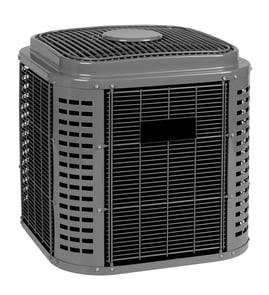
On your York central air conditioner, the model number is printed on the unit’s rating plate (data tag) on the outdoor condenser cabinet. For this parts page, the model number format you’re looking for is H2DB030S06A; match that exact string to ensure correct parts and service information.
Most central AC outdoor units place the data tag in one of these spots:
- On the outside of a side panel near the electrical service access cover
- Inside the service panel (you may need to remove screws to view it)
- Near the refrigerant valves/line set connection area
- On the back panel of the condenser cabinet
The tag usually lists several identifiers. Use this quick guide:
- Model number: the main identifier for parts lookup (example: H2DB030S06A)
- Serial number: used to identify production details (often needed for service)
- Electrical specs: voltage, phase, minimum circuit ampacity (MCA), and max fuse/breaker (MOCP)
- Refrigerant type: commonly R-410A on many systems (verify on your tag)
- Capacity code: many model numbers include a 2 to 3 digit capacity indicator
Many brands embed capacity like this:
| Code in model number | Approx. BTU/hr | Approx. tons |
|---|---|---|
| 024 | 24,000 | 2.0 |
| 030 | 30,000 | 2.5 |
| 036 | 36,000 | 3.0 |
| 048 | 48,000 | 4.0 |
| 060 | 60,000 | 5.0 |
Using the exact model number prevents ordering the wrong capacitor, contactor, fan motor, or control component. Even small model-number differences can change wiring, electrical ratings, and refrigerant components.
If you’re troubleshooting while you locate the tag, use a meter safely and correctly: how to use a multimeter to test electrical parts video.
Last updated: February 2026
What is the average lifespan of a central air conditioning unit?
Most central air conditioning units last 15 to 20 years with normal use and regular maintenance. For a York central air conditioner like model H2DB030S06A, lifespan depends most on installation quality, airflow, and how hard the system runs each season.
- 15 to 20 years: common for modern central AC systems
- 10 to 12 years: common for older systems or units with heavy run time
- 8 to 10 years: common when maintenance is skipped or airflow is restricted
- 20+ years: possible with excellent maintenance and mild operating conditions
| What affects lifespan most | What it does to the system | What to do about it |
|---|---|---|
| Dirty outdoor coil or clogged indoor filter | Raises pressures and heat, increases wear | Keep coils clean; change filters on schedule |
| Low airflow (dirty filter, blocked vents, dirty blower/coil) | Can cause icing and compressor strain | Restore airflow; keep returns and supplies open |
| Electrical wear (contactor/capacitor issues) | Hard starts and overheating | Have electrical components checked during service |
| Refrigerant problems (leaks, incorrect charge) | Poor cooling and compressor damage risk | Fix leaks and charge correctly |
- Cooling is weaker or uneven even after basic maintenance
- The outdoor unit is louder, starts hard, or cycles rapidly
- Repairs are becoming frequent (especially electrical or refrigerant-related)
- Energy bills rise without a clear change in weather or thermostat settings
A central AC’s compressor and coil system are expensive, high-load components. When airflow, coils, or electrical parts are neglected, the unit runs hotter and longer, which shortens service life and increases the chance of a major breakdown.
For safe, basic checks that support longer life, use our guides: are diy appliance repairs safe, how to tell if a fuse is blown, and how to use a multimeter to test electrical parts video.
Last updated: February 2026
How much should a central air conditioning unit cost?
A central air conditioning unit typically costs about $3,000 to $15,000+ installed, depending on size (tonnage), efficiency (SEER2 rating), brand, and how much labor or ductwork your home needs. For York model H2DB030S06A, the biggest price drivers are capacity match and installation scope.
Central AC pricing is usually quoted as a complete installed system, but line items vary by contractor.
- Outdoor condenser unit and set-up labor
- Indoor evaporator coil (often required for a proper match)
- Refrigerant line set work (reuse vs replace)
- Electrical work (disconnect, whip, breaker sizing, permits)
- Start-up, charging, and airflow checks
These ranges help you sanity-check quotes for a central air conditioner replacement.
| Scenario | Typical installed range | Notes |
|---|---|---|
| Straight swap (existing ductwork, minimal electrical) | $3,000 to $7,000 | Most common when everything is accessible and compatible |
| Mid-scope install (coil, line set work, some electrical) | $7,000 to $11,000 | Common when upgrading efficiency or correcting past issues |
| Complex install (duct modifications, major electrical, access challenges) | $11,000 to $15,000+ | Costs rise fast with ductwork and labor time |
- System size (tons/BTU): Oversizing or undersizing causes comfort and humidity problems, so proper sizing matters.
- Efficiency (SEER2): Higher SEER2 usually costs more up front but can reduce operating cost.
- Ductwork condition: Leaks, undersized returns, or poor airflow can require repairs or redesign.
- Refrigerant compatibility: Older systems may need additional work to match components correctly.
- Labor and permitting: Local code requirements and access (attic, roof, tight pad) affect labor hours.
A “cheap” central AC install can cost more later if the system is mismatched, airflow is wrong, or refrigerant charging is off. Comparing quotes using the same scope (unit, coil, line set, ductwork, electrical) helps you judge value accurately.
For help confirming you have the right model information before pricing parts or planning service, use how to find your appliance model number (and what it means for parts).
Last updated: February 2026
What is the most expensive part to replace on an AC unit?
For a York central air conditioner like model H2DB030S06A, the most expensive single component to replace is typically the compressor. It is the core of the refrigerant system, and compressor replacement often comes with significant labor plus refrigerant handling costs.
The compressor is expensive because it is a sealed, high-load mechanical and electrical component; replacing it can also require system cleanup, evacuation, and recharging.
Common high-cost items in a central AC repair include:
- Compressor (often the top cost)
- Condenser coil (especially if it is leaking or badly corroded)
- Evaporator coil (coil leaks can drive up parts and labor)
- Outdoor fan motor (moderate to high, depending on type)
- Control board or defrost board (varies by design)
Actual pricing varies by region, refrigerant type, and accessibility, but this shows what is usually “big” versus “small” in central AC repairs.
| Component | Typical cost impact | Why it runs high |
|---|---|---|
| Compressor | Highest | Major part plus refrigerant work and labor |
| Condenser/evaporator coil | High | Large part, leak-related labor, refrigerant work |
| Fan motor | Medium | Motor cost plus wiring and mounting labor |
| Capacitor/contactor | Low | Simple electrical parts, quick swap |
We use these checkpoints to judge whether a major repair is worth it:
- Unit age and overall condition (rust, coil condition, prior leaks)
- Whether the system has had repeated refrigerant leaks
- Evidence of electrical damage (burnt wiring, pitted contactor)
- Compressor failure cause (overheating, floodback, contamination)
- Total repair cost compared to the value of the system
A compressor failure is often a “system-level” event, not just a single bad part. If the root cause is not corrected (airflow problems, dirty coils, electrical issues, refrigerant problems), the replacement compressor can fail early.
For safe electrical troubleshooting steps before any repair, use our guide: how to use a multimeter to test electrical parts video.
Last updated: February 2026
How big of an AC unit is needed for a 2000 sq ft house?
For a typical 2,000 sq ft home, we usually see a central air conditioner sized around 3 to 4 tons (about 36,000 to 48,000 BTU/hr), but the right size depends on your home’s heat gain and should be confirmed with a Manual J load calculation before choosing equipment.
These are common outcomes for a 2,000 sq ft house when ductwork and insulation are in average condition.
- Mild climates / strong insulation: often ~3.0 tons
- Hot climates / high sun exposure: often ~3.5 to 4.0 tons
- Older homes / leaky ducts: can push sizing higher unless improvements are made first
- High ceilings / lots of glass: increases required capacity
- Shaded home / tight envelope: can reduce required capacity
Square footage alone does not capture the real cooling load. A Manual J calculation accounts for the factors that change tonnage the most.
- Local design temperatures and humidity
- Insulation levels and air leakage
- Window size, type, and orientation
- Ceiling height and attic conditions
- Duct leakage and duct location (attic vs conditioned space)
- Internal loads (people, cooking, equipment)
| If the AC is… | Common symptoms | What it leads to |
|---|---|---|
| Oversized | Short cycling, uneven temps, clammy air | Poor humidity control, more wear on compressor/contactor |
| Undersized | Runs constantly on hot days, struggles to reach set temp | Higher runtime, comfort complaints, potential icing if airflow is weak |
For York model H2DB030S06A, the “030” in the model number commonly indicates a nominal 30,000 BTU/hr class outdoor unit (about 2.5 tons) used in some matched system combinations. Use your home’s load calculation and the indoor coil/air handler match to confirm what capacity is appropriate for your 2,000 sq ft space.
Correct sizing improves comfort, humidity control, and efficiency, and it reduces stress on key components like the compressor, capacitor, and condenser fan motor.
For help identifying the exact model number on the data plate before ordering parts, use how to find your appliance model number (and what it means for parts).
Last updated: February 2026