 Owner’s manual



Is the GE washer dryer combo any good?
GE washer dryer combos can be a good choice when you need one appliance to both wash and dry, but that is a different product category than the GE GTW840CPN0DG, which is a top-load washer only. For GTW840CPN0DG performance and features, we recommend using the cycle and option guidance in the GTW840CPN0DG owner’s manual.
What to know about your GTW840CPN0DG (washer only)
This model is designed for washing; drying performance, venting, and heat-pump behavior do not apply.
- Use HE detergent and avoid overloading for best cleaning.
- The washer uses automatic load sensing, so water levels may look lower than older washers.
- For bulky or water-resistant items, use the Bulky Items (or Delicates) cycle as directed.
- If the display shows H2O SUPPLY, check that both supply valves are fully open.
- If loads end wetter than expected, redistribute and run Drain & Spin.
If you are shopping for a GE washer/dryer combo
Washer/dryer combos are typically chosen for space savings and convenience, but they often trade off cycle time and load size compared with separate machines.
| Feature | Washer/dryer combo | Separate washer + dryer |
|---|---|---|
| Space | Best for tight spaces | Needs more room |
| Cycle time | Often longer | Usually faster overall |
| Load flexibility | More limited | More flexible |
| Serviceability | More integrated systems | More modular |
Why it matters
Choosing the right appliance type prevents disappointment. A combo can simplify laundry in small spaces, while a dedicated washer like the GTW840CPN0DG focuses on wash performance and cycle options.
Last updated: January 2026
What is the most common problem with GE washers?
The most common issues we see with GE washers (including model GTW840CPN0DG) are drain and spin problems: the washer won’t drain fully, won’t reach full spin, or leaves clothes too wet. These symptoms are often tied to a drain restriction, a lid lock problem, or a drive system/control issue.
Most common symptoms customers notice
- Water left in the tub at the end of the cycle
- Clothes still dripping wet after Spin or Drain & Spin
- Humming or buzzing during drain (pump trying but not moving water)
- “Lid” message or the washer won’t start with the lid closed
- Out-of-balance behavior: repeated rebalancing, slow spin, or vibration
What to check first on GTW840CPN0DG
We recommend starting with the quick checks below because they solve a large share of “won’t drain” and “won’t spin” complaints.
- Run Drain & Spin and listen for the drain pump running
- Check the standpipe and drain hose for kinks or a clog (a partial clog can still drain slowly)
- Confirm the lid is closing firmly and latching; a lid lock issue can stop spin
- Reduce load size and redistribute bulky items; out-of-balance loads can prevent full-speed spin
- Verify water supply valves are fully open; some cycles can pause with a water supply message
For cycle behavior, display messages (like “Lid” or “H2O SUPPLY”), and operating tips specific to this washer, use the GTW840CPN0DG manual.
Parts that commonly relate to drain or spin complaints
If the basic checks point to a failed component, these model-compatible parts are common suspects:
| Symptom | Likely area | Example compatible part for this model |
|---|---|---|
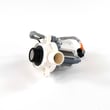
| Won’t drain / drains slowly | Drain system | GE washer drain pump assembly WH23X28418 |
| Won’t spin / lid message | Lid lock system | Washer lid lock WH08X37938 |
| Won’t shift into spin properly | Drive/shifting | Washer shifter assembly (browse the parts list for your exact match) |
Why it matters
Drain and spin problems are the most disruptive because they can stop the cycle, leave water in the tub, and cause wet loads that need re-washing. Catching a clog early can also prevent drain pump strain and repeat failures.
Last updated: January 2026
How many years should a GE washing machine last?
A GE washing machine like model GTW840CPN0DG should last 10 to 14 years with normal household use. Consistent care (proper loading, correct detergent, and routine cleaning) is what most often determines whether you land closer to 10 years or closer to 14.
What affects lifespan the most
- Overloading the basket (extra strain on the drive system and suspension)
- Using too much detergent (can cause residue buildup and odors)
- Skipping routine tub cleaning
- Hard water and heavy weekly usage (more wear on valves, pump, and bearings)
- Not replacing fill hoses on schedule (helps prevent leaks and water damage)
For model-specific operating and care steps, follow the GTW840CPN0DG owner’s manual.
Simple maintenance that helps GTW840CPN0DG reach the high end of the range
- Run a monthly cleaning cycle as described in the manual (this model uses the Bulky Items cycle with bleach for cleaning)
- Use HE detergent and avoid overdosing
- Load items loosely and distribute around the basket for better balance
- Turn off water faucets during long vacations
- Replace water supply hoses every 5 years
Quick “what to do” guide
| Goal | What we recommend | How often |
|---|---|---|
| Reduce residue and odor | Run the washer cleaning routine | Monthly |
| Prevent leaks | Replace water supply hoses | Every 5 years |
| Reduce vibration wear | Balance loads; avoid single heavy items | Every load |
| Protect controls and lid lock | Keep the lid area dry; avoid slamming | Ongoing |
Why it matters
A washer that is kept clean and not overloaded typically has fewer drain, spin, and vibration problems over time. That means fewer repairs and better wash performance throughout the life of your GE top-load washer.
Last updated: January 2026


