Owner’s manual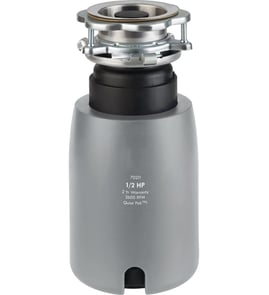

Where is the reset button on a Kenmore garbage disposal?
On the Kenmore garbage disposal model 17560563, the reset button is on the bottom of the disposer housing (under the sink). If the motor stops from a jam or overload, let it cool for 3 to 5 minutes, then press the red reset button on the bottom.
We follow these steps to prevent injury and avoid damaging the disposer:
- Turn the wall switch OFF before reaching under the sink
- Keep hands and fingers out of the disposer opening
- If the unit is hardwired, turn power off at the circuit breaker or fuse box
- If the disposer is hot or humming, let the motor cool 3 to 5 minutes
- Use tools (tongs or pliers) to remove objects, not your hands
Many Kenmore disposers include a self-service “wrenchette” feature. We use it to free the motor safely.
- Turn off the disposer and water.
- Insert the self-service wrenchette into the center hole on the bottom of the disposer.
- Work it back and forth until it turns one full revolution.
- Remove the object(s) with tongs or pliers.
- Let the motor cool 3 to 5 minutes, then press the red reset button.
For the exact illustrations and steps for your unit, use the owner's manual.
If pressing reset does not get it running, we check power and the simplest failure points first.
| Symptom | What it usually means | What we do next |
|---|---|---|
| No sound at all | No power to disposer | Check breaker/fuse, outlet, switch |
| Hums but will not spin | Jammed grinding plate | Free jam with wrenchette, then reset |
| Runs briefly then stops | Overload or repeated jam | Clear debris, cool motor, reset |
| Stops and reset pops again | Ongoing obstruction or electrical issue | Remove object, verify wiring and circuit |
The reset button is an overload protector. Using it correctly (after turning the switch off, clearing jams, and letting the motor cool) prevents repeated trips, protects the motor, and reduces the chance of injury.
Last updated: February 2026
Why don't plumbers like garbage disposals?
Plumbers often dislike garbage disposals because they are a common source of drain clogs and service calls when they are used like a trash can. With the Kenmore 17560563 garbage disposal, following the do’s and don’ts in the owner's manual prevents most of the problems plumbers get called to fix.
Most “garbage disposal issues” are really drain line issues caused by what gets put into the disposer.
- Grease or fat builds up in pipes and creates blockages
- Fibrous foods (corn husks, artichokes) can tangle and clog
- Large amounts of peels at once can pack the drain line
- Hard or non-food items can jam the grind chamber
- Hot grease or hot liquids can contribute to buildup and clogs
Use habits that keep food waste moving through the trap and branch drain.
- Run a moderate to strong flow of cold water before switching the disposer on
- Keep cold water running while grinding, then run it about 15 seconds after to flush the line
- Feed scraps gradually instead of loading the chamber
- Avoid grease, fat, and extremely fibrous materials
- Use ice or small hard items (like small bones or fruit pits) occasionally for a scouring action
| Category | Better choice | Avoid putting in the disposer |
|---|---|---|
| Fats and oils | Dispose in trash | Grease, fat, hot grease |
| Fibrous scraps | Compost or trash | Corn husks, artichokes |
| Hard items | Small amounts only | Glass, metal, large bones |
| Chemicals | Use proper disposal | Solvents, paints, harsh chemicals |
When the disposer grinds food, it still has to travel through your sink trap and household drain piping. Items like grease and fibrous scraps can build up downstream, so the disposer “works” but the plumbing system slowly plugs, which is exactly what plumbers end up clearing.
Last updated: February 2026
Is it cheaper to repair or replace a garbage disposal?
Repairing a Kenmore garbage disposal like model 17560563 is cheaper when the problem is minor (a jam, a trip to the reset button, or a simple clog). Replacing the unit is the better value when the motor is failing, leaks keep coming back, or the disposal is older and needs repeated service.
- Repair when it is jammed but the motor still runs or hums.
- Repair when it just needs a reset and then runs normally.
- Repair when the issue is a drain-line blockage you can clear.
- Replace when the motor is burnt out or repeatedly overheats.
- Replace when leaks are persistent (especially from the housing).
- Replace when repairs add up to about half the cost of a new disposal.
Before you decide, use the safe, basic steps described in the owner's manual:
- Turn the power switch off before clearing a jam or pressing reset.
- Use the disposer wrenchette or a wooden handle to free a jam (not your hands).
- Use tongs or pliers to remove objects.
- Run cold water during grinding and for about 15 seconds after to flush the drain line.
- If the drain is slow, clean the sink drain line (for example, removing the P-trap and clearing hardened waste in the horizontal line).
| Situation | Usually cheaper choice | Why |
|---|---|---|
| Jam, reset trips once, minor clog | Repair | Little to no parts cost; mostly labor and safe clearing |
| Repeated jams, frequent resets, loud grinding | Replace | Wear adds up; performance and reliability drop |
| Persistent leak or failing motor | Replace | Major repair cost approaches replacement value |
A disposal that is frequently jammed or not flushing properly can lead to drain line blockages and more kitchen downtime. Following the operating do’s and don’ts (cold water, avoid grease, avoid fibrous waste) helps you get the most life out of the unit and reduces repeat problems.
Last updated: February 2026
What is the average lifespan of a garbage disposal?
Most garbage disposals last 8 to 15 years, and 10 to 12 years is a common average with normal household use. For your Kenmore 17560563, lifespan depends most on daily habits like using cold water, avoiding grease, and clearing jams safely as outlined in the owner's manual.
Good use and basic maintenance reduce clogs, overheating, and leak risk.
- Run a moderate to strong flow of cold water before switching the disposer on.
- Keep cold water running for about 15 seconds after grinding to flush the drain line.
- Do not pour grease or fat into the disposer or any drain.
- Avoid grinding extremely fibrous foods (corn husks, artichokes) that can cause blockages.
- Feed peels and scraps gradually, not all at once.
- Grind ice or small hard items (like fruit pits) occasionally to help scour the grind chamber.
These symptoms usually mean the motor, seals, or grind components are wearing out.
| Symptom | What it often points to | What to do next |
|---|---|---|
| Frequent resets or humming | Jam or motor strain | Clear jam, then press reset after cooling |
| Persistent bad odor | Grease and food buildup | Clean baffle and grind chamber |
| Leaks under the sink | Worn seals or loose fittings | Inspect fittings and mounting, address leaks promptly |
| Slow draining | Partial blockage | Stop using, clear blockage, flush with cold water |
We follow the safety steps used for Kenmore disposers.
- Turn the power switch off before clearing a jam or pressing reset.
- Use the self-service wrenchette (or a long wooden spoon handle) to free the jam.
- Remove objects with long-handled tongs or pliers, not your hands.
- Let the motor cool 3 to 5 minutes, then press the red reset button.
A disposal that is used with hot water, grease, or frequent overloads tends to clog and overheat more often, which shortens motor life and can contribute to leaks. Consistent cold-water flushing and safe jam clearing help your Kenmore 17560563 run longer.
Last updated: February 2026
Are all garbage disposals universal fit?
Most garbage disposals are not a universal fit. Many units (including typical Kenmore-style disposers like model 17560563) mount to a standard sink drain opening, but the mounting hardware style, discharge tube alignment, dishwasher inlet setup, and under-sink clearance can vary.
Many kitchen sinks use a common drain opening size, so the sink connection is often compatible. Fit problems usually come from the plumbing and mounting details, not the sink hole.
- Sink opening compatibility: often standard, but confirm your sink flange and mounting assembly style
- Mounting system: 3-bolt style vs. other mounting ring designs
- Discharge outlet height and direction: must line up with your P-trap and drain arm
- Dishwasher connection: some installs need a dishwasher drain connection kit or an air gap
- Electrical hookup: corded vs. hardwired, plus grounding requirements
For the exact mounting parts and installation steps used with this disposer, use the owner's manual.
Use this checklist to avoid a return and a second teardown.
- Measure cabinet clearance (height and diameter) under the sink
- Check whether your current unit uses a mounting ring you want to reuse
- Note where the waste discharge tube meets the drain trap
- Confirm whether you need a dishwasher inlet connection
- Verify your electrical setup (switch, wiring, grounding)
| Scenario | What it usually means for fit |
|---|---|
| Replacing an existing disposer | You may be able to reuse the sink flange and mounting assembly if the new unit matches the same style |
| First-time disposer install | You will install the full sink flange and mounting assembly and may need extra plumbing parts |
| Adding dishwasher drain | You may need a dishwasher drain connection kit and proper routing (sometimes with an air gap) |
A disposer that “almost fits” can create leaks, vibration, or a drain line that sits under stress. Matching the mounting assembly and discharge alignment saves time and helps prevent repeat clogs and drips.
Last updated: February 2026