Owner’s manual
 Error Codes





What is the typical cost to replace a 50 gallon water heater?
Replacing a typical 50-gallon water heater usually runs about $700 to $3,100+ installed, with gas units often landing higher than electric because venting, gas-line work, and safety checks can add labor and materials. For your American N50T91-403 gas water heater, costs rise most when venting or piping must be changed.
What drives the price up or down
- Fuel type: gas installs often cost more than electric
- Venting needs: new vent pipe, chimney liner, or power-vent changes add cost
- Plumbing changes: shutoff valves, unions, expansion tank, or re-piping
- Code and safety items: drip pan, seismic straps (where required), combustion air
- Location and access: attic, tight closet, long carry, or difficult drain access
- Disposal and haul-away: old tank removal and fees
Typical cost ranges (what most homeowners see)
| Scenario | Typical installed range | Notes |
|---|---|---|
| Basic swap, easy access | $700 to $1,500 | Reuse existing venting and connections when safe and allowed |
| Standard gas replacement | $1,200 to $2,500 | Common range when minor venting or piping updates are needed |
| Complex replacement | $2,500 to $3,100+ | Relocation, major venting changes, or significant code upgrades |
Model-specific installation details that can affect cost
Your N50T91-403 installation requirements can add labor if updates are needed:
- Combustion air sizing: confined spaces need adequate air volume and ventilation
- Water piping connections: typical 3/4-inch NPT hot and cold connections
- Safety valve requirement: a temperature and pressure relief valve must be installed
- Closed system protection: an expansion tank may be needed in closed systems
For the exact installation and safety requirements, follow the owner's manual.
Why it matters
A low quote can become expensive if the installer later discovers venting, combustion air, or piping issues. Pricing the job correctly up front helps prevent unsafe operation and repeat service calls.
Last updated: February 2026
What is the average lifespan of a 50 gallon hot water heater?
Most 50-gallon tank-style water heaters last 8 to 12 years in typical home use. For your American N50T91-403 gas water heater, regular maintenance (especially anode-rod inspections) is the biggest factor in reaching the high end of that range; see the owner's manual.
Typical lifespan and what changes it
A tank water heater’s life is mainly limited by tank corrosion and water quality.
- Water quality (hard water, corrosive water, softened water) can shorten tank life
- Higher temperature settings increase wear and can accelerate anode depletion
- High hot-water demand increases burner cycling and stress
- Maintenance frequency (flushing, inspections) strongly affects longevity
- Ventilation and installation conditions matter for safe, efficient operation
Maintenance that helps you get the full 8 to 12 years
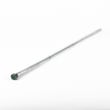
The manual explains that the anode rod protects the glass-lined tank and should be inspected on a schedule.
- Inspect the anode rod every 3 years (inspect annually if you have artificially softened water)
- Replace the anode rod when most of its diameter is under 3/8 inch or the support wire is widely exposed
- Keep combustibles and chemical vapors away from the heater’s air inlet
- Watch burner flame quality (a soft blue flame is normal; heavy yellow is not)
- Address leaks immediately, including after reinstalling or replacing the anode rod
Quick reference: what to expect
| Item | Typical guidance | Why it matters |
|---|---|---|
| Average lifespan | 8 to 12 years | Tank corrosion is the usual end-of-life cause |
| Anode inspection | Every 3 years (annually with softened water) | Protects the tank from rusting through |
| Safer temp setting | 120°F or lower | Reduces scald risk and can reduce stress on the system |
Why it matters
Once the anode rod is depleted, the tank begins to corrode and can eventually leak. Staying ahead of anode wear is one of the most effective ways to extend the service life of a gas water heater like the American N50T91-403.
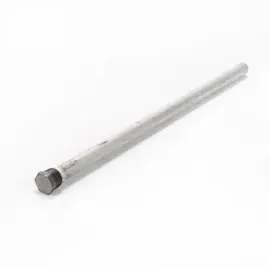
If you’re planning preventive maintenance, the replacement part listed for this model is the anode rod 100108571.
Last updated: February 2026
What is the average cost to install a 40 gallon gas water heater?
Installing a 40-gallon gas water heater typically costs about $900 to $3,000+ total (heater plus labor). The biggest price drivers are gas venting, combustion air requirements, permits, and any code upgrades needed for a safe installation like your American N50T91-403.
What usually makes the price go up
Gas water heater installs vary widely because the installer may need to modify piping, venting, or the installation space.
- New or modified vent pipe or chimney connection (length, elbows, termination)
- Gas line changes (new shutoff, sediment trap, resizing, leak test)
- Combustion air and ventilation changes (especially in closets or small rooms)
- Permit and inspection fees (common for gas appliances)
- Water piping updates (shutoff valve, expansion tank, dielectric fittings)
- Pan and drain line if the heater sits where leakage could cause damage
Typical cost breakdown (what you are paying for)
These ranges reflect common U.S. pricing for a standard 40-gallon atmospheric-vent gas tank replacement.
| Cost item | Typical range | Notes |
|---|---|---|
| Water heater unit | $400 to $1,000 | Brand, efficiency, warranty length affect price |
| Labor (swap-out) | $500 to $1,800 | Higher when venting or gas piping must be reworked |
| Permit/inspection | $50 to $500 | Varies by city/county |
| Materials | $100 to $600 | Vent parts, gas fittings, valves, pan, connectors |
Installation details that matter for this model
Your American N50T91-403 is a Category I, non-direct vented gas water heater; it uses combustion air from the installation area or from ducted outdoor air. That means the room size, ventilation openings, and vent run layout can directly affect both safety and installation cost. For the exact checklist and placement rules, use the owner's manual.
Why it matters
A low bid can turn expensive if the installer later discovers the venting, gas supply, or combustion air setup does not meet code. Pricing the job correctly up front helps prevent unsafe operation, nuisance shutdowns, and rework.
Last updated: February 2026
What is the most common problem with gas water heaters?
The most common gas water heater problem is the pilot light not lighting or not staying lit. On the American N50T91-403, this is often tied to combustion air issues (dirty flame arrestor or poor ventilation) or a failing pilot system component; use the troubleshooting steps in the owner's manual.
What to check first (fast, high-impact)
- Make sure the area has enough combustion air; tight closets and small rooms commonly cause a “lazy” flame and shutdowns.
- If the environment is dusty or linty, clean the flame arrestor (flame-trap) on the bottom of the heater as part of routine maintenance.
- Look for a clogged pilot line or pilot orifice (a common “pilot won’t light/remain lit” cause).
- Watch for the diagnostic status light; an overheat condition can trigger an “Overheat Failure” code.
- If the safety shutoff (ECO) trips, the gas control valve/thermostat is typically replaced by a qualified person.
Common causes and the most likely fix
| Symptom | Most common cause | Typical fix path |
|---|---|---|
| Pilot won’t stay lit | Dirty flame arrestor or restricted combustion air | Clean flame-trap; correct ventilation and make-up air |
| Pilot won’t light | Clogged pilot line/orifice | Clean obstruction; verify gas supply and draft |
| Noisy operation (popping/sizzling) | Sediment buildup | Drain and flush the tank |
| Water on floor near relief line | T&P valve weeping or overheating | Check temperature setting; inspect/replace valve |
Parts that commonly come up for this model
If troubleshooting points to a failed component, these are common replacements for the N50T91-403:
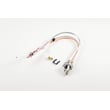
- Water heater pilot assembly 100112330 (pilot system issues)
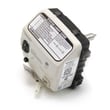
- American water heater water heater gas valve and temperature control assembly 100112336 (ECO trip, temperature control problems)
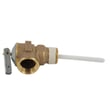
- Water heater temperature and pressure relief valve 100108279 (leaking or dripping relief valve)
Why it matters
A pilot that will not stay lit is more than an inconvenience; it usually indicates an airflow, safety, or control issue that can stop heating completely and can also lead to nuisance shutdowns and higher operating costs.
Last updated: February 2026
Is it cheaper to repair or replace a water heater?
For the American N50T91-403 gas water heater, it’s cheaper to repair when the problem is limited to serviceable components (like the pilot, burner, gas control valve, or a leaking drain valve). Replace the entire water heater when the tank is leaking or when safety-related conditions apply (such as flood submersion of gas controls or burner components). See the owner's manual for model-specific safety guidance.
Repair vs. replace: the quickest decision rules
Repair is the better value when:
- The tank is not leaking and there’s no corrosion-through.
- The issue is isolated to ignition or flame problems (pilot will not stay lit, weak burner flame).
- The temperature control is acting up but the tank is sound.
- A valve is leaking (drain valve or T&P relief valve) and the tank itself is intact.
Replace the water heater when:
- The tank is leaking (water around the base that is not from fittings).
- Any gas controls, main burner, or pilot have been submerged in water (the manual calls for replacing the entire heater in this situation).
- There has been ignition of flammable vapors (the manual indicates replacement is required).
Common repairs for this model (parts we see replaced most)
These are typical “repair-first” items on the N50T91-403:
- Water heater pilot assembly 100112330 for pilot/ignition problems.
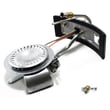
- Water heater burner assembly 100094001 for poor combustion or burner damage.
- American water heater water heater gas valve and temperature control assembly 100112336 for temperature control issues or certain diagnostic/overheat conditions.
- Water heater temperature and pressure relief valve 100108279 if the relief valve is leaking or weeping.
- Drain valve 100108269 if the drain valve drips.
Cost logic: when repair stops making sense
Use this simple comparison to decide:
| Situation | Usually best choice | Why |
|---|---|---|
| Tank is dry, problem is a valve or ignition part | Repair | Parts restore operation without replacing the tank |
| Tank is leaking | Replace | Tank failure is not a practical “parts” repair |
| Flooded/submerged gas components | Replace | Safety requirement in the manual |
| Repeated failures plus heavy sediment/poor performance | Replace | You avoid stacking labor and downtime |
Why it matters
A gas water heater combines fuel, flame, and pressure. Repairing the right component (pilot assembly, burner assembly, gas control valve, T&P relief valve) is cost-effective, but tank leaks and specific safety events require full replacement to keep operation safe and reliable.
Last updated: February 2026