Owner’s manual
 View engine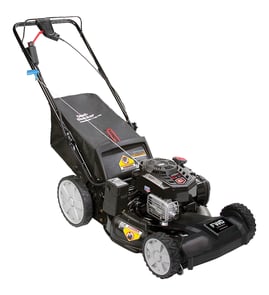
How old is my mower by serial number?
For Craftsman model 917388861, the mower’s serial number is printed on a decal on the rear of the mower housing. That serial number identifies your unit, but the exact “build date” format can vary; the most reliable way to date it is to decode the engine date code and compare it to your purchase date in the 917388861 owner's manual.
Where to find the serial number and what it tells you
On this Craftsman walk-behind mower, we look in two places:
- Mower serial number decal: rear of the mower housing (this is the mower’s serial number)
- Engine identification label: on the Briggs & Stratton engine (often includes a code that can be dated)
- Your receipt or records: the manual provides a spot to record the date of purchase
Quick location checklist
| Item you need | Typical location | What you use it for |
|---|---|---|
| Mower model and serial | Rear of mower housing decal | Identifies the mower unit |
| Engine model/type/code | On the engine shroud or valve cover area | Best path to a true manufacture date |
| Date of purchase | Receipt or written in manual | Confirms the mower’s “in service” age |
How to estimate the mower’s age (practical method)
Because serial formats vary, we use a simple, accurate approach:
- Step 1: Write down the mower serial number from the rear housing decal.
- Step 2: Write down the Briggs & Stratton engine numbers (model and code).
- Step 3: Decode the engine code into a manufacture date (Briggs codes commonly embed a date).
- Step 4: Use the engine manufacture date as the best estimate of mower build timeframe (mowers are typically assembled after the engine is built).
Why it matters
Knowing the mower’s age helps us match the right Craftsman parts and maintenance intervals, especially for wear items like the blade, blade adapter, wheels, and control cable. It also helps when you are troubleshooting starting, cutting quality, or drive issues.
Helpful related parts and references
If you are servicing the cutting system while you are identifying the mower, these model-matched parts are commonly replaced together:
- Husqvarna lawn mower 21-in deck 3-in-1 blade 532189028
- Lawn mower blade adapter 532418373
- Walk-behind lawn mower engine cable 532176556
Last updated: February 2026
Should I use 87 or 89 gas for lawn mower?
For the Craftsman 917388861 rotary lawn mower, we use fresh regular unleaded gasoline; in most areas that means 87 octane is the correct choice. The bigger priority is fuel freshness and keeping water and dirt out of the tank, because stale or contaminated fuel is a top cause of no-start and rough-running problems (see the 917388861 owner's manual).
What we recommend for fuel
- Use fresh, clean unleaded gasoline from a reputable station.
- Use the lowest octane that runs smoothly (typically 87 for walk-behind mowers).
- Avoid old fuel; if it has been sitting for 30 days or more, replace it.
- Keep the gas can clean and rust-free; rust and dirt in fuel cause problems.
- If the mower won’t start after storage, drain and refill with fresh gasoline.
Quick troubleshooting if fuel seems like the issue
The manual’s troubleshooting chart calls out fuel quality issues directly (stale fuel, water in fuel, out of fuel). If your 917388861 is hard to start or surges:
- Confirm the tank has fuel and the primer is used for cold starts.
- If fuel is old, empty the tank and refill with fresh gasoline.
- If you suspect water in fuel, empty the tank and refill.
- Check the air filter; a dirty filter can mimic fuel problems.
87 vs 89: what changes in real use
| Octane choice | Typical result in a mower | When to use it |
|---|---|---|
| 87 (regular) | Normal starting and power | Default for most walk-behind mowers |
| 89 (mid-grade) | Usually no noticeable benefit | Only if your engine knocks/pings on 87 |
Why it matters
Using the right fuel helps the engine start reliably and run cooler and cleaner. In practice, fuel freshness and contamination control prevent more problems than stepping up octane.
Last updated: February 2026
Is it cheaper to repair or replace a lawn mower?
For the Craftsman 917388861 walk-behind mower, it’s usually cheaper to repair when the fix is routine maintenance or a common wear part (blade, cable, wheel, grass bag). Replace the mower when repair costs approach about half the price of a comparable new mower or when major engine damage keeps returning.
Quick rule of thumb (cost and condition)
We use these practical guidelines when deciding repair vs. replace:
- Repair when the mower still starts reliably and needs normal wear items (blade, blade adapter, cables, wheels).
- Repair when the issue is maintenance-related (dirty air filter, dull blade, low oil, grass buildup under the deck).
- Replace when the engine has serious internal damage (for example, a bent crankshaft) or repeated no-start problems after proper tune-up.
- Replace when multiple major systems are failing at once (engine plus deck damage plus wheel/height adjuster problems).
- Replace when the mower no longer meets your needs (cut quality, bagging performance, push effort) even after repairs.
For model-specific maintenance intervals and adjustments, follow the 917388861 owner’s manual.
Common repairs that are typically worth doing
These are frequent, cost-effective fixes on a rotary lawn mower like the 917388861:
- Replace a worn or bent blade (use an approved blade)
- Replace a damaged blade adapter
- Replace a stretched or broken control cable
- Replace a worn wheel or wheel bracket
- Replace a torn grass bag
Example parts that often solve “cheap fix” problems
| Symptom | Often-related part | Example for this model |
|---|---|---|
| Poor cut, vibration | Blade | 21-in deck 3-in-1 blade 532189028 |
| Blade won’t stay tight, wobble | Blade adapter | Lawn mower blade adapter 532418373 |
| Mower hard to control/stop | Zone control cable | Walk-behind lawn mower engine cable 532176556 |
Why it matters
A sharp, balanced blade and correct maintenance protect the engine and improve cut quality. The manual also notes that neglect and abuse can lead to expensive damage (such as bent crankshafts) and can affect warranty coverage, so keeping up with tune-ups helps you avoid “replace-level” failures.
Last updated: February 2026