 Error Codes




Can I replace dishwasher parts myself?
Yes, you can replace many parts on your GE CDT828P2V2S1 dishwasher yourself if you’re comfortable working safely with electrical power and water connections; simple repairs like a door latch strike or drain hose are typically DIY-friendly, while control boards and pumps often require more skill and careful testing.
What’s usually safe for DIY on CDT828P2V2S1
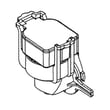
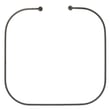
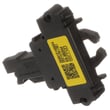
- Replacing a worn door strike such as the dishwasher door latch strike WD13X10071
- Swapping a leaking or kinked drain line such as the dishwasher drain hose WD24X10062
- Replacing a door spring (if the door drops or won’t stay open)
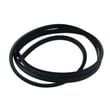
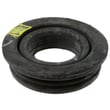
- Replacing a tub gasket if you can clearly see the leak source
- Cleaning maintenance items (filters, spray arms) and checking for clogs
Repairs that are more advanced (often better with a technician)
These jobs involve electrical diagnosis, tight spaces, or water sealing under the tub:
| Repair type | Why it’s harder | Common risk if done wrong |
|---|---|---|
| Control/UI issues | Requires correct diagnosis and safe handling of wiring | Repeat failure, damaged connectors |
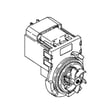
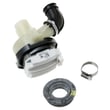
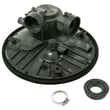
| Pump or sump work | Involves seals, clamps, and leak checks | Leaks, poor wash/drain performance |
| Heating circuit problems | Requires electrical checks and proper reassembly | No drying, tripped breaker |
Safety checklist before you start
- Shut off power at the breaker (do not rely on the door switch).
- Turn off the water supply valve under the sink.
- Protect the floor; keep towels ready for residual water.
- Take photos of wire and hose routing before disconnecting anything.
- Run a short test cycle after reassembly and check carefully for leaks.
Quick “symptom to part” examples
- Won’t start or won’t latch: inspect the latch and strike; the strike is often the simplest fix.
- Not draining: check for a clog first; if the pump is failing, the drain pump may be the next step.
- Poor cleaning: check spray arms and water feed; low wash pressure can also point to pump or sump issues.
Why it matters
Dishwashers combine water, heat, and electricity in a tight space. Choosing the right DIY level helps you avoid leaks, repeat breakdowns, and unnecessary part returns while keeping your GE dishwasher running reliably.
Last updated: February 2026
What is the most common problem with GE dishwashers?
The most common issue we see with GE dishwashers like model CDT828P2V2S1 is a no-start or won’t-run complaint. In most cases, the cause is simple: the door is not latching fully, power is interrupted, or the controls are not accepting a cycle start.
Quick checks that fix many “won’t start” calls
- Confirm the dishwasher has power (breaker on, outlet powered if applicable).
- Close the door firmly until it clicks; a weak latch can prevent any cycle from starting.
- Cancel and restart the cycle (some models need a full cancel/drain before restarting).
- Make sure the control panel is responsive and not locked.
- If the unit beeps or flashes, look up the code in GE dishwasher error codes.
Other very common GE dishwasher problems
Beyond no-start, these are the next most frequent issues for CDT828P2V2S1-TYPE dishwashers:
- Not draining (standing water in the tub)
- Not cleaning well (spray arm or circulation problem, clogged filters)
- Not drying (heater or venting issue, rinse aid settings)
- Leaking (door seal, tub gasket, loose hose connections)
- Unusual noise (pump, chopper area, or debris in sump)
Common symptom-to-part mapping (for CDT828P2V2S1)
| Symptom | Most likely area | Example part to inspect/replace |
|---|---|---|
| Won’t start | Door not proving closed | Dishwasher door latch lock WD01X29878 |
| Won’t drain | Drain path or drain pump | Dishwasher drain pump WD19X25461 |
| Not filling | Water supply or inlet valve | Water valve assembly WD15X27703 |
| Leaks at door/tub | Seals and gaskets | Dishwasher tub gasket WD08X23477 |
Why it matters
A GE dishwasher that won’t start is often protecting you from a safety or flood risk (for example, the door switch not proving closed). Addressing the latch, drain, and fill basics first prevents unnecessary control board replacements and gets the dishwasher running faster.
Last updated: February 2026
Does a 20 year old GE dishwasher have a filter?
Yes. A 20-year-old GE dishwasher typically has a filter system, but it is usually a self-cleaning filter (hard-food disposer style) rather than a removable, rinse-and-reinstall filter. On the GE CDT828P2V2S1, the exact filter style depends on the sump design, but it still uses filtration to protect the wash pump.
What you will usually find on older GE dishwashers
Most older GE units handle food soil in one of these ways:
- Self-cleaning filter with grinder/disposer: you do not remove it for routine cleaning.
- Fixed screen filter: a screen in the sump area that can clog and needs periodic cleaning.
- Hybrid setup: a screen plus a chopper/disposer.
How to tell which filter type you have
Use these quick checks (power off at the breaker first):
- Remove the lower rack and look at the bottom center of the tub.
- If you see a twist-lock cylinder or lift-out mesh assembly, it is a manual-clean filter.
- If you mainly see a fixed grate/screen and no removable filter cup, it is typically self-cleaning.
- If the dishwasher is leaving grit, not draining well, or sounds strained, the sump screen area likely needs cleaning.
Common symptoms that point to a clogged filter or sump area
- Dishes feel gritty after the cycle
- Standing water or slow drain at the end of the cycle
- Poor spray pressure from the arms
- Intermittent wash noise changes (surging or growling)
| What you notice | Most common cause | What we check next |
|---|---|---|
| Grit on dishes | Sump screen/filter area restricted | Clean sump area; inspect spray arms |
| Won’t drain | Drain path restriction or weak pump | Check hose loop, then pump |
| Poor cleaning | Low circulation or blocked manifold | Check spray arm/manifold and sump |
Why it matters
Filtration keeps food soil from recirculating onto dishes and helps protect key components like the wash pump and drain pump. Keeping the sump area clear helps your GE dishwasher clean better and run quieter.
Parts that are often involved when filtration or draining is an issue
If cleaning the sump area does not help, these model-matched parts are common next checks:
- Dishwasher sump and seal assembly WD19X28199 (sump housing and seals that manage water flow and filtration area)
- Dishwasher drain pump WD19X25461 (pumps water out; problems can mimic a clogged filter)
- Wash pump WD19X32518 (circulates wash water; low pressure can look like “filter” trouble)
For step-by-step help diagnosing a drain-related issue, use dishwasher not draining video.
Last updated: February 2026
What is the average life expectancy of a GE dishwasher?
A GE dishwasher like model CDT828P2V2S1 typically lasts about 10 years with normal household use and basic maintenance. Heavy use, hard water, and skipped cleaning shorten lifespan; keeping filters and spray paths clear helps it reach (or beat) that average.
Typical lifespan and what changes it
Most modern residential dishwashers fall into a fairly tight range.
- Typical average: ~10 years
- Common range: 8 to 12 years
- Often shorter when: hard water scale builds up, the unit runs multiple loads daily, or drainage issues are ignored
- Often longer when: the tub stays clean, water heats properly, and the machine drains fully every cycle
| Usage pattern | What we usually see | Practical takeaway |
|---|---|---|
| Light (few loads/week) | Longer life | Maintenance matters more than age |
| Average (1 load/day) | Around average life | Plan for wear parts over time |
| Heavy (2+ loads/day) | Shorter life | Expect earlier pump, heater, or latch wear |
Maintenance that extends life
These steps reduce strain on the wash system, heater, and drain path.
- Clean the filter area and remove debris regularly
- Run hot water at the sink before starting a cycle (improves wash performance)
- Use the right detergent amount; too much can cause buildup
- Check that spray arms spin freely and holes are not clogged
- Keep the door seal clean so it seals without leaks
Parts that commonly affect “end of life” symptoms
When a dishwasher is “old,” it is often one or two key parts causing poor cleaning, no heat, or no drain.
- Not draining or leaving water: dishwasher drain pump WD19X25461, dishwasher drain hose WD24X10062
- Not drying or water not heating: heating element WD05X35098
- Won’t start or won’t latch: dishwasher door latch lock WD01X29878
- Fill or water level problems: water valve assembly WD15X27703, GE dishwasher pressure sensor WD21X25468
Why it matters
Knowing the typical life expectancy helps you decide whether to repair or replace. If your CDT828P2V2S1 is near the 10-year mark, replacing a wear part can still be a smart fix, but multiple major failures close together usually point to overall age-related wear.
Last updated: February 2026





