Installation guide
 Owner’s manual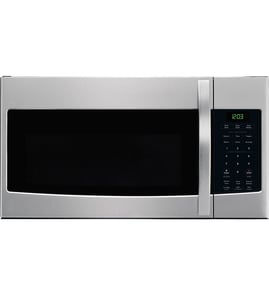



Does a microwave need a 15 or 20 amp circuit?
For the Amana AMV2307PFB0 microwave/hood combo, we use a 120-volt, 60 Hz, AC-only electrical supply on either a 15-amp or 20-amp circuit (with a fuse or circuit breaker). For best performance, we recommend a dedicated circuit just for the microwave; see the installation guide.
What the AMV2307PFB0 electrical requirements mean
The key point is that this model is designed to operate on standard household power, but it still draws enough current that sharing the circuit with other high-draw appliances can trip a breaker.
- Use a grounded 3-prong outlet.
- Use a 15-amp or 20-amp fused/breaker-protected supply.
- Use a time-delay fuse or time-delay circuit breaker (recommended).
- Use a separate (dedicated) circuit serving only the microwave (recommended).
- Do not use an extension cord.
15 amp vs 20 amp: which should you choose?
Both are acceptable for this model; the best choice depends on what else is on the circuit and how often nuisance trips happen.
| Circuit size | When it works well | When to upgrade to 20 amp (or dedicate) |
|---|---|---|
| 15 amp | Microwave is the only major load on that circuit | Breaker trips when microwave runs with other loads |
| 20 amp | Better headroom for startup surges and shared loads | Still best to keep the microwave on its own circuit |
Quick checks before you install or troubleshoot
- Confirm the outlet is inside the upper cabinet and properly grounded.
- Avoid sharing the circuit with items like a toaster oven, coffee maker, or space heater.
- If the cord is too short, have a qualified electrician install an outlet closer (instead of using an extension cord).
- If you see intermittent power loss, inspect the cord and plug; replace a damaged cord with the correct power cord W10708076.
Why it matters
Correct circuit sizing and grounding help prevent nuisance breaker trips, reduce overheating at the outlet, and keep the AMV2307PFB0 running consistently, especially when the hood fan and cooktop light are also used.
Last updated: February 2026
Is an 800 or 1000 watt microwave better?
A 1000-watt microwave is better for faster, more even heating and shorter cook times; an 800-watt microwave is better when you want gentler heating and you do not mind longer cook times. For your Amana AMV2307PFB0 microwave/hood combo, use the cooking charts and settings guidance in the owner's manual to match power level to the food.
What the wattage difference means in real use
Higher wattage mainly changes speed and consistency. Most foods heat more quickly at 1000 watts, while 800 watts often needs extra time and more stirring.
- Reheating leftovers: 1000 W reduces cold spots and total time
- Frozen meals: 1000 W follows package times more closely
- Defrosting: 800 W can be more forgiving (less edge cooking)
- Beverages: 1000 W heats faster but can overheat if you do not watch closely
- Softening butter/chocolate: 800 W (or lower power levels) helps prevent scorching
Quick comparison
| Feature | 800 watts | 1000 watts |
|---|---|---|
| Typical cook time | Longer | Shorter |
| Heating evenness | Good with stirring | Better overall |
| Best for | Gentle warming, small portions | Families, frequent cooking, frozen foods |
| Power-level flexibility | Similar (depends on settings) | Similar (depends on settings) |
How to choose for your kitchen
If you cook often, reheat full plates, or use a lot of frozen foods, we recommend choosing 1000 watts. If you mainly warm small portions and want more control, 800 watts works well.
- Choose 1000 W if you regularly cook for 2+ people
- Choose 1000 W if you want faster results with fewer pauses to stir
- Choose 800 W if you mostly reheat, soften, or warm delicate foods
- Choose 800 W if you are comfortable adding time in 15 to 30 second steps
Why it matters
Wattage affects how quickly the microwave’s magnetron can deliver energy to the food. In day-to-day use, that shows up as cook time, how often you need to stir or rotate food, and how closely you can follow packaged instructions.
Last updated: February 2026
What two things should you not put in a microwave?
For the Amana AMV2307PFB0 microwave/hood combo, the two biggest “never” items are metal (including foil and twist ties) and sealed containers (like closed jars); both can cause arcing, fire, or even an explosion. For model-specific safety details, follow the owner's manual.
The two most important “do not” items
- Metal of any kind: aluminum foil, metal utensils, metal-rimmed dishes, wire twist ties
- Sealed containers: closed glass jars, sealed plastic containers, bottles with tight caps
Other common items to keep out
- Whole eggs in the shell (pressure buildup can make them burst)
- Non-microwave-safe plastics or foam (can melt or release odors)
- Paper bags, newspapers, or recycled paper products (can ignite)
- Flammable or corrosive chemicals (the microwave is for food heating only)
Quick safety checks before you press Start
- Move food to a dish labeled microwave-safe (glass or ceramic is usually best)
- Vent covers and lids (leave a corner open)
- Remove any foil liners, metallic trim, or twist ties
- Avoid overcooking; stay nearby when heating paper or plastic
- If something sparks, stop the microwave and keep the door closed until it stops
Why sealed containers are especially risky
The AMV2307PFB0 safety instructions call out that sealed containers and whole eggs can explode when heated. Steam pressure builds fast in a closed container, even if the food looks like it is heating normally.
“Safe vs. not safe” at a glance
| Item | Put in microwave? | Safer alternative |
|---|---|---|
| Metal utensils/foil | No | Microwave-safe glass or ceramic |
| Closed jar or sealed container | No | Loosely covered, vented container |
| Microwave-safe plastic wrap (vented) | Yes | Leave a corner open |
| Paper towel (short heating) | Usually | Use only briefly and monitor |
Why it matters
Avoiding metal and sealed containers prevents arcing, overheating, and pressure explosions; it also helps protect the door interlocks and internal components so your microwave heats safely and consistently.
Last updated: February 2026