 Owner’s manual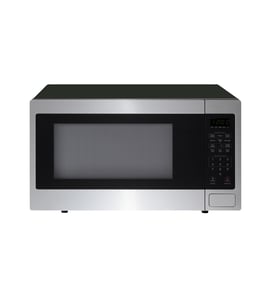



What is the standard size of a countertop microwave?
Most countertop microwaves, including the GE CEB1599SJ2SS, fall into a common “standard” footprint range: about 21 to 25 inches wide, 12 to 15 inches tall, and roughly 16 to 20 inches deep, with about 1.0 to 2.2 cubic feet of cooking capacity. For exact exterior dimensions and clearance requirements, use the CEB1599SJ2SS owner's manual.
Typical countertop microwave size ranges
These are the most common size ranges we see across countertop microwave models:
- Width: 21 to 25 inches
- Height: 12 to 15 inches
- Depth: 16 to 20 inches (often deeper if you include the handle)
- Capacity: 1.0 to 2.2 cubic feet
- Power: commonly 900 to 1200 watts (this model family is listed at 1000 watts in the manual)
Clearance and placement guidelines (important for real-world fit)
Even if the microwave “fits” by dimensions, it still needs airflow and safe placement.
- Place the front of the door at least 3 inches back from the counter edge to reduce tipping risk.
- Plan for ventilation clearance around the cabinet.
- Keep the power cord away from heat and do not pinch it behind the unit.
Recommended clearances (from the manual)
| Location | Typical clearance to plan for |
|---|---|
| Each side | 3 inches |
| Top | 3 inches |
| Rear | 1 inch |
How to measure your space correctly
Use these steps before ordering a replacement microwave or planning a shelf/cabinet opening:
- Measure the usable width between walls or side panels.
- Measure depth from the back wall to the front edge; add extra space if a plug or cord sits behind the unit.
- Measure height to any cabinet above; include the needed top clearance.
- Confirm the outlet location so the cord does not stretch or drape over the counter edge.
Why it matters
A microwave that is too tight in a cabinet opening can overheat, run louder, and wear out electrical parts faster. Proper clearance also helps prevent nuisance issues like blown fuses or intermittent power caused by cord strain.
Last updated: February 2026
What's the average lifespan of a GE Microwave?
Most GE microwaves average about 7 to 10 years of service life with normal household use. For your GE CEB1599SJ2SS countertop microwave, lifespan depends most on door use, ventilation, and keeping the cavity and waveguide area clean; the care and troubleshooting guidance in the CEB1599SJ2SS owner's manual helps you get the longest life.
Typical lifespan and what affects it
A microwave’s life is usually limited by high-wear electrical parts and door safety components.
- Daily use: multiple heat cycles per day shortens life versus occasional reheating
- Door habits: slamming the door or running with a misaligned latch stresses interlocks
- Cleanliness: grease and food splatter can lead to odors, arcing, and overheating
- Airflow: blocked vents make internal components run hotter
- Power quality: frequent surges or nuisance trips can stress the control board and fuse
Signs your microwave is nearing end of life
If these symptoms become frequent, repair may be needed to restore safe, reliable operation.
- Takes noticeably longer to heat (possible magnetron or high-voltage issue)
- Intermittent power loss or dead display (often fuse, door switch, or control-related)
- Loud buzzing or unusual humming during heating
- Turntable stops rotating or is inconsistent
- Burning smell, visible sparking, or repeated arcing
Common parts that impact longevity (CEB1599SJ2SS)
These are some of the most common service items for this model when symptoms show up.
| Symptom | Commonly involved part | Example part on this model page |
|---|---|---|
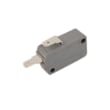
| Unit goes dead when door shuts or won’t start | Door interlock system | Microwave door interlock switch WB24X10146 |
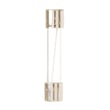
| Completely dead, no display | Line fuse or power issue | Microwave fuse WB27X11138 |
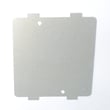
| Sparking near the side wall | Waveguide area protection | Microwave waveguide cover WB39X10034 |
Why it matters
Microwaves rely on door interlocks and high-voltage components to operate safely. Addressing early symptoms (especially door-related issues and arcing) helps prevent repeat failures and reduces the chance of damage to higher-cost parts like the control board or magnetron.
Last updated: February 2026
What are common problems with GE profile microwaves?
Common problems we see with GE Profile microwaves like the GE CEB1599SJ2SS include running but not heating, not powering on, a dead keypad or control, and turntable or fan issues. Many “no start” complaints trace back to door interlock or safety components.
Most common symptoms and what they usually point to
- Runs but does not heat: high-voltage system issue (magnetron, capacitor, transformer) or a control problem
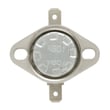
- Completely dead (no display): blown fuse, thermal cutout/thermostat open, power cord or outlet issue
- Starts then stops when the door moves or closes: worn door interlock switch or switch lever
- Turntable not rotating: turntable motor or coupler problem
- Arcing or sparking in the cavity: damaged waveguide cover or metal/foil contact
For model-specific operating and troubleshooting guidance, use the CEB1599SJ2SS owner's manual.
Quick checks you can do safely
- Confirm the outlet has power (try a lamp or small appliance).
- Unplug the microwave for 2 minutes, then plug it back in to reset the control.
- Inspect the door for a solid close and proper latch alignment.
- If you see arcing, stop using it and inspect the waveguide cover area.
Parts that commonly fix these issues on CEB1599SJ2SS
| Symptom | Common part involved | Example part on this model page |
|---|---|---|
| Dead, no display | Fuse | Microwave fuse WB27X11138 |
| Won’t start, door-related | Door interlock switch | Microwave door interlock switch WB24X10146 |
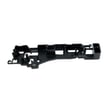
| Intermittent start/stop | Interlock switch lever | Microwave door interlock switch lever WB10X27080 |
| Arcing near side wall | Waveguide cover | Microwave waveguide cover WB39X10034 |
| Runs but no heat | Magnetron (high-voltage) | Microwave magnetron WB26X23320 |
Why it matters
Microwaves use high voltage internally; “runs but won’t heat” and “blows fuse” symptoms often involve safety circuits and high-voltage components. Correct diagnosis helps prevent repeat failures (especially around the door interlock system).
Last updated: February 2026
Are GE countertop microwaves good?
Yes. GE countertop microwaves, including model CEB1599SJ2SS, are a solid choice for most kitchens because they typically deliver reliable heating performance, practical features, and easy day-to-day operation. For the best experience, use the cooking modes and cookware guidance in the owner's manual.
What “good” usually means for a countertop microwave
When customers ask this, they usually care about a few real-world factors:
- Even heating for common foods (leftovers, beverages, frozen meals)
- Useful presets (express cook, sensor-style options on many models)
- Reasonable noise level from the fan and turntable motor
- Durable door operation (latch and interlock system working smoothly)
- Easy cleaning, especially on stainless steel finishes
Features and cooking flexibility on CEB1599SJ2SS
This GE model family supports multiple cooking methods (including convection features), which can be a big plus if you want more than basic reheating.
| Cooking method | Best for | Cookware notes |
|---|---|---|
| Microwave | Reheating, steaming, quick cooking | Use microwave-safe containers; avoid metal trim |
| Convection | Browning, baking-style results | Glass or glass-ceramic is commonly recommended |
| Convection roast | Roasts and crisping | Avoid cookware with metal trim to prevent arcing |
Quick tips to get better results (and avoid common complaints)
A lot of “bad microwave” feedback is really setup or cookware related. We recommend:
- Use glass or glass-ceramic for many convection-style recipes; it cleans up well.
- Avoid cookware with metal trim; it can cause arcing (sparking) and damage.
- For baking, shiny aluminum pans often produce a lighter crust because they reflect heat.
- Keep the waveguide cover clean and intact; replace it if it’s burned or damaged (see microwave waveguide cover WB39X10034).
- If the unit seems dead or intermittent, check power supply basics first; a failed fuse can also be involved (see microwave fuse WB27X11138).
Why it matters
A “good” microwave is one that matches how you cook. If you use convection features, the right cookware and clean internal components help you get consistent browning and prevent arcing, which also protects key parts like the control board and magnetron.
Last updated: February 2026
Who manufactures PEM31SFSS?
PEM31SFSS is not a model number used for the GE CEB1599SJ2SS countertop microwave; it does not match the GE microwave model formats shown in our CEB1599SJ2SS documentation. For manufacturer and parts accuracy, we use the exact model number printed on the microwave’s rating label.
What we can confirm for your GE CEB1599SJ2SS
The CEB1599SJ2SS owner’s manual identifies this appliance as a GE microwave; it also notes that “GE” is a trademark of the General Electric Company and the product is manufactured under trademark license.
How to verify the correct model number (so you get the right manufacturer and parts)
- Open the microwave door.
- Find the rating label in the door opening area.
- Copy the full model number exactly (letters and numbers).
- Record the serial number as well.
- Use that exact model number when selecting diagrams and replacement parts.
Common reasons a model number like “PEM31SFSS” shows up
- A character was misread (for example, 1 vs I, 5 vs S).
- The number came from a different appliance or a trim kit.
- The label was copied from packaging or paperwork that does not match the unit.
Quick comparison
| Item | PEM31SFSS | CEB1599SJ2SS |
|---|---|---|
| Verified in CEB1599SJ2SS manual | No | Yes |
| Used to select parts for this microwave | No | Yes |
| Manufacturer info available from this model page | No | Yes (GE, trademark license noted) |
Why it matters
Microwave parts are model-specific; using the wrong model number can lead to incorrect safety components such as a microwave door interlock switch WB24X10146 or a microwave fuse WB27X11138.
Last updated: February 2026


