Owner’s manual
 View engine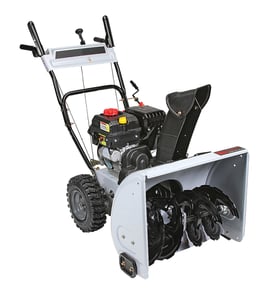

How do you tell what year your snowblower is?
To tell the year of your MTD snow thrower model 31AM63TF799, we use the identification label on the machine (model and serial/date code). The most reliable method is decoding the serial or date code format shown in the 31AM63TF799 owner's manual.
Where to find the model and date/serial code
On most MTD-built snowblowers, the ID label is on the rear of the unit near the frame, or on/near the auger housing. Check these common spots:
- Rear frame between the wheels
- Back of the handle support area
- Side of the auger housing (near the front)
- Under the belt/drive cover area (after removing the cover)
How the date code usually works (what to look for)
MTD and MTD-built machines commonly use a numeric date code that can be interpreted as:
- 1 digit for the year within a decade
- 3 digits for the day of the year (001 to 365)
For example, a code like 5240 often reads as:
- 5 = year ending in “5”
- 240 = the 240th day of that year
Quick example table
| Example date code | Year digit | Day-of-year | What it means |
|---|---|---|---|
| 5240 | 5 | 240 | Built on the 240th day of a year ending in 5 |
| 1035 | 1 | 035 | Built on the 35th day of a year ending in 1 |
Because the year digit repeats every 10 years, we confirm the exact year by matching it to the snowblower’s design era and engine family shown in the 31AM63TF799 owner's manual.
Steps we recommend to pinpoint the exact year
- Locate the ID label and write down the full model number and full serial/date code.
- Decode the day-of-year portion to get the build day.
- Determine the correct decade by checking:
- The style of controls and chute system
- The engine model family and carburetor type
- Parts used on the unit (for example, wear items like the craftsman snowblower shear pin 738-04124A)
Why it matters
Knowing the build year helps you match the correct parts list, service procedures, and maintenance specs (oil type, belt routing, cable adjustments). It also reduces ordering the wrong auger, skid shoe, or carburetor parts for your exact configuration.
Last updated: February 2026
Is a 3 stage snow blower better than a 2 stage?
A 3-stage snow blower is better than a 2-stage when you regularly face deep, heavy, or icy snow and want faster clearing; it adds an accelerator that feeds snow into the impeller more aggressively. For typical driveway snow, a 2-stage often delivers the best value with fewer moving parts.
Quick comparison: 2-stage vs 3-stage
| Feature | 2-stage snow blower | 3-stage snow blower |
|---|---|---|
| Snow handling | Great for most packed and moderate snowfall | Best for deep, heavy, icy, end-of-driveway plow piles |
| Clearing speed | Strong | Typically faster in tough conditions |
| Complexity | Lower | Higher (more components to maintain) |
| Cost | Usually lower | Usually higher |
How this applies to your MTD 31AM63TF799
Even though your MTD 31AM63TF799 is a 2-stage style snow thrower (augers feed an impeller), you can get excellent performance by keeping the wear and adjustment items set correctly, especially skid shoes and the shave plate area. Our 31AM63TF799 owner’s manual covers skid shoe adjustment and operating tips that directly affect scraping performance and control.
Setup and maintenance that matter most
- Set skid shoes higher for smooth pavement; set them lower for uneven surfaces.
- Avoid gravel operation unless you keep maximum clearance to reduce thrown debris.
- Keep tire pressure even side-to-side (most units run best around 15 to 20 PSI).
- Use slower drive speeds until you are comfortable; stop fully before shifting.
- For off-season storage, run the engine until it stops to remove fuel, then change oil.
When a 3-stage is the better choice
A 3-stage is the better buy when these are true most of the season:
- Frequent storms with deep accumulation
- Heavy, wet snow that bogs down your current machine
- Hard-packed plow berms at the street
- You need faster clearing for long driveways
Why it matters
Choosing the right stage is really about matching the machine to your snow type and how quickly you need to clear. For many owners, dialing in adjustments and replacing worn wear parts (like skid shoes and scraper blade) restores performance without stepping up to a more complex machine.
Last updated: February 2026
Is it worth fixing a snowblower?
Yes, it’s worth fixing an MTD snow thrower like model 31AM63TF799 when the problem is a normal wear item (belts, skid shoes, shear pins, spark plug) or a simple adjustment, and the total repair cost stays well below the price of a comparable new machine.
Quick way to decide (cost vs. benefit)
Use this checklist to make a clear call before you buy parts:
- Repair is worth it when the engine runs well and you’re dealing with wear parts or maintenance.
- Repair is worth it when the auger stopped because a shear pin broke after hitting ice or debris.
- Repair is worth it when drive or auger engagement needs a cable adjustment or replacement.
- Replace or rethink when the engine has major internal damage (low compression, heavy knocking) or the gearbox is damaged.
- Replace or rethink when multiple big-ticket items stack up (carburetor plus starter plus gearbox).
For model-specific maintenance and adjustment steps, use the 31AM63TF799 owner’s manual.
Common “good fix” repairs on this model
These are the repairs we see most often that usually make financial sense:
| Symptom | Likely fix | Typical complexity | Parts cost impact |
|---|---|---|---|
| Augers won’t turn after a jam | Replace shear pins and clear obstruction | Low | Low |
| Poor scrape on smooth pavement | Adjust/replace skid shoes and scraper blade | Low | Medium |
| Auger won’t stay engaged | Adjust/replace auger clutch cable | Medium | Medium |
| Hard starting, surging | Fuel system service; carburetor may be needed | Medium | High |
If your auger engagement issue points to a stretched or damaged cable, the snowblower auger clutch cable 946-04230b is a common replacement part for this model.
Why it matters
Snowblowers are designed with sacrificial wear parts for safety and protection. For example, the manual explains that shear pins are intended to break if the auger hits a foreign object; replacing the correct shear pins restores operation and helps protect the auger/gearbox.
Tips to keep repair costs low
- Disconnect the spark plug wire before service and wait for all moving parts to stop.
- Check skid shoe height before operating; incorrect height can cause uneven wear.
- For off-season storage, run the engine dry and change the oil to reduce fuel-system problems.
Last updated: February 2026
What are common gas snow blower problems?
Common problems on the MTD 31AM63TF799 gas snow thrower include hard starting (often fuel or carburetor related), poor snow throwing from clogs or shear pin issues, and drive or auger controls that are out of adjustment. Our 31AM63TF799 owner's manual covers safe checks, adjustments, and storage steps that prevent many of these failures.
Most common symptoms and what usually causes them
- Engine will not start or starts then dies: old fuel, clogged carburetor passages, choke not set correctly, fouled spark plug
- Runs rough or surges: stale fuel, partially clogged carburetor, water in fuel
- Auger does not turn or stops under load: broken shear pin, loose/failed auger clutch cable, jammed auger/impeller
- Snow throws weakly or chute plugs: wet/heavy snow, packed snow in housing, worn scraper blade or skid shoes set too low
- Unit will not drive or slips: drive control out of adjustment, belt or friction drive wear, shifting without stopping (causes premature wear)
Quick checks we recommend (safe, fast, and effective)
Before any inspection or repair, disengage all controls, stop the engine, wait for the auger/impeller to stop, and disconnect and ground the spark plug wire (per the manual).
- Drain and replace old fuel; use fresh, stabilized fuel going forward
- Verify choke and throttle are set correctly for cold starts
- Check for packed snow in the auger housing and discharge chute
- Inspect and replace broken shear pins with the correct type (never substitute bolts)
- Confirm control levers fully engage and disengage; adjust cables if needed
Parts that commonly solve “no auger” or poor throwing
| Symptom | Likely wear item | What it affects |
|---|---|---|
| Auger will not spin | Craftsman snowblower shear pin 738-04124A | Protects gearbox; breaks when auger jams |
| Auger engages late or slips | Snowblower auger clutch cable 946-04230b | Transfers lever motion to auger drive |
| Scrapes poorly, leaves snow behind | MTD snowblower scraper blade 790-00121-0637 | Clears snow at the front edge |
| Skips over pavement or digs in | MTD snowblower skid shoe 731-06439 | Sets housing height and protects surfaces |
Why it matters
Most “gas snowblower problems” trace back to fuel deterioration during storage and wear items that protect the drivetrain. The manual’s storage steps (running the engine dry for long storage, oil change, rust protection) reduce carburetor clogs and corrosion-related failures.
Last updated: February 2026
What is the typical lifespan of a gas snowblower?
For the MTD snow thrower model 31AM63TF799, a typical lifespan is about 7 years or 60 hours of operation as an average useful life guideline; with consistent maintenance and timely replacement of wear items, many owners get additional seasons of reliable service (see the 31AM63TF799 owner's manual).
What “lifespan” means for a snowblower
Most gas snowblowers have two practical limits: total operating hours and age-related wear (rubber, cables, belts, corrosion). Your actual lifespan depends heavily on maintenance, storage, and how often you run the auger in heavy, wet snow.
Common wear items that shorten lifespan
- Skid shoes and scraper blade wear down from pavement contact
- Shear pins break when the auger hits ice chunks, gravel, or hidden objects
- Belts glaze, stretch, or crack from load and age
- Cables go out of adjustment or fray
- Fuel system varnish forms after off-season storage with fuel left in the carburetor
Maintenance that extends service life
We recommend following the maintenance and storage steps in the 31AM63TF799 owner's manual, especially end-of-season fuel handling and routine inspections.
- Change engine oil on schedule and before long storage
- Run the machine briefly after use to clear snow and reduce freeze-up
- Inspect controls to confirm they engage and disengage correctly; adjust as needed
- Check fuel lines, tank, cap, and fittings for cracks or leaks
- Replace worn wear parts before they damage larger assemblies
Quick rule-of-thumb table
| Usage pattern | What to expect | Best focus |
|---|---|---|
| Light (few storms/year) | Age-related wear shows first | Storage, fuel care, corrosion prevention |
| Moderate (typical driveway) | Wear parts and belts over time | Oil changes, inspections, adjustments |
| Heavy (frequent, wet snow) | Faster wear on drive and auger system | Belt/cable condition, shear pins, lubrication |
Why it matters
Planning around a 7-year or 60-hour average useful life helps you decide when to invest in preventive maintenance (oil changes, adjustments, storage steps) versus major repairs like drivetrain or gearbox work. It also reduces downtime during the first big storm.
Last updated: February 2026