Owner’s manual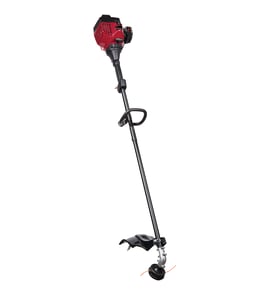

What size trimmer line is a Husqvarna 323L?
For the Husqvarna 323L gas line trimmer, the correct trimmer line size depends on the trimmer head you have installed; the Superauto II 1" head is an approved accessory for this model, and it uses line sized for that head. For the exact line diameter and loading method for your specific head, follow the 323L owner's manual.
How to confirm the right line for your 323L
Use these quick checks so you buy the correct diameter and avoid feed problems:
- Identify the trimmer head model (Superauto II 1", Trimmy Fix, Trimmy Hit, etc.).
- Check whether the head is a bump-feed style or manual-feed style.
- Inspect the spool for a stamped line size (many spools list a diameter range).
- Match the line to the head’s capacity; oversized line causes poor feeding and overheating.
- Replace brittle or fused line; old line swells and sticks in the spool.
Approved cutting equipment for the Husqvarna 323L
Your manual lists several approved heads and accessories for the 322L/323L family, including:
| Item type | Examples listed for 323L | Why it matters |
|---|---|---|
| Trimmer heads | Superauto II 1", Trimmy Fix, Trimmy Hit, Trimmy Hit Pro | Line size and spool design vary by head |
| Shaft thread | M10 | Ensures the head fits and tightens correctly |
| Guards | Specific guard part numbers are specified by head | Correct guard supports safe line length and debris control |
Why it matters
Using the correct line diameter helps the trimmer head feed smoothly, keeps the engine from bogging down, and reduces wear on the clutch, drive components, and head spool.
Quick safety and install notes
When installing or servicing the head:
- Lock the output shaft before loosening or tightening the head.
- Make sure the drive disc/support flange seats correctly in the cutting equipment center hole.
- Tighten fasteners to the manual’s specification when provided.
Last updated: February 2026
Which is better, .080 or .095 trimmer line?
For your Husqvarna 323L gas line trimmer, .095 inch line is the better all-around choice for durability and cutting thicker weeds; .080 inch line is better for lighter trimming and edging where you want easier feeding and a cleaner feel. Use the line type and cutting equipment Husqvarna recommends in the 323L owner's manual.
Quick comparison: .080 vs .095
| Line diameter | Best for | Pros | Tradeoffs |
|---|---|---|---|
| .080 in | Light grass, edging, detail work | Easier to feed, less engine load | Breaks faster in thick weeds, wears quicker |
| .095 in | Mixed trimming, thicker weeds, fence lines | Longer-lasting, better knockdown power | More drag, can be harder to load |
How we choose the right line for the 323L
The 323L manual emphasizes using a recommended trimmer head and trimmer cord matched to the engine size, and it notes that longer cord requires more engine power than shorter cord of the same diameter.
Use these practical rules:
- Choose .095 for thick weeds, coarse grass, and trimming along hard edges.
- Choose .080 for weekly maintenance trimming on normal grass.
- Keep the line length correct so the engine is not overworked.
- Wind line tightly and evenly on the spool to prevent vibration and poor feeding.
- Make sure the guard line-cutting knife is intact so the line is trimmed to the correct length.
Why it matters
Line diameter and line length directly affect cutting load. Thicker or longer line increases drag, which can reduce performance and increase vibration if the spool is not wound evenly.
Tips to get longer life from any trimmer line
- Soak new line in water for a few days; this makes the line tougher and helps it last longer.
- Avoid letting the trimmer head constantly contact the ground; it accelerates wear.
- Use full throttle during cutting and sweeping for best results.
Last updated: February 2026
What is the fuel mix for a Husqvarna 323L?
For the Husqvarna 323L gas line trimmer, we use a 50:1 (2%) gasoline-to-2-stroke oil mix. Use fresh, high-grade unleaded gasoline (minimum 87 octane) and a quality 2-stroke oil; the exact fuel and oil guidance is in the 323L owner's manual.
Quick mix chart (50:1)
| Gasoline amount | 2-stroke oil needed | Mix ratio |
|---|---|---|
| 1 gallon | 2.6 fl oz | 50:1 |
| 2 gallons | 5.1 fl oz | 50:1 |
| 5 liters | 100 ml | 50:1 |
How we mix fuel correctly
- Use a clean, approved fuel container (not the trimmer fuel tank).
- Add about half the gasoline first.
- Add the full measured amount of 2-stroke oil.
- Cap and shake to blend.
- Add the remaining gasoline, then shake again.
- Mix only what you will use within one month.
Fuel and oil tips that prevent hard starting
- Use unleaded fuel; leaded fuel damages the catalytic converter.
- Use 87 octane or higher; lower octane can cause knocking and overheating.
- Do not use 2-stroke oil made for water-cooled outboard motors.
- Do not use 4-stroke engine oil.
Why it matters
The correct 50:1 mix keeps the 323L properly lubricated while maintaining clean combustion. Too little oil increases wear and seizure risk; too much oil increases smoke, carbon buildup, and can foul the spark plug and muffler.
Last updated: February 2026
Is Husqvarna 323L discontinued?
We do not label the Husqvarna 323L as discontinued here; the practical way to confirm current availability is to check whether new units and model-specific support are still being offered, then focus on keeping your trimmer serviceable using the maintenance schedule in the 323L owner's manual.
How to confirm the exact model you own
Use the ID label on the trimmer and match it to the model coverage shown in the manual so you do not confuse it with similar Husqvarna models.
- Confirm the model number reads 323L (not 322L, 325L, or 223L)
- Record any serial or production code from the ID label
- Match your cutting attachment style (trimmer head/guard) to the manual illustrations
- Verify whether your unit uses an angle gear setup (the manual references 322L/323L angle gear maintenance)
- Use the manual’s maintenance sections to identify service points before ordering parts
What “discontinued” changes (and what it does not)
Even if a model stops being produced, routine repairs stay straightforward because most issues involve normal wear items and adjustments.
| Topic | If still current | If discontinued |
|---|---|---|
| Parts fit | Must match 323L exactly | Must match 323L exactly |
| Maintenance | Same schedule and checks | Same schedule and checks |
| Repair approach | Wear items and tune-up first | Wear items and tune-up first |
Maintenance items that matter most on the 323L
These checks are called out in the operator guidance and prevent common running and safety problems.
- Perform maintenance with the engine off and the stop switch in STOP
- Verify the trimmer head does not rotate at idle
- Keep the exterior clean; inspect the guard for cracks
- Service the air filter as directed (including proper oiling if specified)
- Check angle gear grease level before use (the manual notes it is factory-filled; verify it is about 3/4 full)
Why it matters
The biggest risk is mixing up similar Husqvarna model numbers and ordering the wrong components. Confirming 323L identification and following the manual’s maintenance schedule keeps performance and safety consistent.
Last updated: February 2026