Owner’s manual
 Error Codes




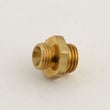
How long should a thermocouple last on a water heater?
On a Kenmore gas water heater model 153572500, a thermocouple typically lasts 10 to 15 years, which is about the same as the expected service life of many gas water heaters. If your pilot will not stay lit, the thermocouple is one of the first parts we check.
Typical lifespan and what shortens it
A thermocouple fails sooner when the pilot flame is unstable or the burner area runs dirty.
- Dirty pilot or burner causing a weak flame
- Poor combustion air or lint and dust buildup near the burner
- Loose thermocouple connection at the gas control valve
- Pilot flame not fully engulfing the thermocouple tip
- Repeated overheating events or frequent pilot outages
Quick symptoms checklist
Use this to decide whether you are dealing with a thermocouple issue or something else.
| Symptom | Most likely cause | What we check first |
|---|---|---|
| Pilot lights but goes out when you release the button | Weak thermocouple signal | Thermocouple seating and condition |
| Pilot will not light at all | No gas to pilot or ignition issue | Gas supply, pilot assembly |
| Pilot stays lit but burner will not fire | Control or safety issue | Gas control valve settings and wiring |
Parts that commonly solve “pilot won’t stay lit”
If troubleshooting points to the safety circuit, these are the model-matched parts we see replaced most often:
- Water heater thermocouple 100112327 (senses pilot flame heat and keeps the gas valve open)
- Water heater pilot assembly 100112330 (includes pilot components that affect flame quality)
- Gas control valve 100262939 (receives the thermocouple signal and controls gas flow)
Why it matters
A healthy thermocouple is a key safety device; it shuts off gas if the pilot flame goes out. Replacing a weak thermocouple can restore reliable hot water and prevent nuisance shutdowns.
For model-specific lighting steps and safety notes, follow the 153572500 owner's manual.
Last updated: January 2026
What is the life expectancy of a Kenmore water heater?
Most Kenmore gas water heaters, including model 153572500, typically last 8 to 12 years. Actual life depends most on water quality, maintenance (especially flushing), and whether key components like the gas control and anode rod are kept in good condition.
Typical lifespan and what affects it
A water heater’s tank life is mainly limited by internal corrosion and sediment buildup. These factors usually shorten life:
- Hard water and heavy sediment (more scale on the burner and tank bottom)
- High thermostat setting (more stress on the tank and gas control)
- No annual flushing or infrequent draining
- A worn anode rod (tank corrodes faster)
- Poor venting or combustion issues (can overheat components)
Signs it’s near end of life
If your Kenmore 153572500 is approaching the 8 to 12 year range, watch for these common indicators:
- Rust-colored hot water or metallic odor
- Rumbling or popping sounds during heating (sediment)
- Water around the base of the tank
- Pilot problems that keep returning after basic cleaning
- Inconsistent hot water temperature
Maintenance that helps you reach the high end of the range
We recommend these habits to extend service life:
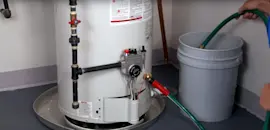
- Flush the tank periodically to reduce sediment
- Test the temperature and pressure relief valve for proper operation
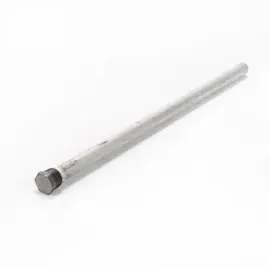
- Inspect and replace the anode rod when it’s significantly depleted
- Keep the burner area clean and the access door properly installed
- Follow lighting and temperature-setting instructions in the 153572500 owner's manual
Common “life extender” parts for this model
| What it helps with | Example part for model 153572500 | When it matters |
|---|---|---|
| Protecting the tank from corrosion | Water heater secondary anode 100300397 | If the heater is aging or water is aggressive |
| Stable temperature control | Gas control valve | If temps swing or the pilot will not stay lit |
| Reliable pilot operation | Water heater pilot assembly | If lighting issues keep recurring |
Why it matters
Once a tank starts leaking, replacement is the practical fix. Knowing the typical 8 to 12 year life expectancy helps you plan maintenance, avoid surprise downtime, and decide whether a repair makes sense based on the heater’s age.
Last updated: January 2026
Do I need 10 2 or 10 3 for a water heater?
For the Kenmore 153572500 gas water heater, you typically do not use 10/2 or 10/3 cable for the heater itself because it runs on natural gas or LP and uses only a small electrical connection (if any) for accessories. If you’re wiring a 240V electric water heater, 10/2 with ground is the standard choice for a 30-amp circuit.
How to choose the right cable (based on what you’re installing)
- Gas water heater (like model 153572500): no 240V heater circuit; focus on gas supply, venting, and safety controls
- Electric water heater (typical 4500 to 5500W): usually a 30-amp, 240V dedicated circuit
- 10/2 with ground: two hot conductors plus ground (most common for electric water heaters)
- 10/3 with ground: adds an extra conductor; used when a neutral is required (uncommon for standard electric tank heaters)
- Always follow the wiring diagram and requirements in the 153572500 owner’s manual
10/2 vs 10/3 at a glance
| Cable type | What’s inside (typical) | When it’s used for water heaters |
|---|---|---|
| 10/2 with ground | 2 insulated conductors + ground | Standard 240V electric tank water heater circuit |
| 10/3 with ground | 3 insulated conductors + ground | Only when the heater or controls require a neutral |
Why it matters
Using the correct cable type helps ensure the circuit matches the heater’s electrical design (breaker size, conductor count, and grounding). For a gas water heater like the Kenmore 153572500, the more common “no hot water” fixes involve ignition and safety components, not 240V supply wiring.
If you’re troubleshooting a gas heater instead of wiring
If your pilot will not stay lit or the burner will not fire, these model-matched parts are commonly involved:
- Water heater pilot assembly 100112330
- Water heater thermocouple 100112327
- Gas control valve 100262939
Last updated: January 2026
How old is my water heater by the serial number?
For Kenmore gas water heater model 153572500, you determine age by decoding the serial number on the rating plate. Kenmore units are built by different manufacturers, so the serial-date format varies; use the rating plate details and the 153572500 owner's manual to confirm label location and identification.
Step 1: Find the rating plate serial number
Look for the rating plate on the outside of the tank; it is typically easy to spot once you know where to look.
- Side of the tank near the vent draft hood
- Mid-tank area on the room-facing side
- Near the burner access door area
- Near the gas control valve area
- On or near the insulation jacket seam
Step 2: Decode the date from the serial number
Many water heater serial numbers include a date code near the beginning. Start by writing the serial number exactly as shown (including letters).
- If it starts with 4 digits, try reading them as a date code
- If it starts with a letter, the letter often represents a month or plant code
- If the label shows a manufacturer name, use that maker’s serial format to decode the date
Common serial-date patterns you may see
| Pattern at the start | How it is commonly read | Example | What it indicates |
|---|---|---|---|
| YYWW | Year, then week of year | 1220 | Week 20 of 2012 |
| MMYY | Month, then year | 0915 | September 2015 |
| Letter + digits | Maker-specific month code + year | A215 | Date depends on maker |
Why it matters
The build date helps us match the correct replacement parts and plan maintenance. For example, ignition and safety components like the water heater thermocouple 100112327 and water heater pilot assembly 100112330 are often selected based on the exact model and production series.
Tips to get an accurate age
- Use the serial number, not the model number alone
- Copy every character; don’t swap O and 0, or I and 1
- If the label is faded, take a clear photo and zoom in before decoding
Last updated: January 2026