Owner’s manual
 View engine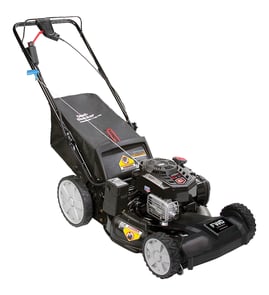



How old is my mower by serial number?
On Craftsman walk-behind mower model 917377844, the serial number is recorded from the decal on the rear of the mower housing; that serial number helps identify the unit, but the most reliable way to determine the mower’s age is to match the serial number to the date-coding format shown in the 917377844 owner's manual.
Where to find the serial number on model 917377844
We use the same location the manual calls out for recording it.
- Look for a decal on the rear of the lawn mower housing.
- Write down the serial number exactly as shown.
- Record the date of purchase too (helpful for service history).
- If the decal is dirty, wipe it gently so every digit is readable.
How to estimate the build date from the serial number
Serial formats vary by manufacturer and production run, so we decode it by looking for a date pattern in the serial.
- Check the first 4 to 6 characters for a date-style code (common patterns include YYMM, MMYY, or MMDDYY).
- If you see a clear month and year grouping, that typically indicates the manufacture month and year.
- If the serial is all letters and numbers with no obvious date grouping, use the serial to cross-reference the model’s documentation and parts breakdown in the 917377844 owner's manual.
Quick guide: what the serial might look like
| What you see in the serial | What it usually means | Example interpretation |
|---|---|---|
| 4 digits that look like YYMM | Year and month | 2105 = May 2021 |
| 4 digits that look like MMYY | Month and year | 0521 = May 2021 |
| 6 digits that look like MMDDYY | Month, day, year | 051521 = May 15, 2021 |
Why it matters
Knowing the mower’s age helps us choose the right maintenance plan (oil, spark plug, blade service) and reduces the chance of ordering the wrong Craftsman parts when there were mid-year design changes.
Last updated: January 2026
Should I use 87 or 91 gas for lawn mower?
For the Craftsman lawn mower model 917377844, we recommend using 87-octane (regular) unleaded gasoline for normal operation. Higher octane (like 91) does not add power in small mower engines; the bigger priority is using fresh, clean fuel and storing it correctly per the 917377844 owner's manual.
What to use (and what to avoid)
- Use 87 octane unleaded gasoline for everyday mowing.
- Avoid stale fuel; old gas is a common reason a mower will not start.
- Keep fuel containers clean and replace rusty cans; rust and dirt cause fuel system problems.
- Do not store gasoline from one season to the next.
- Let the engine cool before storing the mower indoors with fuel in the tank.
Quick comparison: 87 vs 91 for a walk-behind mower
| Fuel choice | What it changes | What it does not change | Best use case |
|---|---|---|---|
| 87 octane (regular) | Normal starting and running | Does not reduce maintenance needs | Standard mowing, everyday use |
| 91 octane (premium) | Usually nothing noticeable | Does not “clean” the carburetor by itself | Only if your engine label specifically requires it |
If your mower is hard to start after fueling
Stale fuel and fuel contamination show up as “won’t start” symptoms. Before replacing parts, we use these checks:
- Confirm you have fresh fuel in the tank.
- Check the fuel valve lever (if equipped) is in the ON position.
- Inspect the air filter for heavy dirt buildup.
- Verify the spark plug wire is firmly connected.
- If fuel is old, drain it safely and refill with fresh 87-octane.
For step-by-step no-start diagnosis, use lawn mower wont start troubleshooting video fuel ignition and compression.
Why it matters
Using the right fuel is less about octane and more about reliability. Fresh 87-octane fuel helps prevent hard starting, rough running, and fuel-system issues that can shorten engine life and increase tune-up frequency.
Last updated: January 2026
What are the most common issues with 917377844?
On the Craftsman 917377844 gas walk-behind mower, the most common problems are drive and wheel issues (self-propel not pulling), poor cutting or vibration, and bagging or discharge problems. These usually trace to wear parts like the blade, transmission drive components, or chute and deflector hardware.
Common symptoms and what they usually mean
- Self-propel quits or slips: worn drive components, loose hardware, or a failing transmission
- Mower vibrates or cuts unevenly: bent or dull blade, loose fasteners, debris buildup under the deck
- Grass clumps or won’t bag well: clogged chute, damaged bag or frame, misaligned deflector
- Wheels wobble or don’t track: worn wheel, missing retaining ring, worn bearing
- Controls feel loose: worn handle/control hardware or linkage parts
Quick checks we recommend first
- Shut the engine off and disconnect the spark plug wire.
- Tip the mower safely (air filter and carburetor side up) and clear packed grass from the deck.
- Inspect the blade for bends, cracks, and dull edges.
- Check wheels for side-to-side play and verify retaining hardware is in place.
- Confirm the discharge/bagging path is clear and the deflector moves freely.
Parts that commonly solve these issues (when worn or damaged)
| Symptom | Commonly involved part | Example part for this model |
|---|---|---|
| Poor cut, vibration | Blade | Husqvarna lawn mower 21-in deck 3-in-1 blade 532189028 |
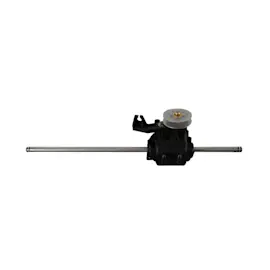
| Self-propel not driving | Transmission/drive | Lawn mower transmission assembly 532188294 |
| Poor discharge or bagging | Chute/deflector | Lawn mower clipping deflector 583127101 |
| Wheel wobble | Wheel/bearing/retainers | Wheel 532192622, lawn mower bearing 532187120 |
Why it matters
Catching wear early prevents secondary damage (like a loose blade stressing the crankshaft area or a slipping drive wearing other drivetrain parts). It also restores cut quality and reduces vibration.
For model-specific diagrams, adjustment points, and maintenance intervals, use the Craftsman 917377844 owner’s manual.
Last updated: March 2026