Error Codes

Is my stove gas or propane?
Your KitchenAid KFGC506JSS05 is a gas range, and it can be set up for natural gas or LP (propane) depending on how it was converted and connected. The most reliable way to tell is to check what your home supplies (gas utility line vs propane tank) and whether the range has an LP conversion installed.
Quick ways to tell (no tools)
- Look at the fuel source: a propane tank outside usually means LP; a utility gas meter typically means natural gas.
- Check your paperwork: installers often leave a tag or note if the range was converted to LP.
- Flame appearance: natural gas is usually steady blue; LP often burns blue too, but incorrect conversion commonly causes yellow tips, soot, or lifting flames.
- Burner performance clues: wrong fuel setup can cause hard ignition, weak heat, or flames that are too large.
Check for an LP conversion on this model
KitchenAid ranges like KFGC506JSS05 use a conversion kit to change regulator settings and burner orifices for LP. If you suspect the range was converted (or needs conversion), use the correct kit for this model: cooktop lp conversion kit W11502161.
What the conversion typically changes
| Item | Natural gas setup | LP (propane) setup |
|---|---|---|
| Gas pressure regulation | Set for NG | Regulator adjusted for LP |
| Burner orifices | Larger openings | Smaller openings |
| Flame behavior when correct | Clean, stable flame | Clean, stable flame |
Why it matters
Running a range on the wrong fuel setup can cause poor cooking performance, ignition problems, and soot buildup. Correct conversion protects the burner system, oven bake ignition, and overall temperature control.
Safety notes before you inspect anything
- Turn off the burners and let everything cool completely.
- If you smell gas, do not operate the range; shut off the gas supply and ventilate.
- For any regulator or gas-line work, we recommend a qualified technician.
Last updated: January 2026
What is the purpose of KFGC506JSS05?
The KitchenAid KFGC506JSS05 is a gas range built to give you strong, responsive burner heat on the cooktop and reliable oven cooking performance, so you can handle everything from quick searing and sautéing to steady simmering and everyday baking in one appliance.
What you can do with this gas range
- Sear and sauté with high burner output for fast pan heating
- Simmer gently with controlled low flame for sauces and delicate foods
- Bake and roast in the oven for even, consistent results
- Broil to brown and finish foods with intense top heat
- Use the oven light to monitor food without opening the door (and losing heat)
Parts that support the range’s core functions
If performance drops, these model-matched parts are commonly involved in cooking, monitoring, or safe operation:
| Function | What you may notice | Example model-matched part |
|---|---|---|
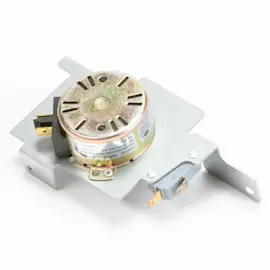
| Oven door locking (self-clean related) | Door will not lock or unlock | Motorized latch W11029221 |
| Oven ignition (bake) | Bake burner clicks but does not light | Electrode, bake W11355922 |
| Oven ignition (broil) | Broil burner clicks but does not light | Electrode, broil W11355920 |
| Oven visibility | Oven light out | Wall oven light bulb WPW10169757 |
Why it matters
When your KFGC506JSS05 can smoothly transition between high heat and low heat, you get better cooking control, more consistent results, and fewer temperature swings that can scorch sauces or undercook roasts.
Last updated: January 2026
What is the life expectancy of a KitchenAid gas range?
A KitchenAid gas range like model KFGC506JSS05 typically lasts 13 to 15 years. Consistent cleaning, correct burner flame, and fixing small issues early (ignition, door sealing, temperature control) are what most often push a range past that average.
What affects lifespan the most
- Keeping burner ports and igniters clean so the burners light quickly and burn evenly
- Avoiding boil-overs that soak igniters, electrodes, and wiring
- Not slamming the oven door (protects hinges, door glass, and door seal)
- Replacing wear items promptly (light bulbs, igniters/electrodes, latches)
- Using the correct gas type and conversion setup when applicable
Quick “age vs. repair” guide
| Range age | What we usually recommend | Why |
|---|---|---|
| 0 to 5 years | Repair most issues | Parts are typically cost-effective and the range has lots of life left |
| 6 to 12 years | Repair if it is a single, clear failure | Prevents repeat service calls and keeps performance stable |
| 13+ years | Repair only if the fix is straightforward | Multiple aging components can start failing close together |
Parts that commonly extend usable life
If your oven will not lock/unlock for self-clean or shows door-lock related symptoms, replacing the latch assembly is a common fix on many ranges.
- Motorized latch W11029221
- Electrode, bake W11355922
- Electrode, broil W11355920
- Wall oven light bulb WPW10169757
Why it matters
A gas range that is lighting reliably and holding temperature accurately cooks more evenly, uses fuel more efficiently, and reduces the chance of nuisance shutdowns during baking or broiling.
Last updated: January 2026