
Is a 10 or 12 inch miter saw better?
A 10-inch and a 12-inch miter saw are both “better” depending on what you cut most often. For most DIY and trim work, a 10-inch saw is easier to carry, costs less to run (blades), and still handles common boards; a 12-inch saw is best when you need maximum cut capacity for wider or taller stock.
Quick comparison (what changes most)
| Feature | 10-inch miter saw | 12-inch miter saw |
|---|---|---|
| Typical best use | Trim, baseboard, smaller framing | Wide boards, taller crown, heavier-duty work |
| Portability | Lighter, easier to move | Heavier, bulkier |
| Blade cost | Usually lower | Usually higher |
| Cut capacity | Plenty for most home projects | More capacity for large stock |
How we recommend choosing
- Choose 10-inch if you value portability, faster setup, and lower blade cost.
- Choose 12-inch if you regularly cut wide shelving, thick hardwood, or tall crown molding.
- If you cut a lot of 2x lumber, either size works; capacity matters most when you start crosscutting wider boards.
- If you do finish carpentry, prioritize a saw that holds alignment well (miter and bevel detents) and supports a stable fence.
- If you plan to add a stand, remember the saw’s weight affects how practical it is to transport and store.
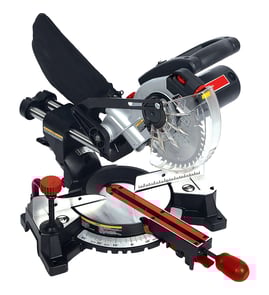
What this means for your Craftsman model 137245100
Your Craftsman 137245100 is a compound miter saw model; the “better” blade size comes down to the material sizes you expect to cut and how often you move the saw between jobs. If you are shopping parts or accessories, confirm the exact blade diameter and arbor size on the saw’s data label before ordering through Sears PartsDirect.
Why it matters
Picking the right size reduces re-cuts, improves safety (less forcing the cut), and helps you avoid buying blades that cost more than you need for your typical trim or framing projects.
Last updated: February 2026
Where can I buy Craftsman replacement parts?
For your Craftsman compound miter saw model 137245100, we recommend buying replacement parts through Sears PartsDirect by searching the model number and using the parts diagrams to match the exact component you need (guard parts, switch, motor parts, arbor hardware, or base components).
Best way to buy the right part (and avoid returns)
- Confirm the model number on the saw’s ID label is 137245100.
- Identify the failed area (blade guard, trigger switch, power cord, motor, fence, table, bevel or miter lock).
- Use the model’s parts diagrams to match the part by location and description.
- Compare any markings on the old part (stamped numbers, dimensions, connector style).
- Order using the matched diagram reference so you get the correct fit.
What we typically see customers replacing on a compound miter saw
| Symptom | Common part area to check | What to look for |
|---|---|---|
| Won’t start | Switch, cord, brushes (if equipped) | Loose terminals, worn contacts, damaged insulation |
| Cuts out mid-cut | Cord, switch, motor wiring | Heat damage, intermittent connection |
| Guard sticks | Blade guard linkage/spring | Binding, broken spring, sawdust buildup |
| Won’t hold angle | Miter/bevel lock parts | Stripped threads, worn detents, loose fasteners |
Why it matters
Miter saw parts are often model-specific; ordering by Craftsman 137245100 helps ensure the replacement matches the saw’s mounting points, electrical connectors, and safety guard geometry.
Helpful resources for parts and repair prep
- If you need help confirming the correct model number before ordering, use how to find your appliance model number (and what it means for parts).
- If you’re troubleshooting a no-power issue, how to tell if a fuse is blown and how to use a multimeter to test electrical parts video help you verify power and continuity before replacing parts.
Last updated: February 2026
What should you never cut with a miter saw?
You should never use a Craftsman compound miter saw like model 137245100 to cut tiny, unsupported pieces near the blade, rip-cut boards (with the grain), or cut materials the saw is not designed for (such as steel/iron or masonry). These cuts increase the risk of binding, kickback, and loss of control.
Cuts and materials to avoid
- Small, short offcuts that cannot be clamped securely
- Rip cuts (cutting lengthwise with the grain); use a table saw or circular saw setup instead
- Ferrous metals (iron/steel) unless the saw is specifically equipped and rated for metal cutting
- Masonry products (brick, concrete, tile) unless the saw is specifically designed for it
- Freehand cuts without the workpiece supported against the fence and table
- Warped, twisted, or bowed boards that rock or pinch the blade unless clamped flat and stable
Safe alternatives (what to do instead)
Use the tool that matches the cut and material; it keeps the blade from binding and helps you maintain control.
| Task you want to do | Better tool/setup than a miter saw | Why it’s safer |
|---|---|---|
| Rip a board | Table saw, track saw, or circular saw with a guide | Work is supported for long, straight cuts |
| Cut very small pieces | Cut a longer piece first, then trim using a jig/stop and clamps | Keeps hands away from the blade path |
| Cut steel/iron | Metal-cutting saw rated for ferrous metal | Correct blade speed and guarding |
| Cut brick/tile/concrete | Masonry saw or angle grinder with rated wheel | Controls dust and uses proper abrasive cutting |
Quick safety checks before any cut
- Unplug the saw before changing blades or adjusting the guard.
- Confirm the blade is rated for the material and saw speed.
- Keep the workpiece flat on the table and tight to the fence.
- Clamp whenever the piece is short, narrow, or prone to shifting.
- Let the blade reach full speed before entering the cut; do not force the feed.
Why it matters
A miter saw is built for controlled crosscuts and miters on supported stock. When the material pinches the blade or the piece is too small to control, the saw can grab the work and throw it (kickback) or pull your hands toward the blade.
For more DIY safety guidance before starting repairs or adjustments, see are diy appliance repairs safe.
Last updated: February 2026
What are the parts of a miter saw?
A Craftsman compound miter saw like model 137245100 is built around a motor-driven blade, a pivoting saw head, and adjustable fences and tables that let us set accurate miter and bevel angles. Most parts fall into cutting, adjustment, guarding, and dust-control groups.
Main parts you will see on most compound miter saws
- Blade and arbor: The circular blade mounts to the arbor (spindle) and is clamped by the arbor bolt and washers.
- Motor and drive: The motor spins the blade (direct drive or belt drive, depending on design).
- Handle and trigger (power switch): The grip and switch we use to start and control the cut.
- Blade guard (upper and lower): Covers the blade; the lower guard retracts as the head comes down.
- Miter table and miter scale: The rotating base with degree markings for left and right miter cuts.
- Miter lock and detent system: Lock knob or lever plus detent plate/pins that help “click” into common angles.
- Fence: The vertical back support that keeps the workpiece square to the blade.
Angle adjustments: miter vs. bevel
| Adjustment | What moves | What it changes | Typical use |
|---|---|---|---|
| Miter | The table/base rotates | Left-right angle | Trim corners, picture frames |
| Bevel | The saw head tilts | Blade tilt angle | Crown molding, compound cuts |
Safety and control parts that matter
- Spindle lock (if equipped): Helps hold the arbor still during blade changes.
- Work clamp (if equipped): Holds material against the fence.
- Depth stop (if equipped): Limits how far the blade travels for dado-like cuts.
- Dust port and dust bag/shop vac adapter: Captures sawdust at the guard or rear shroud.
Why it matters
Knowing the names of the miter scale, bevel lock, fence, guard, and arbor parts helps us diagnose issues faster (for example, a saw that will not hold an angle usually points to the lock or detent parts, not the blade).
Finding the right replacement parts
Use the model number 137245100 when searching diagrams so you match the correct guard, switch, fence, or table hardware. If you are shopping beyond the model page, we recommend searching by model on Sears PartsDirect.
Last updated: February 2026
What size is the miter slot on a Craftsman table saw?
The Craftsman 137245100 is a compound miter saw, and it does not use a table-saw style miter slot. If you are asking about a Craftsman table saw, the most common miter-slot size is 3/4 inch wide x 3/8 inch deep, and you should confirm by measuring your saw’s slot.
How to measure your table saw’s miter slot accurately
- Unplug the saw before measuring.
- Measure the top opening width; most standard slots are 3/4 inch.
- Measure the depth from the tabletop to the bottom of the slot; most standard slots are 3/8 inch.
- Check for a T-slot undercut (a wider area below the opening) if you plan to use T-bolts.
- Measure both slots if your saw has two; they should match.
Common miter-slot sizes you’ll run into
| Slot style | Typical top opening | Typical depth | What it affects |
|---|---|---|---|
| Standard (most common) | 3/4 in | 3/8 in | Fits most miter gauges and sled runners |
| T-slot (undercut) | 3/4 in | 3/8 in | Accepts T-bolts and some hold-downs |
| Non-standard | Varies | Varies | May require custom runners or adapters |
Why it matters
A correctly sized miter slot keeps a miter gauge or crosscut sled runner from rocking or binding. That improves cut accuracy and helps the workpiece stay stable during crosscuts.
Make sure you’re matching the right tool
If you need parts or specs for a Craftsman table saw (not the 137245100 miter saw), start by confirming the table saw’s model number; our guide on how to find your appliance model number (and what it means for parts) shows where to locate it.
Last updated: February 2026