Owner’s manual




Is the Samsung 4.5 front load washer any good?
Yes. The Samsung WF45R6100AP front-load washer is a strong 4.5 cu. ft. option with a 1200 RPM max spin and solid efficiency specs; it is a good fit for households that want large-load capacity and strong water extraction. Long-term satisfaction is highest when it is installed level and maintained regularly (especially the door area). See the WF45R6100AP owner's manual for the exact features, cycles, and care steps for your unit.
What we like about this model
- 4.5 cu. ft. capacity for larger loads and fewer cycles
- 1200 RPM spin to remove more water and shorten drying time
- Wide water-pressure range (20 to 116 psi) that works in most homes
- Standard 120 V / 15 amp electrical requirement on a dedicated circuit
- Clear built-in troubleshooting codes to guide next steps
What to watch for (common front-load realities)
Front-load washers clean well, but they are less forgiving about setup and upkeep. These are the issues that most often make owners feel a washer is “not good,” even when the machine is operating normally:
| Concern | What usually causes it | What to do first |
|---|---|---|
| Vibration or walking | Not level, weak flooring, unbalanced load | Level the legs; rebalance load; use a solid floor |
| Odor or mildew | Moisture left in door boot area | Wipe the boot; leave door ajar between loads |
| “UB” unbalance code | Load clumped on one side | Redistribute items; restart spin |
Setup and maintenance that make the biggest difference
- Install on a solid floor (soft tile or carpet can increase vibration)
- Use new water hoses and check hose connections for leaks periodically
- Keep the door boot clean and dry after wash day
- Run the washer’s Self Clean cycle on the schedule in the manual
- If you see an information code, follow the code actions in the manual before replacing parts
Why it matters
A front-load washer’s performance depends heavily on installation (leveling, flooring, drain setup) and routine cleaning. When those are right, the WF45R6100AP’s capacity and 1200 RPM spin are real advantages for cleaning and faster drying.
Last updated: February 2026
How to replace Samsung washer top cover?
To replace the top cover on your Samsung WF45R6100AP washer, we remove power, take out the rear mounting screws, then slide the cover back and lift it off. Because internal components can present an electric shock risk during servicing, we keep the washer unplugged the entire time and reinstall the cover securely.
Safety first (before you start)
- Unplug the washer from the wall outlet.
- Turn off both water taps (hot and cold).
- Pull the washer forward carefully; avoid kinking the fill hoses.
- Wear work gloves; sheet metal edges can be sharp.
- Never lay the washer on its front, back, or side to do this job.
Tools and supplies we use
Most top cover removals on Samsung front-load washers use basic hand tools.
- Phillips screwdriver
- Small container for screws
- Work gloves
- Flashlight
- Measuring tape (helpful for spacing when pushing the washer back)
Steps to remove and reinstall the top cover
- Disconnect power: Keep the washer unplugged.
- Access the rear of the top panel: Slide the washer forward enough to work comfortably.
- Remove the rear screws: Take out the screws securing the top cover at the back edge.
- Slide the cover back: Push the top cover toward the rear about 1 to 2 inches until it releases.
- Lift off: Lift the cover up and off the cabinet.
- Reinstall: Set the cover in place, slide it forward to lock, then reinstall the rear screws.
- Restore connections: Push the washer back, keeping about 5 inches of clearance to prevent hose kinks, then turn water back on and plug in.
Quick checks after replacement
| What to check | What “good” looks like | What to fix if not |
|---|---|---|
| Cover fit | Flush and even at the front corners | Slide cover forward fully, then retighten screws |
| Vibration/noise | No new rattles during spin | Confirm screws are tight and cover is seated |
| Hose clearance | Hoses not pinched or kinked | Pull washer forward and reroute hoses |
Why it matters
The top cover helps stabilize the cabinet and reduces vibration noise. Removing it correctly also prevents damage to wiring, the control area, and water hoses while you service parts like the inlet valve, control board, or dispenser.
For model-specific diagrams and safety notes, use the WF45R6100AP manual.
Last updated: February 2026
Does a Samsung washer have a filter that needs to be cleaned?
Yes. Your Samsung WF45R6100AP front-load washer has a drain pump filter that needs periodic cleaning to prevent slow draining, odors, and leak issues; it sits behind the lower front filter cover and works with the emergency drain tube. See the WF45R6100AP owner's manual for the exact access and steps.
Where the filter is on this model
On the WF45R6100AP, the manual identifies these parts at the lower front of the washer:
- Filter cover (access door)
- Pump filter (debris filter)
- Emergency drain tube (used to drain water before opening the filter)
How often we recommend cleaning it
A practical schedule for most Samsung front-load washers is:
- Every 1 to 3 months for typical use
- Sooner if you wash pet bedding, linty items, or small loads frequently
- Immediately if you see a drain-related code such as 5C (often tied to a clogged pump filter)
Quick cleaning checklist (safe, low-mess)
- Unplug the washer.
- Place a shallow pan and towels under the filter area.
- Drain water first using the emergency drain tube.
- Remove and rinse the pump filter; clear coins, hair, lint, and debris.
- Reinstall the filter fully and tighten the filter knob securely.
- Close the filter cover and run a quick rinse/spin to confirm no leaks.
What to do if it still will not drain
If cleaning the pump filter does not restore normal draining, these are the most common next checks:
| Symptom | Most likely cause | What to check next |
|---|---|---|
| Hums but no drain | Blocked pump or hose | Inspect drain hose for kinks and clogs |
| Intermittent draining | Debris re-clogging | Recheck filter cavity for trapped items |
| No pump sound | Electrical or pump issue | Consider the Samsung washer drain pump assembly DC97-20621A |
Why it matters
A clean pump filter helps the washer drain at the correct rate, reduces standing water that can cause odors, and prevents leaks caused by an improperly seated filter after maintenance.
Last updated: February 2026
Is the Samsung WF45R6100AP stackable?
Yes. The Samsung WF45R6100AP front-load washer is designed to be stacked with a compatible Samsung dryer using the specified stacking kit (SKK-8K), following the clearance and installation requirements in the WF45R6100AP owner's manual.
What you need to stack it correctly
- Use the correct Samsung stacking kit for this platform (listed as model SKK-8K in the manual).
- Stack the dryer on top of the washer (not the other way around).
- Remove the dryer feet before stacking (per the manual’s stacking notes).
- Maintain the required clearances for ventilation and service access.
- Install on a solid, level floor; avoid carpeting that can block airflow.
Clearance quick check (stacked installation)
These are the key stacked-installation clearances called out for this washer platform:
| Measurement | What it refers to | Requirement |
|---|---|---|
| A | Side clearance | 1 in. (25 mm) |
| B | Rear clearance | 5.9 in. (150 mm) |
| C | Top clearance | 7.1 in. (180 mm) |
| D | Front clearance | 6 in. (152 mm) |
| E | Approx. stacked height | 78.5 in. (1994 mm) |
Why it matters
Stacking saves floor space, but the washer needs proper airflow and the correct kit to keep the dryer stable and to prevent vibration, noise, and installation issues.
Before you start (recommended checks)
- Measure your space height and depth, including door swing and venting path.
- Confirm your dryer model is approved to stack with the SKK-8K kit.
- Verify you can still access the washer drain pump filter area and water shutoff valves.
Last updated: February 2026
What is the lifespan of a Samsung front load washer?
A Samsung front load washer like model WF45R6100AP typically lasts 10 to 15 years with normal household use and consistent maintenance. Regular cleaning, correct detergent use, and avoiding chronic overloads are the biggest factors that keep the tub, drain system, and motor running longer.
What affects lifespan the most
- Load size and balance: frequent overloading or unbalanced loads increase vibration and wear.
- Maintenance routine: running cleaning cycles and wiping the door area reduces odor, mold, and seal damage.
- Water quality and pressure: hard water and debris can shorten valve and dispenser life.
- Drain care: keeping the drain path clear prevents pump strain.
- Installation setup: a solid, level floor reduces shock absorber and suspension wear.
Maintenance habits that extend washer life
We recommend following the care steps in the WF45R6100AP owner's manual, especially the maintenance items like Self Clean, cleaning the interior, and emergency drain.
- Run Self Clean on schedule (helps prevent odor and residue buildup).
- Leave the door slightly open between loads so the door boot can dry.
- Use HE detergent and measure carefully to prevent oversudsing.
- Check inlet hose connections periodically for leaks.
- Keep the drain system clear; slow draining is a sign to clean and inspect.
Common wear items over time (and what they do)
| Part | What it affects | Typical symptom when worn |
|---|---|---|
| Door boot | Sealing at the door | Leaks, mildew odor, visible tears |
| Shock absorbers | Vibration control | Banging, walking, excessive shaking |
| Drain pump | Draining performance | Water left in tub, drain errors |
| Water inlet valve | Filling | Slow fill, no fill, fill errors |
Why it matters
A front load washer depends on tight sealing, controlled vibration, and reliable draining. When those areas are maintained, the washer runs quieter, cleans better, and avoids the repeated stress that shortens the life of major components like the tub and drive motor.
Last updated: February 2026
How much does it cost to repair a Samsung washing machine?
Repair cost for a Samsung washer like model WF45R6100AP depends on what failed and whether you need a service call plus parts and labor. Most repairs land in the $150 to $500 range; major repairs (control board, tub, motor-related) can run $500 to $1,000+.
What usually makes the price go up or down
- Service call/diagnostic fee (often applied toward the repair if you proceed)
- Labor time (front-load washer repairs often require more disassembly)
- Part cost (some parts are under $50; others are several hundred)
- Severity of the failure (leak vs. no-spin vs. tub damage)
- Warranty status (your manual lists coverage periods for parts and labor)
For model-specific safety and servicing notes, use the WF45R6100AP manual.
Typical repair scenarios and cost drivers
| Symptom | Common cause | Typical cost driver |
|---|---|---|
| Won’t fill or fills slowly | Inlet valve, supply issue | Diagnostic + valve replacement |
| Won’t drain | Drain pump, blockage | Access time + pump replacement |
| Leaks at door | Door boot or clamp | Boot replacement labor |
| Loud banging/vibration | Shock absorber, counterweight, leveling | Parts + setup time |
| Dead/no power or erratic behavior | Control board, wiring | Higher part cost + troubleshooting |
Example parts for WF45R6100AP that can affect total cost
These are common “big ticket” or frequently replaced items that influence the final bill:
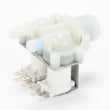
- Washer water inlet valve DC62-30314K (fill problems)
- Samsung washer drain pump assembly DC97-20621A (drain problems)
- Washer door boot DC64-03788A (door leaks, odor, tears)
- Samsung washer electronic control board (often higher cost than mechanical parts)
Why it matters
A front-load washer repair estimate is mostly a combination of diagnosis + labor access + part price. Knowing the symptom (NF no fill, ND no drain, door leak, vibration) helps us narrow the likely parts and avoid replacing the wrong component.
Last updated: February 2026