



How do I find the right MTD part?
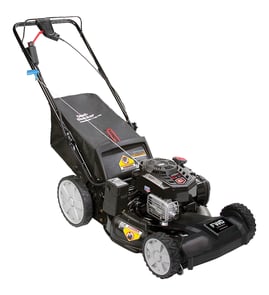
For your MTD 11A-A2SD791 gas lawn mower, the most reliable way to get the right part is to match the exact model number from the product ID label, then use the parts diagrams for that model to confirm the part name and reference location before ordering.
Where to find the model and ID information
On walk-behind mowers like the MTD 11A-A2SD791, the product identification label is commonly found on the deck housing (often near the rear), around the handle mounting area, or near the rear discharge area.
Use these tips:
- Write down the full model number exactly as shown: 11A-A2SD791
- Record the serial number too (helps confirm production run)
- Clean the label area so every character is readable
- If the label is damaged, look for stamped numbers on the deck (when present)
How we recommend confirming the correct part
Even within the same model family, parts can vary by production run. We recommend confirming by diagram callout and description, not by appearance alone.
Checklist before you buy:
- Match the model number to 11A-A2SD791
- Use the diagram callout number to identify the component
- Compare mounting points, openings, and attachment style
- If the part is soft goods (bag, belt), confirm size and style by listing details
Example: common replacement on this model
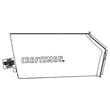
If you are replacing the catcher, use the model-matched listing for the exact bag assembly: lawn mower grass bag 664P05321A.
When the engine model number matters
Some items are tied to the engine, not the mower chassis. For engine-specific parts (for example: carburetor, air filter, spark plug, fuel cap), use the engine’s model/type code from the engine label in addition to the mower model 11A-A2SD791.
| Part type | Usually matched to | Why it matters |
|---|---|---|
| Deck and handle parts | Mower model (11A-A2SD791) | Fit and mounting points vary |
| Grass bag and chute parts | Mower model (11A-A2SD791) | Bag frame and hooks must match |
| Carburetor and filters | Engine model/type | Engine families use different specs |
Why it matters
Using the exact model number and diagram callout helps prevent returns and downtime; the right fit means proper bagging, safe operation, and correct clearances around the blade and deck.
Last updated: January 2026
How old is my mower by serial number?
For an MTD walk-behind mower model 11A-A2SD791, the mower’s age is determined from the serial number date code, not the model number. The exact format can vary by production run, so we use the serial tag’s character pattern to identify the year (and often week) of manufacture.
Where to find the serial number on model 11A-A2SD791
Look for a product ID tag on the mower deck or rear housing. Common locations include:
- Top of the deck near the engine mounting area
- Rear discharge door area (if equipped)
- Rear frame/housing near the handle brackets
- A label near the wheel height adjuster area
If the mower tag is missing or unreadable, the engine may also have its own separate code, but that date applies to the engine, not always the mower assembly.
How to decode the serial number (MTD basics)
MTD serial formats vary, but many MTD-built products use a serial pattern where one character indicates the model year (often as the last digit of the year) and other characters indicate the production week or day.
Use this quick approach:
- Write down the full serial number exactly as shown
- Identify any obvious date-style blocks (week/year patterns)
- If a single digit appears to represent the year, confirm it by checking the mower’s approximate era (design, engine family, decals)
- Cross-check with the engine code date if you need a “not earlier than” reference point
Quick reference table (how to interpret what you find)
| What you see on the tag | What it usually means | What you can conclude |
|---|---|---|
| A week + year style code | Production week and year | Approximate build date |
| A single “year digit” in the serial | Last digit of the year | Narrow to a decade using context |
| Engine date code only | Engine manufacture date | Mower is same date or newer |
Why it matters
Knowing the manufacture year helps us match the correct MTD parts and revisions (like deck hardware, wheels, or bagging components) so you avoid ordering a look-alike part that does not fit.
Related part you may replace by age/wear
If you are refreshing bagging performance as the mower ages, the compatible lawn mower grass bag 664P05321A is one of the common wear items to check for tears, weak seams, or a stretched mounting edge.
Last updated: January 2026
Is it cheaper to repair or replace a lawn mower?
For an MTD gas walk-behind mower model 11A-A2SD791, it’s usually cheaper to repair when the fix is routine and the total cost stays under about half the price of a comparable new mower. Replacement makes more sense when you’re facing major engine or drive-system failure, or repeated breakdowns.
A practical cost rule we use
If the repair estimate (parts + labor) is under 50% of what you’d pay for a similar new walk-behind mower, repairing is typically the better value.
Repairs that are usually worth it
- Blade sharpening or replacement
- Oil change, spark plug, air filter service
- Carburetor cleaning (especially after stale fuel)
- Cable adjustments (drive or blade control)
- Bagging issues caused by a worn or torn grass bag
If your mower is bagging poorly or the bag is damaged, replacing the bag is often a low-cost fix; see the compatible lawn mower grass bag 664P05321A.
When replacement is usually the better call
- Engine has low compression, heavy smoking, or internal damage
- Self-propel/drive system repair is extensive and recurring
- Deck is severely rusted through or cracked
- Multiple major issues stack up in the same season
Quick decision table
| Situation | Usually best choice | Why |
|---|---|---|
| Basic maintenance or one small failure | Repair | Lowest cost, restores performance fast |
| One moderate repair on an otherwise solid mower | Repair | Extends life for less than buying new |
| Major engine or drive failure | Replace | Repair cost can approach new mower value |
| Frequent repeat repairs year after year | Replace | Downtime and cumulative cost add up |
Why it matters
A walk-behind mower’s value is tied to reliable starting, consistent cutting, and safe blade control. Spending strategically on maintenance parts can keep your MTD 11A-A2SD791 cutting well, but big drivetrain or engine repairs can quickly exceed the mower’s practical value.
Last updated: January 2026
Should I use 87 or 91 gas for lawn mower?
For the MTD 11A-A2SD791 gas walk-behind mower, we recommend using 87-octane (regular) unleaded gasoline in normal conditions. Higher octane (like 91) is not “better” for most small mower engines; what matters more is fresh, clean fuel and the correct ethanol content.
What to use (and what to avoid)
- Use: 87-octane unleaded gasoline.
- Prefer: Fresh fuel (ideally used within 30 days).
- If available: Ethanol-free gas is a good choice for storage and fewer fuel-system issues.
- Avoid: Old gas, contaminated gas, or fuel with more than 10% ethanol (E15/E85).
- Do not mix: Gasoline and oil unless your mower is specifically a 2-cycle engine (most walk-behind mowers are 4-cycle).
Quick comparison
| Fuel choice | OK for MTD 11A-A2SD791? | When it makes sense |
|---|---|---|
| 87 octane (regular) | Yes | Everyday mowing, best default |
| 91 octane (premium) | Usually yes | Only if it is the freshest option or ethanol-free |
| E15 / E85 | No | Can cause hard starting and fuel-system damage |
Why it matters
Using the right fuel helps prevent hard starting, surging, and carburetor varnish. Octane mainly relates to knock resistance; most mower engines are designed to run correctly on regular 87, so fuel freshness and ethanol level typically have a bigger impact on reliability.
Helpful maintenance tip
If you store the mower between seasons, run the engine dry (or treat the fuel with stabilizer) to reduce carburetor and jet clogging. If you are also replacing worn collection components, match parts to this model, such as the lawn mower grass bag 664P05321A.
Last updated: January 2026