Owner’s manual

Are all table saw arbor nuts the same size?
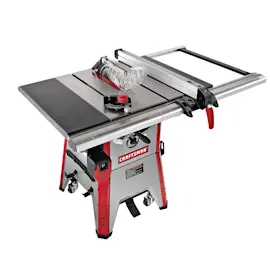
No. Table saw arbor nuts are not all the same size because arbor shaft diameters and thread patterns vary by saw design. On the Craftsman 12458833 10-inch table saw, the manual specifies using a 24 mm open-end wrench for blade installation, which tells you the nut size is model-specific. See the owner's manual for the exact blade-change procedure and tool callouts.
What is standardized (and what is not)
Some blade-related dimensions are common across many saws, but the arbor nut itself is not universal.
- Blade arbor hole size is often standardized by blade diameter (many 10-inch blades use a 5/8-inch arbor hole).
- Arbor nut wrench size varies by manufacturer and model.
- Arbor thread direction can vary (some saws use left-hand threads to resist loosening).
- Flange and washer stack-up can differ, which changes what nut fits correctly.
- Arbor lock style (pin, button, lever) affects how you remove and tighten the nut.
What we know for Craftsman 12458833
Your Craftsman 12458833 manual calls out the tools and steps for removing and tightening the arbor nut.
| Item | What to use/do | Why it matters |
|---|---|---|
| Loosen/remove arbor nut | 24 mm open-end wrench with arbor lock engaged | Prevents rounding the nut and keeps the arbor from spinning |
| Tighten blade hardware | Follow the manual sequence (flange, nut, lock) | Keeps the blade clamped correctly and reduces vibration |
| Blade selection | Use a 10-inch blade with a 5/8-inch arbor hole and proper RPM rating | Ensures safe fit and safe operating speed |
Why it matters
Using the wrong arbor nut (wrong thread, wrong thickness, or wrong wrench size) can prevent the blade flange from clamping the blade correctly. That can lead to blade wobble, poor cut quality, and unsafe operation.
Quick safety checks when changing blades
- Unplug the saw before servicing.
- Engage the arbor lock fully before loosening the nut.
- Confirm the blade teeth face the correct direction (toward the front of the saw per the manual).
- Make sure the flange is seated flat before tightening.
- Reinstall the table insert and guards before cutting.
Last updated: February 2026
Can you use an 8 inch blade on a 10 inch table saw?
Yes. On the Craftsman 12458833 10-inch table saw, you can use an 8-inch blade as long as it fits the arbor and is rated for the saw’s operating speed; you must never install a cutting tool larger than 10 inches on this model. See the 12458833 owner's manual for blade requirements and safe setup.
What matters for blade compatibility
- Diameter limit: This saw is designed for a maximum 10-inch blade.
- Arbor hole size: Use blades with a 5/8-inch arbor hole (the manual specifies this for 10-inch blades; most 8-inch blades made for table saws also use 5/8-inch).
- Speed rating: Use only blades rated at or above the saw’s required RPM (the manual warns against blades marked for operating speed less than 4000 RPM).
- Kerf vs. riving knife: Choose a blade with a kerf wider than the riving knife thickness to prevent binding.
- Guarding: Keep the blade guard and anti-kickback features in place whenever the cut allows.
8-inch blade vs. 10-inch blade: what changes
Using a smaller blade is usually fine for non-through cuts or when you do not need full depth, but it reduces capacity.
| Item | 10-inch blade (designed size) | 8-inch blade (smaller) |
|---|---|---|
| Max depth of cut at 90° | Up to 3-1/8 in. | Less than 3-1/8 in. |
| Guard and riving knife alignment | Designed to match | May require extra attention to alignment and height settings |
| Best use | General ripping and crosscutting | Shallower cuts; some dado-style/non-through work (when properly equipped) |
Safe setup checklist before you cut
- Unplug the saw before changing blades.
- Install the blade, flange, and arbor nut correctly; tighten securely.
- Set blade height as low as practical for the cut.
- Confirm the blade clears the table insert and the insert sits flush.
- Verify the riving knife is locked in position and aligned.
Why it matters
Blade size affects cutting depth, guarding geometry, and kickback control. Staying within the 10-inch maximum and matching arbor size, RPM rating, and riving-knife kerf requirements keeps the saw cutting accurately and safely.
Last updated: February 2026
Does the 12458833 table saw accept dado blades?
Yes. The Craftsman 12458833 10-inch table saw is designed to make dado and rabbet cuts using a dado head (stacked dado set); use the correct dado table insert (not included) and follow the setup and safety steps in the Craftsman 12458833 owner's manual.
What to use (and what to change)
For model 12458833, dadoing is a non-through cut, so you must set the saw up specifically for a dado set.
- Use a stacked dado set intended for a 10-inch table saw
- Use the miter gauge or rip fence for guidance (never freehand)
- Install a dado table insert (standard insert will not support the wider cutter)
- Remove the blade guard for the dado cut
- Reinstall the standard blade, blade insert, and blade guard immediately after
Dado width and fit: what to verify
The key compatibility checks are arbor fit and clearance. Most 10-inch contractor-style saws use a 5/8-inch arbor, but always confirm your dado set matches your saw.
| Check | What to match | Why it matters |
|---|---|---|
| Arbor hole | Dado set arbor size to saw arbor | Prevents wobble and unsafe mounting |
| Insert opening | Dado insert sized for dado set | Supports the workpiece and reduces tear-out |
| Guard use | Guard removed for non-through cuts | Guard cannot be used during dadoing |
Safety steps we recommend every time
Because the guard is off during dadoing, controlling the workpiece is critical.
- Unplug the saw before changing blades or inserts
- Use featherboards and push sticks to keep hands away from the cutter
- Keep stock flat to the table and tight to the fence or miter gauge
- Use outfeed support for long boards to prevent tipping and binding
- Make test cuts in scrap to confirm width and depth before cutting your workpiece
Why it matters
Dado sets remove more material than a standard blade; the correct insert and work-holding accessories reduce kickback risk and improve cut quality when the blade guard is removed.
Last updated: February 2026
What size blade is a craftsman 12458833 table saw?
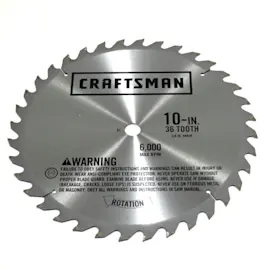
The Craftsman model 12458833 is a 10-inch table saw, and it is recommended for use with a 10-inch blade. For safe operation, match the blade’s arbor size and rated RPM to the saw’s specifications in the 12458833 owner's manual.
What to match when buying a replacement blade
A “10-inch blade” is the diameter; you still need to match a few key specs so the blade fits and runs safely.
- Diameter: 10 in.
- Arbor (center hole) size: match the saw’s arbor specification
- Kerf (blade thickness): use a kerf that works with the riving knife and guard
- Max RPM rating: blade rating must meet or exceed the saw’s no-load speed
- Tooth count: choose based on cut quality vs. speed (rip vs. crosscut)
Quick blade selection guide
| What you’re doing | Typical tooth count (10 in.) | What to expect |
|---|---|---|
| Fast ripping (with the grain) | 24T to 30T | Faster feed, rougher edge |
| General purpose | 40T to 50T | Balanced speed and finish |
| Fine crosscuts (across the grain) | 60T to 80T | Smoother edge, slower feed |
Why it matters
Using the correct 10-inch blade helps the guard and riving knife work properly, reduces binding and kickback risk, and protects the motor and arbor bearings from overload.
Last updated: February 2026