View engine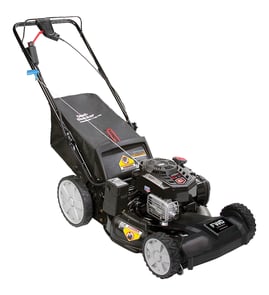




Should I use 87 or 91 gas for lawn mower?
For your MTD 11A-B25W791 gas lawn mower, we recommend using fresh 87-octane unleaded gasoline in most situations. Higher octane (like 91) does not add power in small mower engines and usually is not needed; the bigger priority is clean, fresh fuel and correct oil level.
- Use 87 octane unleaded gas for normal mowing.
- Use fresh fuel (older gas is a common cause of hard starting and surging).
- Avoid fuel that has been sitting in the can or tank for a long time.
- Avoid overfilling the tank; leave room for expansion.
- If your mower runs rough after storage, start with draining old fuel and refilling with fresh 87.
91 octane is fine to run, but it typically does not solve common mower problems by itself. If you are troubleshooting performance, focus on fuel quality and airflow first.
Common situations where higher octane is not the fix:
- Engine hunts or surges
- Engine starts then dies
- Loss of power in thick grass
| Fuel choice | Best use case | What you should expect |
|---|---|---|
| 87 octane | Everyday mowing | Normal performance when fuel is fresh |
| 91 octane | Acceptable substitute | Usually no noticeable improvement |
Most walk-behind mower engines are designed to run correctly on regular unleaded fuel. Using the right fuel helps prevent varnish buildup in the carburetor and reduces starting issues after storage.
If fresh 87 octane does not help, these parts often matter more than octane:
- Air filter (restricted airflow can cause rich running): filter 799579
- Fuel cap venting (a plugged vent can starve fuel): lawn mower fuel tank cap 596250
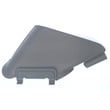
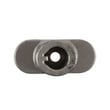
- Blade and adapter condition (drag and vibration can feel like “power loss”): MTD lawn mower blade adapter 748-0376E
Last updated: February 2026
What is the best self-propelled mower for the money?
If you want the best value in a self-propelled mower, we recommend choosing one that matches your yard size and terrain first (flat vs. hills), then comparing drive system, deck size, and battery or engine support. For owners of MTD model 11A-B25W791, the best “for the money” choice is the one you can keep running easily with readily available wear parts.
- Yard size: under 1/4 acre vs. larger lots
- Terrain: hills favor rear-wheel drive and higher traction tires
- Deck size: most walk-behind mowers are 21 inches; wider decks cut faster but weigh more
- Power type: gas (refuel fast) vs. battery (less routine maintenance)
- Serviceability: blade, wheels, and control cable availability
| Your situation | Best “for the money” direction | Why |
|---|---|---|
| Small, flat yard | Battery self-propelled | Lower routine maintenance, easy starts |
| Medium yard, mixed terrain | Gas self-propelled | Consistent power, quick refuel |
| Hilly yard | Gas or high-torque battery with RWD | Better traction and climbing |
| You mulch most of the time | Mulching-capable deck and correct blade | Cleaner cut, fewer clumps |
Keeping a mower cutting and driving correctly often costs less than replacing it. For the 11A-B25W791, these common wear items are worth checking first:
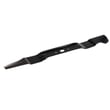
- Lawn mower 21-in deck xtreme mulching blade 742p0741-x (dull or bent blades reduce cut quality)
- MTD lawn mower blade adapter 748-0376E (worn adapter can cause vibration or poor blade engagement)
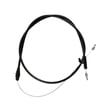
- MTD lawn mower zone control cable 946-04661A (stretched cable can affect blade control and safety shutoff)
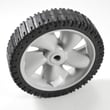
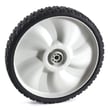
- Kmart lawn mower wheel 734-04562 (worn wheels reduce traction and make self-propel feel weaker)
A mower that is “best for the money” is the one that delivers a clean cut with minimal downtime. Matching the drive type to your terrain and staying ahead of blade and traction wear usually gives the biggest return.
Last updated: February 2026
How do I find the model number on my 11A-B25W791?
The model number on your MTD walk-behind mower is printed on the mower’s model-and-serial tag (a sticker or metal plate) mounted to the deck or rear housing. Match that tag to 11A-B25W791 so you get the correct diagrams and parts.
Check these common tag locations (clean off grass and dirt first):
- On top of the mower deck near the engine (often by the recoil starter area)
- On the rear of the deck near the discharge opening or rear door
- Near the rear wheel height-adjuster bracket
- Under the rear flap or near the grass bag mounting area
- Along the side of the deck, close to the handle mounting points
Record the full information exactly as shown on the tag:
- Model number (example: 11A-B25W791)
- Serial number
- Any “factory number” or “product number” listed
- Engine model and type (engine parts often use a separate engine ID)
MTD uses similar decks and handle controls across multiple mower versions. The exact model and serial range helps ensure parts like a blade, wheel, or control cable fit and route correctly.
| If the tag shows | Use it for |
|---|---|
| 11A-B25W791 | Mower deck, wheels, bagging parts, controls |
| Engine model/type/code | Engine-specific parts like filters and caps |
Once you confirm the tag matches 11A-B25W791, you can confidently shop by diagram for items such as:
- MTD lawn mower zone control cable 946-04661A (blade control safety cable)
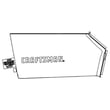
- Lawn mower grass bag 664P05322A (rear bagging collection)
- Filter 799579 (engine air filter)
Last updated: March 2026