Error Codes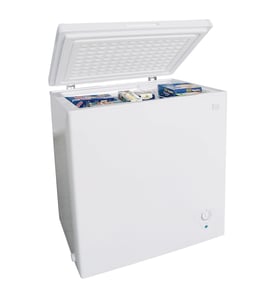



What is the average lifespan of a chest freezer?
A Kenmore chest freezer like model 2539133280 typically lasts 15 to 20 years with normal home use. Consistent temperatures, clean condenser airflow, and a good lid seal are the biggest factors that help a freezer reach the high end of that range.
What affects chest freezer lifespan most
- Heat and airflow: Hot garages and blocked airflow make the compressor run longer.
- Dirty condenser area: Dust buildup raises operating temperatures and wear.
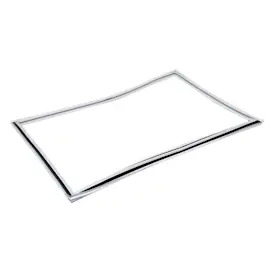
- Lid seal condition: A leaking gasket causes frost, longer run times, and temperature swings.
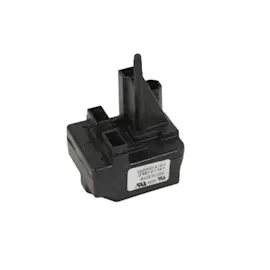
- Power quality: Frequent outages or low voltage can stress the start components.
- Usage habits: Overloading, frequent lid openings, and warm food loads increase run time.
Quick care checklist to help it last longer
- Keep the freezer level so the lid closes evenly.
- Leave a little space around the cabinet for air circulation.
- Defrost when frost buildup reaches about 1/4 inch.
- Keep the interior reasonably full (frozen jugs work) to stabilize temperature.
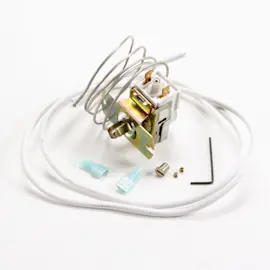
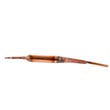
- If temperatures drift or it runs constantly, test the temperature control; the Thermostat 5304496560 is a common control part on this model.
Common “end-of-life” symptoms vs. fixable issues
| Symptom | Often fixable? | What it usually points to |
|---|---|---|
| Runs constantly, warm inside | Yes | Thermostat issue, airflow/dirty condenser, lid seal leak |
| Clicking, won’t start | Sometimes | Start components, wiring, capacitor |
| Heavy frost, lid hard to close | Yes | Lid seal leak, frequent openings, high humidity |
| Loud buzzing and poor cooling | Sometimes | Compressor strain, restricted airflow |
Why it matters
A chest freezer that runs longer than it should uses more electricity and can shorten compressor life. Catching airflow, frost, and temperature-control problems early helps protect food and extends the freezer’s service life.
Last updated: January 2026
How to find serial number on chest freezer?
On Kenmore chest freezer model 2539133280, the serial number is printed on the appliance ID plate (rating label). On many chest freezers, that label is most often on the back exterior panel or around the lid opening (rim) where the lid seals.
Where to look first (fastest checks)
- Back of the cabinet: scan the upper area of the rear panel for a white or silver ID plate.
- Lid opening (rim): look along the top edge of the cabinet, especially near a corner.
- Inside the lid: check the underside of the lid near the hinge side.
- Inside the cabinet wall: look on an inner side wall just below the top edge.
- Near the compressor compartment access area: some units place the label close to service access.
What the label looks like
Most ID plates include:
- Model number (for example, 2539133280)
- Serial number (a longer mix of letters and numbers)
- Electrical ratings (volts/amps)
- Refrigerant type and charge information
| What you need | What it’s used for | Tip |
|---|---|---|
| Model number | Ensures diagrams and parts match your freezer | Write it exactly as shown |
| Serial number | Helps confirm production series and compatible revisions | Take a clear photo |
Tips if the label is hard to read
- Wipe gently with a damp cloth; avoid harsh cleaners that can erase printing.
- Use your phone camera with flash, then zoom in.
- If the label is damaged, check for a second label on the back panel.
Why it matters
We use the serial number (along with the model number) to match the correct Kenmore parts and revisions, especially for electrical items like the thermostat 5304496560 or sealed-system components.
Last updated: January 2026
How can I tell what size my chest freezer is?
For Kenmore chest freezer model 2539133280, the most reliable way to tell “size” is to identify whether you mean capacity (cubic feet) or outside dimensions; capacity is usually listed on the model/serial tag, while dimensions are measured with a tape measure.
Step 1: Check the model and rating label
On most Kenmore chest freezers, the model/serial tag is inside the cabinet (often on an inner wall) or on the back. It commonly lists the capacity in cu. ft. along with electrical ratings.
- Unplug the freezer for safety before reaching inside tight areas
- Look for wording like “Capacity” or “cu. ft.”
- Write down the full model number (2539133280) and any capacity value
- If the label is missing or unreadable, use the model number to match parts and diagrams
Helpful reference: how to find your appliance model number (and what it means for parts)
Step 2: Measure the outside dimensions (physical size)
If you need to know whether it will fit in a space, measure the exterior.
- Width: left to right across the front
- Depth: front to back (include the lid overhang and hinges if they stick out)
- Height: floor to top of the lid (measure with the lid closed)
| What you need | What to use | What you get |
|---|---|---|
| Storage “size” | Rating label | Capacity (cubic feet) |
| Fit in a space | Tape measure | Width, depth, height |
Why it matters
Capacity tells you how much food the freezer can hold; dimensions tell you if it will fit through doorways, into a garage corner, or under shelving. Knowing both also helps when ordering accessories like a handle or latch.
If you are comparing to common chest freezer sizes
Most chest freezers are grouped roughly like this:
- Small: about 5 to 9 cu. ft.
- Medium: about 10 to 16 cu. ft.
- Large: about 17 to 25+ cu. ft.
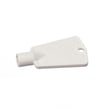
If your lid does not close securely while you are measuring or checking the label, inspect the latch (almond) 5303209634 and handle (almond) 216204801 for damage or looseness.
Last updated: January 2026
What are the common chest freezer problems?
Common problems on the Kenmore 2539133280 chest freezer include not freezing or warming up, heavy frost buildup, water on the floor, unusual noises, and a lid that will not seal or latch. Most issues trace back to airflow, temperature control, power supply, or a sealing problem.
Quick checks we recommend first
- Confirm the freezer is plugged in firmly and the outlet has power.
- Make sure the temperature control is set colder and give it 24 hours to stabilize.
- Verify the lid closes fully and the latch pulls the lid down evenly.
- Avoid overpacking; leave space for cold air circulation.
- Clean dust from the condenser area if accessible.
Symptom-to-cause guide
| Symptom | Most common causes | What to do next |
|---|---|---|
| Freezer not running | No power, damaged cord, control issue | Check outlet and cord; inspect freezer power cord 216089500 for damage |
| Runs but not cold enough | Warm room, overloading, thermostat out of range, sealed-system issue | Reduce load, improve airflow; consider testing thermostat 5304496560 |
| Heavy frost or ice | Lid not sealing, frequent openings, humid air | Check lid alignment and closing force; inspect latch/handle |
| Clicking or humming then stops | Start components, compressor strain | Unplug and let it rest; if it repeats, service may be needed |
| Lid will not stay shut | Worn/broken latch or handle | Replace latch (almond) 5303209634 or handle (almond) 216204801 if cracked or loose |
Parts that commonly solve these problems
If your symptoms match, these model-compatible parts are often involved:
- Thermostat 5304496560: regulates cabinet temperature; a bad control can cause warming or nonstop running.
- Freezer power cord 216089500: fixes intermittent power, heat damage at the plug, or a loose connection.
- Latch (almond) 5303209634 and handle (almond) 216204801: help the lid seal consistently to reduce frost and temperature swings.
- Filter 5303305677: a sealed-system service part used during refrigerant work.
Why it matters
Chest freezers hold temperature best when the lid seals tightly and airflow is not blocked. Small issues like a weak latch or incorrect thermostat setting can lead to thawing, excess frost, higher energy use, and food quality problems.
Last updated: January 2026