Owner’s manual
 Error Codes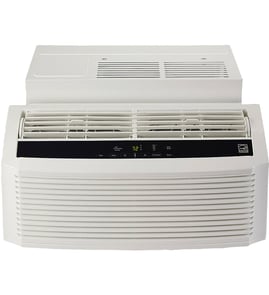




How many square feet will a 15000 BTU window air conditioner cool?
A 15,000 BTU window air conditioner typically cools about 700 square feet in a room with standard 8-foot ceilings and average insulation. For your LG LW1517IVSM, confirm the exact “estimated cooling area” and capacity details in the LW1517IVSM owner's manual.
Typical coverage for 15,000 BTU (what to expect)
Most 15,000 BTU window units are sized for medium to large rooms; real-world results change with heat load and airflow.
- Standard bedroom or living room with average insulation: around 700 sq. ft.
- Strong sun exposure or lots of air leaks: plan for less coverage
- Excellent insulation and good shading: performance feels stronger
- Open floor plans: cooling may be uneven without good air circulation
What changes the square footage most
These factors have the biggest impact on whether a 15,000 BTU unit reaches its rated coverage:
- Sun exposure (west-facing windows and afternoon sun add heat)
- Insulation and air leaks (drafty windows and doors reduce cooling)
- Ceiling height (higher ceilings increase the air volume to cool)
- Occupancy and appliances (people, cooking, and electronics add heat)
- Installation and clearance (restricted outside airflow reduces efficiency)
Quick sizing reference
| Room size | 15,000 BTU result | Recommendation |
|---|---|---|
| 500 to 650 sq. ft. | Fast pull-down | Good fit |
| Around 700 sq. ft. | Designed target | Best match |
| 750+ sq. ft. | Longer run times, warm spots | Consider a larger capacity or supplemental cooling |
Why it matters
Sizing a window air conditioner correctly prevents constant running, icing, and uneven temperatures. Proper installation and keeping airflow clear also protects the compressor and helps the unit hit its rated performance.
Last updated: February 2026
What is the common problem of an LG air conditioner?
The most common problems we see with the LG LW1517IVSM room air conditioner are reduced cooling from restricted airflow (dirty filter or blocked front grille), water dripping indoors from incorrect tilt, and “won’t start” issues caused by power interruptions or a tripped reset on the cord. See the LW1517IVSM owner's manual for model-specific troubleshooting steps.
Most common symptoms and what they usually mean
- Not cooling well: airflow restricted by a dirty filter or blocked front of the unit
- Turns on and off rapidly: dirty air filter restricting airflow
- Water dripping indoors: unit not tilted slightly to the outside for proper drainage
- Won’t start: unplugged cord, tripped breaker, blown fuse, or the cord’s reset device tripped
- Noise during cooling: normal air movement sound, or vibration from poor installation
Quick checks you can do first (no tools)
- Make sure curtains, blinds, or furniture are not blocking the front airflow.
- Clean the air filter and reinstall it fully.
- Confirm the unit is plugged in firmly; reset the house breaker if needed.
- Press RESET on the power cord plug if the interrupter device tripped.
- If there was a power outage, wait 3 minutes before restarting to protect the compressor.
- If water drips indoors, recheck that the cabinet slants slightly to the outside.
Normal vs. problem noises (LG LW1517IVSM)
| Sound | Usually means | Action |
|---|---|---|
| Gurgle or hiss | Refrigerant moving during normal operation | No repair needed |
| Pinging or swishing | Water droplets hitting the condenser | No repair needed |
| Vibration/rattling | Installation or window structure issue | Re-seat and secure the unit |
Why it matters
Restricted airflow and poor installation are the two biggest causes of comfort complaints. Fixing those first improves cooling performance, reduces nuisance shutoffs, and helps prevent icing and indoor leaks.
If you’re troubleshooting a display code, use our LG error codes reference to match the code to the right fix.
Last updated: February 2026
What is the life expectancy of an LG AC?
Most LG room air conditioners like model LW1517IVSM last about 10 to 15 years with normal seasonal use and basic maintenance. Keeping airflow unrestricted and cleaning the filter and coils on schedule is what most directly extends service life (and helps the unit cool efficiently).
Typical lifespan (what to expect)
A window (room) air conditioner’s lifespan depends mostly on runtime hours, maintenance, and installation quality.
- 10 to 15 years: typical life expectancy for a room air conditioner
- Shorter life: heavy daily use, dirty coils, restricted airflow, poor window sealing
- Longer life: clean filter, clean coils, correct tilt/drain, stable power supply
For model-specific care steps and cleaning intervals, follow the LW1517IVSM owner’s manual.
Maintenance that adds years
From the LG manual, routine cleaning matters, including checking and cleaning the outdoor condenser coils when they get dirty.
- Clean and reinstall the air filter regularly (a clogged filter strains the fan and compressor)
- Wipe the front grille and inlet grille with a mild detergent solution
- Check the condenser coils (outside of unit) periodically; clean if clogged with dirt or soot
- Keep the rear of the unit clear outside (leaves, lint, dryer vent exhaust)
- Make sure the unit is installed level per the manual so it drains correctly
“Replace or repair?” quick guide
| What you’re seeing | Most common cause | Best next step |
|---|---|---|
| Runs but not cooling well | Dirty filter/coils, airflow blocked | Clean filter and coils; verify vents are open |
| Loud rattling or vibration | Fan blade damage, loose hardware | Inspect fan area; replace damaged fan parts |
| Intermittent cooling, odd temperature behavior | Sensor (thermistor) issue | Check wiring and sensor placement |
| Dead unit or random shutdowns | Power supply/cord, control issue | Verify outlet and cord; then control diagnostics |
If you’re troubleshooting an error display on an LG unit, use our LG error codes reference to match the code to the most likely fix.
Why it matters
A room air conditioner that is near end-of-life often still runs, but it cools less efficiently and costs more to operate. Regular cleaning and correcting airflow problems can prevent unnecessary strain on the fan motor, control board, and compressor.
Last updated: February 2026