


How to reset furnace ignitor?
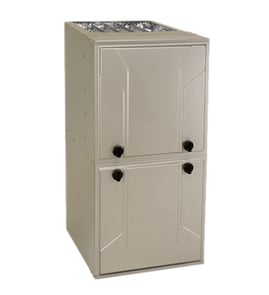
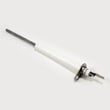
For your York P3URB12N07501B upflow natural gas furnace, there is no separate “ignitor reset” button on most systems; the practical reset is a control-board power cycle. Turn the thermostat to OFF, shut off furnace power, wait 60 seconds, restore power, then call for heat again.
Safe reset steps (power cycle)
- Set the thermostat to OFF.
- Turn OFF power to the furnace at the service switch or circuit breaker.
- Wait 60 seconds (this clears many ignition lockouts).
- Turn power ON.
- Set the thermostat to HEAT and raise the setpoint 3 to 5 degrees.
- Watch for a normal sequence: inducer starts, ignitor glows, gas valve opens, burners light.
If it still will not ignite
These checks help you narrow down whether the issue is the ignitor, airflow, or an electrical/control problem.
- Look for a diagnostic flash code on the control board (through the blower door sight glass if equipped).
- Confirm the furnace door switch is pressed; an open door switch prevents ignition.
- Replace the air filter if it is dirty; restricted airflow can trip limits and interrupt ignition.
- Inspect wiring at the ignitor and flame sensor for loose spade connectors or heat damage.
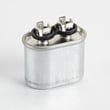
- Check the capacitor if the inducer motor or blower struggles to start; a weak run capacitor can cause failed starts and repeated lockouts (use the exact replacement listed for this model: capacitor 12907).
Quick symptom guide
| What you see | Most likely cause | What we recommend |
|---|---|---|
| Inducer runs, ignitor never glows | Ignitor circuit issue, open ignitor, wiring, control board | Inspect connectors; test with a meter; replace failed part |
| Ignitor glows, no flame | Gas supply/valve issue, pressure switch not proving | Verify gas is on; check venting and pressure switch tubing |
| Flame lights then shuts off in seconds | Dirty flame sensor, poor grounding | Clean flame sensor; verify tight ground connections |
Why it matters
Repeated ignition attempts can put the furnace into safety lockout, leaving you without heat and masking the original cause (ignitor, pressure switch, flame sensing, or a motor start problem).
Last updated: February 2026
What does a solid red light on my furnace mean?
A solid red light on a York P3URB12N07501B upflow natural gas furnace usually means the control board is reporting a fault or the furnace is in a safety-related shutdown (lockout). The exact meaning depends on the LED pattern and any label on the blower door, but common causes include ignition or airflow problems.
What to check first (safe, quick steps)
- Set the thermostat to OFF, then back to HEAT; listen for the normal start sequence (inducer, igniter, flame, blower).
- Check the air filter; replace it if it is dirty or collapsed.
- Make sure supply registers are open and return grilles are not blocked.
- Verify the furnace switch is ON and the breaker is not tripped.
- If you have PVC venting, confirm the intake/exhaust pipes are not blocked by debris, snow, or nests.
What a “solid red” light commonly points to
On many York-style control boards, a steady LED often indicates one of these situations:
- The furnace has power and is in a normal standby state (waiting for a heat call).
- The furnace has entered a lockout after repeated failed ignition attempts.
- A safety circuit issue is preventing heat (limit switch, rollout switch, pressure switch, or flame-sensing problem).
A simple troubleshooting path
- Reset power: Turn the furnace power OFF for 60 seconds, then ON.
- Try one heat call: If it lights and then shuts down, suspect airflow or flame-sensing.
- If the blower runs but no heat: Check filter, vents, and overheating symptoms.
- If the inducer runs but no ignition: Pressure switch/venting or ignition components are common.
When a part is a likely suspect
A weak blower motor circuit can contribute to overheating and limit trips. If your furnace uses a run capacitor for the blower motor, a failing capacitor can cause slow starts or overheating.
| Symptom | What you may notice | Common next step |
|---|---|---|
| Short cycling on high limit | Hot cabinet, frequent shutdowns | Fix airflow first; then test limit circuit |
| No steady blower speed | Hums, slow ramp-up | Test/replace run capacitor |
| Repeated ignition attempts | Clicking, no flame | Clean flame sensor; check gas/ignition system |
If testing shows the capacitor is weak or open, replace it with the correct match for your model: capacitor 12907.
Why it matters
That red light is the furnace protecting you and the equipment. Addressing airflow (filter, vents, blower performance) and ignition reliability prevents repeated lockouts, nuisance shutdowns, and heat loss.
Last updated: February 2026
What causes a furnace pressure switch to trip?
A pressure switch on your York P3URB12N07501B upflow natural gas furnace trips when the inducer system cannot prove proper draft (negative pressure). The most common causes are venting restrictions, condensate drainage problems (on condensing setups), inducer or tubing issues, or a failing pressure switch.
Common causes to check first
- Blocked intake or exhaust vent (snow, ice, leaves, bird nests, sagging pipe, loose joints)
- Water in the pressure switch hose, cracked hose, or a clogged port at the inducer housing
- Condensate drain or trap backing up (water safety condition that prevents draft proving)
- Weak or failing inducer motor or inducer wheel obstruction
- Pressure switch contacts sticking, out of calibration, or intermittently opening
- Burner/heat exchanger draft problems caused by restricted airflow through the furnace cabinet
Safe troubleshooting steps (what we recommend)
- Turn off power to the furnace at the switch or breaker.
- Inspect the vent termination outside; clear any visible blockage.
- Check the pressure switch tubing for kinks, splits, or water; make sure it is firmly connected.
- Look for signs of water around the inducer or drain lines; clear obvious clogs.
- If you have a meter, test the switch and related circuit wiring using a proven method; our guide on how to use a multimeter to test electrical parts video helps.
Quick symptom-to-cause guide
| What you notice | Most likely cause | What to do next |
|---|---|---|
| Furnace starts, inducer runs, then shuts down quickly | Vent restriction or blocked pressure port | Check venting and the inducer pressure port |
| Works on mild days, fails on very cold/windy days | Vent icing, termination location, marginal inducer | Clear ice, verify vent slope and termination |
| You hear water sloshing in tubing | Condensate issue or low spot in hose | Drain/replace tubing, correct routing |
| Inducer is noisy or slow to start | Inducer motor/wheel problem | Inspect inducer assembly and wiring |
Why it matters
The pressure switch is a safety device; it prevents the furnace from firing when combustion gases cannot be vented correctly. Repeated trips are a sign to correct the draft, venting, or condensate condition before replacing parts.
Parts that can be involved
If testing shows the inducer circuit is struggling to start or stay running, a weak run capacitor can contribute on some furnace motor designs. For this model, we list a capacitor 12907 (part number 024-20045-700) as an available replacement part.
Last updated: February 2026
Why won't my York furnace ignite?
If your York P3URB12N07501B upflow natural gas furnace will not ignite, the usual causes are a thermostat or power issue, a safety switch stopping the cycle, a dirty flame sensor, a failed igniter, or a gas shutoff problem. Start with simple, safe checks first.
Quick checks we recommend first
- Set thermostat to HEAT and raise the setpoint above room temperature.
- Confirm the furnace service switch is ON and the breaker is not tripped.
- Make sure the blower door/panel is fully seated (door switch must close).
- Verify the gas shutoff valve at the furnace is open (handle parallel to the pipe).
- If the furnace has a resettable switch (rollout or limit), reset only once after it cools.
Use the ignition sequence to pinpoint the failure
Watch and listen to identify where it stops.
| What you observe | Most likely cause | What to do next |
|---|---|---|
| Inducer never starts | Power, door switch, control/safety circuit | Recheck power, door fit, wiring connections |
| Inducer runs then stops | Pressure switch, venting restriction | Check intake/exhaust for blockage |
| Igniter never glows/sparks | Igniter, wiring, control board | Inspect igniter and connectors for damage |
| Lights then shuts off fast | Flame sensor, grounding | Clean flame sensor; verify tight ground |
Common fixes and parts to consider
- Clean the flame sensor with a non-abrasive pad; reinstall firmly.
- Inspect the igniter for cracks or white spots; replace if damaged.
- Check for loose spade terminals or heat-damaged wires.
- If a motor hums or struggles to start, a weak run capacitor can prevent proper airflow and trip safeties; see capacitor 12907.
Why it matters
Ignition failures often mean a safety device is preventing unsafe operation. Finding the exact step where the start-up sequence stops helps avoid replacing the wrong part.
Last updated: February 2026