
Are 110 stick welders any good?
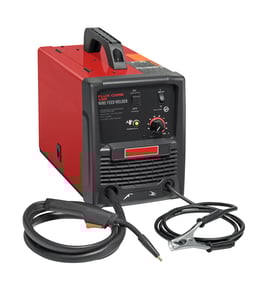
Yes. A 110V stick welder like the Century 110-104 100-amp welder is a good choice for light repairs and DIY welding on mild steel when you use the right electrode and keep expectations realistic (short welds, clean metal, and proper amperage).
What a 110V stick welder does well
- Runs on standard household power (convenient for garages and job sites)
- Handles basic maintenance and repair welding on mild steel
- Works well with smaller electrodes (commonly 1/16-inch and 3/32-inch)
- Portable compared to many 230V welders
- Great for learning fundamentals like arc length and travel speed
Where 110V stick welders struggle
110V machines are limited by input power, so they bog down sooner on thicker metal and long beads.
- Thick material (typically over about 1/8-inch without special prep)
- Long continuous welds (duty cycle limits can force cool-down time)
- Rusty, painted, or oily steel (stick can handle some contamination, but 110V output is less forgiving)
- Low household circuits (shared 15A circuits can cause nuisance trips)
Quick setup tips for better results
- Use a dedicated outlet and avoid long, undersized extension cords
- Clean to bright metal at the weld area; grind off paint and rust
- Start with smaller rods and match amperage to rod size
- Tack first, then stitch weld to control heat and avoid burn-through
- If the arc is unstable, check your ground clamp contact and cable condition
Typical capability snapshot
| Task | 110V stick welder performance | Best approach |
|---|---|---|
| Thin sheet metal | Fair | Short tacks, low amps |
| 1/8-inch mild steel | Good | Multiple passes if needed |
| 3/16-inch and thicker | Limited | Bevel edges, multiple passes, slower pace |
Why it matters
Choosing a 110V stick welder is about matching the tool to the job. For home repairs, brackets, small frames, and general maintenance, the Century 110-104 is a practical, cost-effective option. For frequent heavy fabrication, a higher-output welder is the better fit.
For safe electrical troubleshooting on a welder (power cord, switch, connections), we use the same basics shown in how to use a multimeter to test electrical parts video.
Last updated: February 2026
How thick can you weld with a 110V welder?
With a 110V welder like the Century 110-104 (100-amp), we typically see best results on mild steel up to about 1/8 inch (3 mm) in a single pass. With excellent fit-up and technique, you can weld thicker material (up to about 1/4 inch (6 mm)) using beveling and multiple passes, but it is better suited to non-critical work.
What to expect by thickness
- Up to 1/8 inch (3 mm): Most consistent penetration and bead profile
- 1/8 to 3/16 inch (3 to 5 mm): Often needs slower travel, tighter joint fit-up, and multiple passes
- Around 1/4 inch (6 mm): Usually requires beveling, multiple passes, and careful heat control
- Over 1/4 inch (6 mm): A higher-output machine is the practical choice for reliable fusion
Setup tips that make a 110V welder work better
- Use a dedicated circuit when possible; avoid long, undersized extension cords
- Prep the joint: clean to bare metal, remove paint, rust, and mill scale
- For thicker stock, bevel the edges and leave a small root gap for better penetration
- Make multiple passes instead of trying to “burn in” all at once
- Match consumables to the job (wire/rod type and diameter) and keep a steady stickout and travel speed
Quick guide: thickness vs. prep
| Steel thickness | Typical approach on a 110V / 100-amp class welder | Best use case |
|---|---|---|
| 16 ga to 1/8 in | Single pass, minimal prep | Brackets, light repairs |
| 1/8 to 3/16 in | 2+ passes, tight fit-up | Frames, heavier brackets |
| ~1/4 in | Bevel + multiple passes | Non-structural projects |
Why it matters
Welding thickness is really about heat input and penetration. On 110V machines, your available amperage and duty cycle limit how much heat you can put into the joint before the arc gets unstable or the welder overheats. Good joint prep and multiple passes let you build strength without forcing the machine.
Helpful DIY reference
For electrical checks that affect arc stability (power cord, connections, internal wiring), use our guide: how to use a multimeter to test electrical parts video.
Last updated: February 2026
Is a 110 welder powerful enough for home projects?
Yes. A Century 110-104 100-amp welder is powerful enough for many common home projects, especially light fabrication and repairs on mild steel. For best results, match the process and wire/rod size to the metal thickness and keep expectations realistic on thicker material.
What you can realistically weld at home
Most 110V-class welders like the Century 110-104 handle typical DIY tasks well when the joint is prepped and you use multiple passes as needed.
- Sheet metal to about 1/8 in. is a strong fit for most setups (auto panels, brackets, light frames)
- Up to about 3/16 in. is often doable with good technique (beveling, tight fit-up, multiple passes)
- 1/4 in. and thicker usually needs 240V power, higher output, or specialized prep and process control
- Clean metal, tight joints, and correct polarity matter as much as amperage
- Wind and cold metal can reduce penetration, especially outdoors
Setup tips that make a 110V welder work better
- Use the correct input circuit (dedicated outlet, proper extension cord gauge, avoid long cords)
- Prep the joint: remove paint, rust, oil; grind to bright metal
- For thicker joints, bevel edges and plan on multiple passes
- Practice on scrap of the same thickness before welding the project
- If the arc feels weak, reduce wire speed (MIG) or shorten stick-out and slow travel speed
Quick thickness guide (typical results)
| Material thickness | Typical 110V outcome | Best approach |
|---|---|---|
| 22 ga to 16 ga | Excellent | Short stitches, avoid burn-through |
| 1/8 in. | Very good | Single pass or light multi-pass |
| 3/16 in. | Good with prep | Bevel, tight fit-up, multi-pass |
| 1/4 in.+ | Limited | Consider 240V machine or redesign joint |
Why it matters
Choosing a welder that matches your metal thickness helps you get proper penetration and strength. When a 110V welder is pushed too far, the weld can look fine but lack fusion, which is where failures happen.
For electrical troubleshooting that affects output (blown fuse, damaged cord, loose connections), use our DIY guide how to tell if a fuse is blown.
Last updated: February 2026
Is a 110 welder suitable for beginners?
Yes. A 110V welder like the Century 110-104 100-amp welder is a solid beginner-friendly choice for light repairs and practice because it runs on standard household power and is easier to set up than many 220V machines. It is best for thinner metal and shorter welds.
What a beginner can realistically do with a 110V welder
- Practice basic beads on mild steel (flat and horizontal positions)
- Weld thin-gauge steel with fewer burn-through issues when settings are correct
- Handle small home and hobby repairs (brackets, lawn equipment, light frames)
- Learn fundamentals: travel speed, stick-out, and puddle control
- Build confidence before moving up to higher-amperage equipment
What to watch out for (common beginner pain points)
- Limited output: thicker steel often needs multiple passes or beveling
- Duty cycle limits: you may need cool-down time during longer welds
- Household circuits: shared loads can trip breakers during welding
- Extension cords: long or undersized cords cause voltage drop and weak arcs
- Fit-up matters more: gaps and dirty metal make welding harder at lower amperage
Quick suitability guide
| Task | 110V welder fit | Notes |
|---|---|---|
| Thin steel (sheet metal to light brackets) | Good | Use clean metal and steady travel speed |
| General home repairs | Good | Keep expectations to light-duty work |
| Thick steel (heavy structural) | Limited | Prep joints; consider multi-pass |
| Long continuous welds | Limited | Duty cycle becomes the bottleneck |
Why it matters
Beginners learn faster when the machine setup is simple and predictable. A 110V unit reduces the barrier to entry (power, portability, and setup), so you can focus on technique, safety gear, and consistent practice.
Helpful DIY reference
For safe troubleshooting habits when a welder has power issues (tripping breakers, weak arc, intermittent output), we use the same electrical testing basics covered in how to use a multimeter to test electrical parts video.
Last updated: February 2026