 Owner’s manual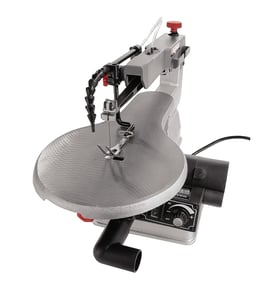
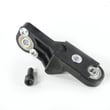
Are all scroll saw blades universal?
No. Scroll saw blades are not universal because scroll saws use different blade-end styles and sizes. Your Craftsman 137216010 scroll saw is designed to use 5-inch pin-end or 5-inch plain-end blades, so you need blades that match those ends and that length (see the 137216010 owner's manual).
What “fits” on the Craftsman 137216010
This model accepts two common blade attachment styles:
- Pin-end blades (5-inch): quick to install; common for general cutting.
- Plain-end blades (5-inch): better for fine, intricate work; takes a bit longer to clamp and tension.
- Teeth direction matters: install the blade with the teeth pointing downward to prevent the workpiece from being pulled up.
How to choose the right blade (not just the right fit)
Even when the blade fits your saw, the cut quality depends on matching the blade to the material and the pattern.
- Use narrower blades for tight curves and intricate scroll work.
- Use wider blades for straighter cuts and larger curves.
- Choose teeth per inch (TPI) based on material and detail level; higher TPI is typically smoother but slower.
- Slow the variable speed down for harder or thicker materials so teeth can clear the kerf.
- Expect blades to dull; many scroll saw blades stay sharp for about 1/2 to 2 hours of cutting.
Quick compatibility checklist
| What to check | What you want for this model | Why it matters |
|---|---|---|
| Blade length | 5-inch | Prevents clamp and tensioning problems |
| Blade end type | Pin-end or plain-end | Must match the blade holders |
| Teeth direction | Downward | Improves control and reduces lifting |
| Width/TPI | Match to curves and material | Cleaner cuts, less breakage |
Why it matters
Using the wrong blade style or size can cause poor tension, blade breakage, rough cuts, and extra vibration. Using the correct 5-inch pin-end or plain-end blade lets your Craftsman scroll saw cut efficiently and more accurately.
For replacement parts and diagrams for your Craftsman 137216010, start with the parts list for this model or search by model number on Sears PartsDirect.
Last updated: February 2026
Should I get pinless or pinned scroll saw blades?
For the Craftsman 137216010 scroll saw, we recommend pinless (plain-end) blades for most projects because they’re best for fine, accurate, intricate cuts, especially in 3/4-inch or thinner material. This saw also accepts pinned (pin-end) blades, which work well for simpler cuts.
What your Craftsman 137216010 accepts
Your saw is designed to use 5-inch blades in either style:
- Plain-end (pinless) blades: best for detailed fretwork and tight curves
- Pin-end (pinned) blades: convenient and quick to install on many setups
- The saw’s built-in blade storage can hold both pin-end and plain-end blades
For blade installation, tensioning, and correct tooth direction, use the steps in the owner's manual.
How to choose between pinless and pinned
Choose based on the kind of cutting you do most often:
- Pick pinless (plain-end) for intricate patterns, small inside cuts, and cleaner detail work
- Pick pinned (pin-end) for basic shapes, practice cuts, and faster blade changes
- Use very fine, narrow blades for thin wood (around 1/4 inch or less)
- Use wider blades for thicker stock, knowing tight curves become harder
- For best results, plan on replacing blades often; dull teeth cause burning and wandering cuts
Quick comparison
| Blade type | Best for | Tradeoff |
|---|---|---|
| Pinless (plain-end) | Fine, accurate, intricate work; tight curves | Takes a bit longer to clamp and tension |
| Pinned (pin-end) | General cutting; quick changes | Less ideal for very fine detail work |
Setup tips that matter (either blade type)
Good blade choice only helps if the setup is right:
- Unplug the saw before changing blades
- Install the blade with teeth pointing downward
- Set high blade tension (a loose blade wanders and breaks easier)
- Feed thicker wood slowly to avoid twisting or bending the blade
- Use dust collection when possible to keep cutting efficient
Why it matters
Pinless blades give you more control for detailed scroll saw work, while pinned blades prioritize convenience. Since the Craftsman 137216010 supports both, we suggest keeping a small assortment on hand and matching the blade to the material thickness and curve tightness.
If you’re shopping by model number, you can search parts and accessories by 137216010 on Sears PartsDirect.
Last updated: February 2026
What are some common scroll saw mistakes?
Common mistakes on the Craftsman 137216010 scroll saw include incorrect blade direction (teeth must point down toward the table), improper blade tension, pushing the workpiece too fast, and running the saw without securing it to a stable bench. These issues cause rough cuts, blade breakage, and loss of control.
Most common mistakes (and what to do instead)
- Blade installed upside down: Install the blade so the teeth point downward toward the table.
- Blade tension too loose or too tight: Tension the blade properly before starting, then recheck and adjust as needed.
- Saw not fastened down: Bolt or clamp the saw to a firm, level surface so it cannot rock or tip.
- Feeding the wood too aggressively: Guide the workpiece steadily; do not force it through the cut.
- Twisting the blade in thick stock: When cutting wood thicker than 1 inch, feed very slowly and avoid bending or twisting the blade.
- Poor dust control: Work in a well-ventilated area and use dust collection when possible; position the sawdust blower to clear your line of sight.
Quick setup checklist for cleaner cuts
Use this checklist before you start a project; it prevents most beginner problems.
- Unplug the saw before changing blades or making adjustments.
- Clear debris off the table so the workpiece sits flat.
- Confirm the blade is the correct 5-inch type (pin end or plain end) and installed with teeth down.
- Set blade tension, then test with a short practice cut on scrap.
- Hold the workpiece firmly against the tabletop while cutting.
Blade choice and feed rate: what changes what
| What you change | What you usually see | Best practice |
|---|---|---|
| Narrow blade vs. wide blade | Tight curves vs. straighter tracking | Use narrow blades for intricate curves; wider blades for straighter cuts and large curves |
| Cutting speed / feed pressure | Burning, wandering, broken blades | Let the blade cut; guide slowly, especially in thicker wood |
| Dull blade | Fuzzy edges, more vibration, more breakage | Replace blades frequently; many blades stay sharp about 1/2 to 2 hours of cutting |
Why it matters
Most scroll saw “problems” are setup and technique issues. Correct blade direction, stable mounting, proper tension, and a controlled feed rate improve accuracy, reduce blade breakage, and make the saw safer to use.
For model-specific safety steps and blade guidance, follow the 137216010 owner's manual. For parts and diagrams for this Craftsman scroll saw, search by model on Sears PartsDirect.
Last updated: February 2026
Where can I buy Craftsman replacement parts?
You can buy replacement parts for your Craftsman scroll saw model 137216010 through the model’s parts listing and documentation, then order by matching the exact model number and the part description from the 137216010 owner's manual. For broader Craftsman parts searches by model, use Sears PartsDirect.
How we recommend buying the right part
- Confirm the model number is 137216010 (match it exactly).
- Use the parts list in the 137216010 owner's manual to identify the part name and reference number.
- Compare the part description to what you see on the parts diagram/listing.
- Replace missing or damaged items before using the saw (the manual warns not to plug in the tool until missing/damaged parts are replaced).
- Use only Craftsman replacement parts for servicing to avoid fit and safety issues.
Common parts and accessories people shop for
The manual lists common accessory types for this scroll saw, including:
- Pin-end saw blades
- Plain-end saw blades
- Hex key (3 mm) (supplied tool)
- Variable speed control knob (listed in the parts list)
- Blade holders and tension-related hardware (referenced in adjustment steps)
Quick checklist: what to match before you order
| What to match | What it affects | Where to find it |
|---|---|---|
| Model number: 137216010 | Ensures correct diagrams and parts list | Tool label and 137216010 owner's manual |
| Blade type (pin-end vs plain-end) | Fit in blade holders | 137216010 owner's manual |
| Electrical specs (120V AC, 60 Hz) | Correct switches/cord components | 137216010 owner's manual |
| Part description from parts list | Prevents ordering the wrong item | 137216010 owner's manual |
Why it matters
Scroll saw parts are highly model-specific; even small differences in blade holders, tension handles, or speed control components can affect cutting accuracy and safe operation. Matching 137216010 and using the manual’s parts list prevents returns and downtime.
Last updated: February 2026