Owner’s manual
 Error Codes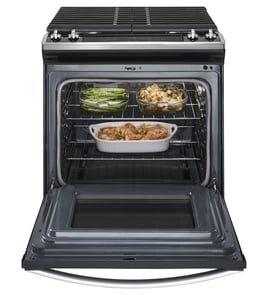



How long should a Kenmore gas stove last?
A Kenmore gas range like model 3627555890 typically lasts 15 years with normal household use. Keeping burners clean, confirming proper flame quality, and addressing ignition problems early helps you get the full service life from key parts like the igniter and gas valve.
Typical lifespan and what affects it
Most gas ranges reach the 15-year mark when they are used normally and maintained.
- Heavy daily cooking and frequent self-clean cycles can shorten life
- Poor flame quality (yellow flames) can signal a combustion or gas supply issue
- Ignition delays and weak heating often point to wear in ignition or gas components
- Grease buildup and spills can damage wiring, switches, and burner parts
- Loose or failed oven light components are common, low-impact repairs
Quick checks that protect performance
Use these simple checks to keep your Kenmore 3627555890 operating efficiently.
- Verify surface burners ignite promptly; after air is purged, burners should light within a few seconds
- Look at flame color: soft blue is normal for natural gas; yellow flames need service
- Keep burner ports clear of spills and debris
- Turn the oven control to OFF when not in use (prevents accidental operation)
- If the oven takes longer than normal to light (often 30 to 90 seconds is typical), monitor for worsening delays
Common “wear” parts vs. “structure” parts
| What you notice | Most likely area | Example part for this model |
|---|---|---|
| Oven won’t heat or ignites inconsistently | Oven ignition | WB2X9154 WB2X9154 |
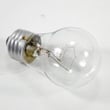
| Oven light out | Bulb or socket | 40a15bulb 40A15, pushin receptacle WB08T10026 |
| Weak or inconsistent oven flame | Gas control components | Control valve WB19K14 |
Why it matters
A gas range can keep cooking well for years past mid-life if combustion stays clean and ignition stays reliable. Catching yellow flames, slow ignition, or repeated clicking early helps prevent bigger failures and keeps baking and broiling temperatures steady.
For model-specific operating and safety guidance, follow the 3627555890 manual.
Last updated: February 2026
How to change Kenmore spark electrode igniter?
On the Kenmore 3627555890 gas range, replacing a spark electrode igniter means shutting off power, removing the burner grate and burner parts, swapping the electrode and wire connection, then reassembling so the electrode tip sits correctly by the burner for reliable clicking and ignition. See the 3627555890 owner's manual for burner-part removal and safety notes.
Safety first (before you touch the electrode)
- Turn all surface burner knobs OFF.
- Disconnect electrical power to the range (unplug or switch off the breaker).
- Let the cooktop and grates cool completely.
- Do not disassemble or clean around a burner while another burner is on; all burners can spark when one is set to LITE.
Step-by-step: replace the spark electrode
- Remove the grate, then lift off the burner cap and burner head (sealed burner styles lift straight up once cool).
- Locate the spark electrode (the small ceramic post near the burner).
- Remove the mounting screw or retainer holding the electrode to the burner base/orifice holder.
- Pull the electrode up enough to access the wire connector.
- Transfer the wire to the new electrode:
- Push the connector fully onto the electrode terminal.
- If your connector is a crimp style, crimp it snugly so it cannot wiggle loose.
- Reinstall the electrode in the same position and tighten the screw.
- Reinstall burner head and cap, then the grate.
- Restore power and test: turn one knob to LITE and confirm strong, steady sparking and quick ignition.
Quick checks if it still will not spark
- Electrode tip is not aligned close to the burner metal (gap too large).
- Burner head holes are clogged from spillovers; clean and dry parts before reassembly.
- Wire is damaged or not fully seated on the electrode terminal.
| Symptom | Most common cause | What to do |
|---|---|---|
| Clicking but no flame | Burner ports clogged or cap mis-seated | Clean, dry, reseat cap/head |
| No clicking on any burner | No power to ignition system | Restore power, check outlet/breaker |
| Clicking is weak/intermittent | Dirty/wet electrode area | Clean and dry around electrode |
Why it matters
A properly mounted, clean electrode gives fast ignition and helps prevent delayed lighting, which can cause a brief flare-up when gas finally ignites.
Last updated: February 2026
How to remove the top of a Kenmore gas range?
On the Kenmore 3627555890 gas range, the cooktop (top) typically lifts up or is released after you remove the grates and burner pieces; some versions also use hidden screws at the front or under burner bases. Follow the step-by-step access instructions in the 3627555890 owner's manual before lifting the top.
Before you start (safety and prep)
- Turn all burner knobs to OFF and let the range cool completely.
- Shut off the gas supply valve if you will be working near gas tubing.
- Unplug the range (or switch off the breaker) before touching wiring or igniters.
- Remove anything on the cooktop: grates, pans, and foil liners.
- Protect the surface with a towel if you will rest the cooktop in a raised position.
Basic cooktop removal steps (most common)
- Lift off the grates.
- Remove burner caps.
- If your model has removable burner heads/bases, lift them off; if they are screwed down, remove the mounting screws.
- Check for front hold-down screws (often along the front lip under the control panel edge) and remove them.
- Lift the cooktop from the front and support it (some models use a prop rod); if it does not lift, recheck for missed screws.
What you may need to remove first (model variations)
| Range design | What you usually do | Why it matters |
|---|---|---|
| Lift-up cooktop | Lift from the front after removing burner parts | Fast access to surface burner area |
| Fixed cooktop | Remove screws under burner bases and/or front lip | Prevents bending the top |
| Dual burner style (lift-up referenced in manual) | Lift cooktop to access components | Needed for tasks like regulator access |
Why it matters
Removing the top the right way prevents cracked porcelain, stripped screws, and damaged igniter wiring. It also gives safe access to surface burner tubes, orifices, and the area where spills collect.
Last updated: February 2026
What if I can't find my part on Sears PartsDirect?
If you cannot find a part for your Kenmore gas range model 3627555890, start by confirming the exact model number and then search by the part name or part ID. If the part still does not appear, we recommend contacting Sears PartsDirect so we can match the correct replacement to your range.
Quick steps that usually solve it
- Confirm the model number on the appliance data plate matches 3627555890 exactly.
- Use the exploded-view diagrams and part lists in the 3627555890 owner's manual to identify the correct part name.
- Search using a part ID when possible (example: WB2X9154 WB2X9154 for an oven burner igniter).
- Try alternate keywords for the same item (example: “igniter” vs. “glow bar”, “light bulb” vs. “appliance bulb”).
- Check nearby assemblies; some small items (screws, trim, retainers) are listed under a larger section.
- If you are replacing an oven light, confirm whether you need the bulb, socket, or lens parts (example: 40a15bulb 40A15 vs. Pushin receptacle WB08T10026).
Common reasons a part is hard to find
| What you searched | What to try instead | Why it helps |
|---|---|---|
| A description only (“oven won’t light”) | Search the likely part (“igniter”, “gas valve”) | Symptoms map to a small set of parts |
| A partial number | Search the full part ID (letters and numbers) | Prevents mismatches |
| A generic term (“trim”) | Search the exact trim piece (door trim, lower) | Many trims exist on one range |
Why it matters
Using the exact model number and the correct part ID helps prevent ordering a look-alike part that will not fit or connect correctly. That is especially important for gas range items like igniters, valves, and electrical light components.
Last updated: February 2026