Error Codes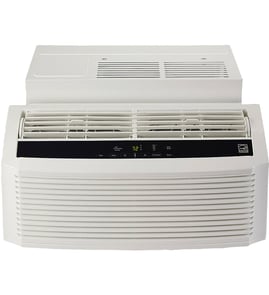

Is it safe to sleep in a room with a portable air conditioner?
Yes, it’s generally safe to sleep in a room with a portable air conditioner, including the Wintair AP-08CK1FDS, as long as the unit is vented correctly, the room has normal airflow, and you manage dryness and noise. The most common comfort issue is dry air that can irritate your throat, nose, or skin.
- Vent the exhaust hose to a window and keep it as short and straight as possible.
- Keep the air intake and outlet clear (no curtains, bedding, or furniture blocking airflow).
- Use a dedicated wall outlet; avoid extension cords and power strips.
- Make sure the unit sits level so condensate drains as designed.
- Keep doors and windows mostly closed so the unit can control temperature and humidity.
- If the air feels too dry, run a humidifier or place a small bowl of water near (not on) the unit.
Portable AC can make the room feel dry, especially if you run it all night. If you wake up congested or with a dry throat, adjust your settings and airflow.
| Issue | What you notice | What to do tonight |
|---|---|---|
| Dry air | Dry throat, dry skin | Raise the set temp 1 to 3 degrees; add humidity |
| Draft | Cold air blowing on you | Redirect louvers away from the bed |
| Noise | Light sleep, frequent waking | Use a lower fan speed; move unit farther away |
| Poor cooling | Room still warm | Recheck window vent seal; clean filters |
A portable air conditioner is safest and most effective when it can breathe (good airflow) and exhaust heat properly. That reduces overheating risk, improves cooling performance, and helps prevent the unit from running nonstop, which can worsen dryness and disturb sleep.
If you’re doing any electrical checks (for example, a tripped outlet or suspected power issue), use our guide: how to use a multimeter to test electrical parts video.
Last updated: February 2026
How much do AC spare parts usually cost?
AC spare parts for the Wintair AP-08CK1FDS room air conditioner typically range from under $10 for small electrical items (like fuses) to $100 to $700 for common components (like a fan motor or control board); major sealed-system parts (like a compressor) can run $500 to $3,000+.
Prices vary by brand, availability, and whether the part is a simple external component or part of the sealed refrigerant system.
- Fuses, knobs, small hardware: $5 to $30
- Thermistors, sensors, switches: $10 to $60
- Capacitors: $15 to $60
- Fan motor or blower wheel: $80 to $300
- Control board or display board: $120 to $700
- Coils (evaporator/condenser): $200 to $1,200+
- Compressor (sealed system): $500 to $3,000+
Parts are only one piece of the total. Labor, diagnostics, and refrigerant work can change the value of the repair.
| Repair type | What you usually pay for | Typical total impact |
|---|---|---|
| Simple electrical fix | Fuse, capacitor, switch | Lowest cost repairs |
| Airflow repair | Fan motor, blower wheel, cleaning | Moderate cost, often worth it |
| Cooling system repair | Coil or compressor work | Highest cost; compare to replacement |
We typically recommend comparing repair cost to replacement when the issue involves sealed-system work.
- Compressor or coil replacement is needed
- The unit has repeated cooling failures
- Corrosion or refrigerant leaks are suspected
- The repair estimate approaches the cost of a new room AC
Room air conditioners like the Wintair AP-08CK1FDS often fail from airflow restrictions (dirty filter/coils) or electrical wear parts (capacitor, fan motor). Pricing the likely part category first helps you decide whether a DIY repair makes sense before paying for diagnostics.
For safe testing and troubleshooting, use a meter and follow basic electrical checks in how to use a multimeter to test electrical parts video.
Last updated: February 2026
Where can I vent my portable air conditioner without a window?
You still need to exhaust hot air outdoors; without a window, the practical options for a Wintair AP-08CK1FDS are venting through an exterior wall, a door panel insert, or a drop-ceiling plenum that leads to an outdoor-rated exhaust point. Avoid venting into an attic, crawlspace, or another room.
- Through an exterior wall: Cut a properly sized opening, install a wall vent hood, and connect the exhaust hose with the shortest, straightest run.
- Through a door: Use a rigid panel insert (similar to a window kit) in a sliding door or a modified interior door that leads directly outside.
- Through a ceiling only if it truly exits outdoors: A drop-ceiling route can work only when it connects to a dedicated exhaust path to the exterior.
- Temporary venting: A slightly opened exterior door with a sealed panel can work short-term if you can block air gaps.
- Vent into another room, a hallway, a garage, an attic, or a crawlspace (heat and moisture build up and cooling performance drops).
- Use long hose runs or multiple sharp bends; they trap heat and reduce airflow.
- Reduce the hose diameter; it increases backpressure and can cause poor cooling.
| Item | Better | Worse |
|---|---|---|
| Hose length | As short as possible | Extended/extra-long |
| Hose routing | Straight, minimal bends | Kinked, multiple elbows |
| Sealing | Tight seal at wall/door | Air leaks around panel |
| Room pressure | Minimal negative pressure | Strong negative pressure (pulls hot air in) |
Portable air conditioners remove heat from the room and must dump that heat outside. If the exhaust air stays inside the home envelope, the unit runs longer, dehumidifies poorly, and can overheat.
If you need to troubleshoot power or control issues after moving the unit or routing the hose, use how to use a multimeter to test electrical parts video for safe, basic electrical testing guidance.
Last updated: February 2026
What is the most reliable portable AC unit?
The most reliable portable AC unit is the one that matches your room size, vents correctly, and can drain moisture consistently; in our experience, dual-hose designs tend to deliver steadier cooling and fewer comfort complaints than single-hose units. For your Wintair AP-08CK1FDS, we recommend focusing on sizing, hose setup, and drainage features first.
- Correct capacity for the space: Oversized units short-cycle; undersized units run nonstop.
- Dual-hose vs. single-hose: Dual-hose units usually cool more efficiently and maintain room pressure better.
- Drainage design: A unit with a dependable drain port or pump option reduces shutdowns from a full pan.
- Serviceability: Easy-to-clean filter access and straightforward hose connections.
- Electrical fit: Standard 115V plug and a circuit that is not overloaded.
| Feature | Dual-hose portable AC | Single-hose portable AC |
|---|---|---|
| Cooling consistency | More consistent | Can vary more in hot weather |
| Efficiency | Typically better | Typically lower |
| Room pressure impact | Lower | Higher (can pull warm air in) |
| Setup complexity | Slightly more | Simpler |
Use this as a starting point, then adjust for sun exposure, ceiling height, and heat sources.
- 150 to 250 sq ft: Small portable AC range
- 250 to 400 sq ft: Mid-size portable AC range
- 400 to 550 sq ft: Larger portable AC range
“Reliability” is often about operating conditions, not just brand. Correct sizing, tight window venting, and consistent condensate management prevent common failures like icing, poor cooling, and frequent shutoffs.
- Must have tools for appliance repair
- Are diy appliance repairs safe
- How to find your appliance model number (and what it means for parts)
Last updated: February 2026
What AC parts are most commonly replaced?
For the Wintair AP-08CK1FDS room air conditioner, the most commonly replaced parts are the ones that wear from normal use or get stressed by heat, vibration, and airflow restrictions: the air filter, fan motor components, start/run capacitor, control board or selector switch, and temperature sensor (thermistor).
- Air filter: Protects the evaporator coil from dust; a clogged filter reduces cooling and can cause icing.
- Run capacitor / start capacitor: Helps the compressor and fan motor start and run; weak capacitors cause hard-starting or humming.
- Fan motor and fan blade: Moves air across the evaporator and out of the unit; worn bearings can squeal or stall.
- Thermistor (temperature sensor): Tells the control when to cycle; a bad sensor can cause short cycling or poor temperature control.
- Electronic control board or selector switch: Manages modes and fan speeds; failures can cause dead display, wrong mode, or no response.
- Power cord / plug / internal wiring: Heat and vibration can loosen connections; damage can cause intermittent power.
| Symptom | Commonly involved parts | What we check first |
|---|---|---|
| Unit won’t turn on | Power cord, wiring, control board | Outlet power, reset, cord condition |
| Hums but won’t start | Capacitor, fan motor, compressor | Capacitor test, fan spins freely |
| Runs but doesn’t cool well | Air filter, evaporator coil, fan | Filter/coil cleanliness, airflow |
| Freezes up (ice) | Air filter, fan, thermistor | Airflow restriction, sensor placement |
| Fan noisy or rattling | Fan blade, motor mounts, motor | Blade damage, motor play |
Room AC units like the AP-08CK1FDS run in a hot, humid environment and rely on steady airflow. When airflow drops (dirty filter or coil), the system runs hotter and longer, which increases stress on electrical parts (capacitors, controls) and moving parts (fan motor).
- Unplug the unit and clean or replace the air filter.
- Vacuum dust from the front intake and rear grille to restore airflow.
- Listen for fan motor noise (squeal, grinding, rattling).
- If you suspect an electrical issue, use safe testing practices and follow our guidance in are diy appliance repairs safe.
- For electrical diagnosis, use how to use a multimeter to test electrical parts video and confirm whether a capacitor, switch, or wiring is at fault.
Last updated: February 2026