Error Codes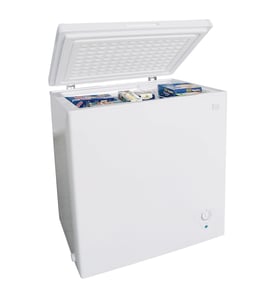





Can you replace the seals on a chest freezer?
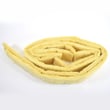
Yes. On the Gibson GFC15M4AW3 chest freezer, you can replace the lid seal (gasket) when it’s torn, hardened, or no longer sealing. A good gasket restores proper temperatures, reduces frost buildup, and helps the compressor run less.
How to tell the lid gasket needs replacement
- You see gaps, cracks, or sections pulling away from the lid
- Frost builds up quickly around the top edge or inside walls
- The lid feels “springy” and won’t sit flat
- A paper strip slides out easily when the lid is closed
- You notice warm, moist air getting pulled into the freezer
What part you typically replace
For this model, the seal is the lid gasket.
| Symptom | Most likely seal issue | What to do |
|---|---|---|
| Small tear but lid still seals | Minor damage | Clean and monitor; replace if it worsens |
| Lid won’t seal evenly | Warped or hardened gasket | Replace the gasket |
| Heavy frost near lid | Air leak at gasket | Replace gasket and check hinge alignment |
A model-matched option is the lid gasket (white) 216481211.
Replacement tips that prevent leaks
- Unplug the freezer before working around the lid and hinges
- Clean the rim and gasket channel so the new gasket seats fully
- Warm the new gasket (room temperature) so it lays flat and seals evenly
- After installation, close the lid for several hours to “set” the shape
- If the lid still doesn’t seal, inspect the hinge for looseness or misalignment
For step-by-step guidance, use our how to replace a freezer lid gasket instructions.
Why it matters
A leaking gasket lets humid air in; that creates frost, forces longer run times, and can lead to temperature swings that affect food quality.
Last updated: February 2026
What is the best chest freezer to buy?
The best chest freezer to buy is the one that fits your space, temperature conditions (especially if it will live in a garage), and how you plan to organize food. For most households, a 10 to 16 cu. ft. chest freezer with strong temperature stability and a tight-sealing lid gives the best long-term value.
What to look for (the features that matter most)
- Capacity that matches your shopping habits: 10 to 16 cu. ft. is the sweet spot for many families; larger sizes work best if you buy in bulk.
- Garage-ready performance: Choose a model rated for wider ambient temperatures if it will be in an unheated or hot garage.
- Energy efficiency: Look for an efficient compressor system and good insulation; it lowers operating cost year-round.
- Organization: Multiple baskets, dividers, and a bright interior light reduce “lost food” and freezer burn.
- Lid seal quality: A strong gasket prevents warm air leaks and frost buildup.
Quick comparison: how to choose the right “best”
| Your priority | What to prioritize | Why it helps |
|---|---|---|
| Lowest operating cost | Efficient design, tight lid seal | Saves energy and reduces frost |
| Garage placement | Garage-ready rating | Prevents temperature swings |
| Easy organization | More baskets/dividers | Faster access, less waste |
| Long-term reliability | Proven brand support, simple controls | Fewer headaches over time |
Why it matters
Chest freezers are naturally efficient, but real-world performance depends on stable temperatures and a good lid seal. A weak seal can cause longer run times, more frost, and inconsistent freezing.
If you already own a Gibson GFC15M4AW3
If your current Gibson GFC15M4AW3 is not holding temperature, check the lid seal and closing alignment first. A worn gasket is a common cause of warm spots and excess frost; see the lid gasket (white) 216481211 if you need a replacement.
For maintenance and performance tips that apply to most chest freezers, use our freezer energy savings tips.
Last updated: February 2026
What are the common chest freezer problems?
Common problems on the Gibson GFC15M4AW3 chest freezer are the freezer running warm, heavy frost buildup, the compressor running nonstop (or not starting), lid seal leaks, and unusual noises. Most issues trace back to airflow restrictions, dirty condenser areas, a weak lid gasket, or a failing start component.
Quick symptom checklist
- Too warm: poor airflow, dirty condenser area, lid not sealing, low refrigerant, or sealed-system issue
- Too cold or freezing unevenly: temperature control problem or sensor/control issue
- Heavy frost: frequent lid openings, humid room air, or a leaking lid gasket
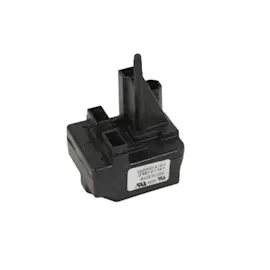
- Clicking/humming then stops: start device or run capacitor problem
- Rattling/buzzing: cabinet vibration, loose panels, or condenser tubing touching
What to check first (fast, no parts)
- Confirm the lid closes flat and nothing is pinched in the opening.
- Set temperature to mid-range and give it 24 hours to stabilize.
- Improve airflow around the cabinet: keep the exterior vents clear and avoid tight enclosures.
- Listen for the compressor pattern: steady run is normal after loading warm food; rapid cycling or repeated clicking is not.
Parts that commonly relate to these problems
| Symptom | Likely area | Example part for this model |
|---|---|---|
| Frost, moisture, warm spots near lid | Lid seal | Lid gasket (white) 216481211 |
| Clicking, won’t start, intermittent cooling | Start/run circuit | Capacitor 5304464438 |
| Runs but won’t cool well | Sealed system | Filter drier 5303305677 |
Why it matters
Chest freezers hold temperature best when the lid seals tightly and heat can leave the condenser area. When airflow is blocked or the start components weaken, the compressor works harder, temperatures drift, and food quality drops.
Helpful DIY guidance
If you suspect a control or cooling issue and want a step-by-step repair overview, use our freezer category landing page to match symptoms to the right repair path.
Last updated: February 2026
Is it worth repairing a chest freezer?
Yes, repairing a Gibson chest freezer like model GFC15M4AW3 is usually worth it when the problem is a wear item (seal, hinge, electrical start part) and the cabinet is in good shape. It is typically time to replace when the repair involves sealed-system parts and the total cost approaches the price of a comparable new freezer.
Quick decision checklist
- Repair when the freezer still holds temperature, but has a lid seal leak, loose lid alignment, or intermittent starting.
- Repair when the issue is a single replaceable component (for example, a gasket or hinge).
- Replace when the freezer has poor cooling plus long run times and you suspect a sealed-system or compressor issue.
- Replace when the cabinet is badly rusted, the lid is warped, or the liner is cracked.
- Replace when you have repeated failures within a short period (multiple service calls).
Common repairs and what they usually mean
| Symptom | Most common cause | Typical “worth it” note |
|---|---|---|
| Frost buildup, sweating around lid | Worn or torn lid gasket | Often a good repair; improves efficiency |
| Lid won’t close squarely | Hinge wear or misalignment | Usually a straightforward repair |
| Won’t start, clicks, then stops | Start components or capacitor | Often worth diagnosing before replacing |
| Not cooling well | Sealed system or compressor | Often the tipping point toward replacement |
Parts that can make a repair worthwhile on GFC15M4AW3
- Lid gasket (white) 216481211 to stop warm-air leaks and heavy frost.
- Hinge (white) 297321900 if the lid sags or won’t seal evenly.
- Capacitor 5304464438 when the compressor struggles to start.
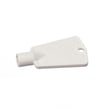
- Key 297147700 if the lock is missing a key (security and safety).
Why it matters
A chest freezer that seals tightly and starts reliably protects food quality, reduces frost buildup, and cuts energy waste. Fixing a gasket or hinge can restore normal temperatures and prevent the compressor from running excessively.
Practical cost rule we use
- Green light to repair: simple part replacement and the freezer otherwise cools normally.
- Caution: sealed-system symptoms (warm interior, oily residue near tubing, constant running) because repairs can be expensive.
Last updated: February 2026
How long do chest freezers last?
Most chest freezers, including the Gibson GFC15M4AW3, last 10 to 20 years; a typical real-world lifespan is about 16 years when the lid seals well, airflow stays clear, and the freezer is kept clean and level.
What affects lifespan the most
- Lid seal condition: a leaking gasket forces longer run times and shortens compressor life.
- Condenser cleanliness: dust and pet hair raise operating temperatures.
- Room conditions: hot garages and tight clearances increase workload.
- Power quality: frequent outages or low voltage can stress the compressor.
- Usage habits: long lid-open times add moisture and heat.
Maintenance that helps a chest freezer reach the high end of the range
- Vacuum and wipe the exterior vents and surrounding area every few months.
- Keep the freezer level so the lid closes evenly.
- Avoid overpacking; leave space so cold air can circulate.
- Defrost when frost buildup becomes noticeable (heavy frost reduces efficiency).
- Check for a tight lid seal using the “paper test” (paper should drag when pulled).
Quick symptom guide: repair vs. replace
| What you notice | Common cause | What we check first |
|---|---|---|
| Runs constantly, warm spots | Air leak at lid | Lid gasket (white) 216481211 |
| Clicking, won’t start | Start components | Capacitor 5304464438 |
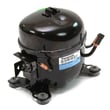
| Not cooling at all | Sealed system or compressor issue | Compressor-r 5304507765 |
Why it matters
A chest freezer’s long lifespan comes from its design: cold air stays in when you open the lid, so the compressor cycles less than many upright freezers. Keeping the lid gasket sealing and the unit breathing properly is the biggest difference between 10 years and 20 years.
Last updated: February 2026
How to troubleshoot a chest freezer?
For a Gibson chest freezer model GFC15M4AW3, we troubleshoot by confirming power, setting the temperature correctly, improving airflow inside the cabinet, and checking for dirty condenser coils or a leaking lid seal. Most cooling complaints trace back to airflow, frost buildup, or a weak door seal.
Quick checks (start here)
- Confirm the outlet has power and the cord is fully seated.
- Set the control colder and wait 12 to 24 hours for temperature to stabilize.
- Make sure the lid closes fully and nothing is pinched in the gasket.
- Leave space around packages so cold air can circulate.
- Listen for the compressor: steady hum is normal; repeated clicking points to a start issue.
Symptom-based troubleshooting
| What you notice | Most common cause | What to do next |
|---|---|---|
| Not freezing or soft food | Warm control setting, poor airflow, dirty condenser | Reset control, reorganize, clean coils |
| Heavy frost or ice | Lid not sealing, frequent openings | Inspect gasket, defrost, reduce openings |
| Runs constantly | Dirty coils, warm room, overpacked | Clean coils, improve ventilation, reduce load |
| Clicking, won’t start | Start components or compressor issue | Unplug, inspect for overheating; service if persistent |
Clean the condenser coil (big performance win)
A dirty condenser makes the freezer run longer and struggle to hold temperature.
- Unplug the freezer.
- Vacuum dust from the condenser area and surrounding vents.
- Restore power and recheck temperatures after 12 to 24 hours.
If the coil is damaged or leaking, replacement may be needed; see the freezer condenser coil 5303925238.
Check the lid seal (gasket)
A leaking gasket pulls in humid air, causing frost and temperature swings.
- Close the lid on a dollar bill; it should drag when you pull it out.
- Look for gaps, tears, or hardened sections.
- Clean the gasket with mild soap and warm water; dry fully.
If the gasket is torn or won’t seal, use the correct replacement for this model: lid gasket (white) 216481211.
Why it matters
Chest freezers rely on a tight seal and good heat release at the condenser. When either is compromised, you get higher energy use, more frost, and warmer food.
Last updated: February 2026
What are the parts of a chest freezer?
A Gibson chest freezer like model GFC15M4AW3 is built around a sealed refrigeration system (compressor, condenser, evaporator, and refrigerant tubing) plus lid and electrical components that keep cold air in and control temperature. Most cooling problems trace back to airflow, sealing, or start components.
Main parts you will find in a chest freezer
- Compressor: pumps refrigerant through the sealed system (often with a start device and run capacitor)
- Condenser: rejects heat to the room (coils and tubing)
- Evaporator: absorbs heat from inside the freezer to create cooling
- Metering device (capillary tube): controls refrigerant flow into the evaporator
- Temperature control: thermostat or electronic control that cycles the compressor
- Lid and seal: lid hinges and a gasket that prevents warm, moist air leaks
- Wiring and safety grounding: harnesses, clamps, and ground wire
Model GFC15M4AW3 parts you may replace most often
These are common service parts we see customers need when a freezer will not cool, runs constantly, or has condensation around the lid:
| Symptom | Likely area | Example part for this model |
|---|---|---|
| Warm temps, compressor will not start | Start circuit | Capacitor 5304464438 |
| Frost or moisture around lid, longer run times | Lid sealing | Lid gasket (white) 216481211 |
| Lid misalignment or poor closing | Lid hardware | Hinge (white) 297321900 |
Quick checks before replacing parts
- Confirm the control is set colder and the unit has power.
- Make sure the lid closes squarely and the gasket is not torn, stiff, or gapped.
- Allow airflow around the cabinet; blocked ventilation increases run time.
- Listen for a repeating click or hum (often points to a start issue).
- If the freezer was recently moved, let it sit unplugged for a few hours before restarting.
Why it matters
Knowing the major components helps you troubleshoot efficiently: lid leaks and dirty heat rejection make the compressor run longer, while start components (like a capacitor) can prevent the compressor from running at all.
For step-by-step repair help on common freezer components, use our freezer category landing page.
Last updated: February 2026