Installation guide
 Owner’s manual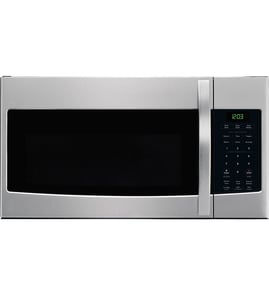


What are the dimensions of the FMV152KSA?
The Frigidaire FMV152KSA over-the-range microwave/hood combo is approximately 29-7/8 in. wide x 15-1/32 in. deep x 16-13/32 in. high. For built-in placement under a cabinet, the typical cutout space is about 30 in. wide x 14 in. deep x 17 in. high; confirm your exact cabinet and mounting clearances in the installation guide.
Quick dimension reference
| Measurement | Size |
|---|---|
| Overall width | 29-7/8 in. |
| Overall depth | 15-1/32 in. |
| Overall height | 16-13/32 in. |
| Typical cutout width | 30 in. |
| Typical cutout depth | 14 in. |
| Typical cutout height | 17 in. |
What to measure before you install
To avoid fit issues with cabinets, backsplash, and ducting, we recommend checking these items on your FMV152KSA installation location:
- Cabinet opening width (inside-to-inside)
- Clearance above the range (mounting height per the guide)
- Depth to the back wall (watch for tile or a thick backsplash)
- Vent path (top exhaust, back exhaust, or recirculating)
- Duct size and route if venting outside (short, direct runs work best)
Venting and ducting space (why depth can change)
Your final “real-world” depth can vary slightly depending on how the exhaust is configured and how the duct transitions are routed. The installation instructions for this style of microwave/hood combo call out common duct sizes such as 3-1/4 in. x 10 in. rectangular or 6 in. round ducting, and recommend keeping the duct run as direct as possible.
Why it matters
Correct dimensions help prevent cabinet interference, door swing problems, and venting restrictions. Getting the opening and vent route right also reduces vibration and improves exhaust airflow.
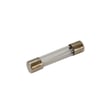
You can also order replacement parts for FMV152KSA from the parts list for this model, or search by model number on Sears PartsDirect.
Last updated: February 2026
What is the average lifespan of a Frigidaire microwave?
A Frigidaire microwave like the FMV152KSA typically lasts 9 years. With heavy daily use, expect closer to 7 years; with lighter use and good care (cleaning, proper ventilation, and avoiding misuse), it commonly reaches 10 years.
What affects lifespan the most
- Heat and ventilation: Grease buildup and restricted airflow make components run hotter.
- Door wear: Slamming the door can damage the latch and door switches.
- Power quality: Frequent blown fuses or tripped breakers can stress electrical parts.
- Cleaning habits: Harsh, corrosive cleaners can damage hood filters and surfaces.
- Cooking practices: Running the microwave empty or using metal can cause arcing and internal damage.
Quick care checklist for longer life
Use these habits to help your FMV152KSA reach its typical service life:
- Keep the cavity and door seals clean and dry.
- Turn the hood fan on when cooking on the range (especially with steam or smoke).
- Clean the hood filters regularly; avoid lye-based or corrosive cleaners.
- Plug the microwave into a properly grounded, dedicated 110 to 120V circuit (no extension cord).
- Stop using the unit if the door does not close firmly or the latch feels loose.
Repair vs. replace: a practical guide
| What you notice | Common cause | Typical next step |
|---|---|---|
| Microwave runs but does not heat | High-voltage component issue | Consider professional diagnosis; parts like a magnetron can be costly |
| Starts then stops when door moves | Door switch or latch issue | Inspect/replace door switch or latch parts |
| Dead, no display | Fuse/thermal protection or power issue | Check power supply; test protective devices |
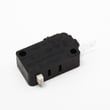
If the microwave is otherwise in good shape, door-related fixes are often straightforward; for example, a failing microwave door switch 5304509459 can cause intermittent operation.
Why it matters
Microwave/hood combos work in a hot, greasy environment above the range. Simple maintenance (filters, ventilation, gentle cleaning) reduces heat stress on the control panel, thermostats, and high-voltage system, which is what most often determines whether you get 7 years or 10.
For model-specific operating and care details, follow the FMV152KSA owner's manual. For installation and electrical requirements, use the FMV152KSA installation guide. If you need to order replacement parts, start with the parts list for FMV152KSA or search by model on Sears PartsDirect.
Last updated: February 2026
How many watts is my Frigidaire Gallery microwave?
For the Frigidaire FMV152KSA microwave/hood combo, the installation instructions list an electrical input rating of 1.6 kilowatts (about 1600 watts). That number is the power the microwave draws from the outlet; the actual cooking (output) wattage is typically lower and is listed in the specifications section of the owner's manual.
Input watts vs cooking watts (what you are really asking)
Microwaves are commonly described by cooking output watts, but documents may also list input watts.
- Input watts: what the unit consumes from your 120V circuit (helps with electrical planning)
- Cooking output watts: the heating power delivered into the food (helps compare performance)
- They are not the same; output is usually lower than input
- If you are comparing models, use cooking output watts
- If you are checking breaker or outlet needs, use input watts
What the FMV152KSA documentation shows
The installation guide for FMV152KSA lists the product rating as 120V AC, 60 Hz, 15 amps, 1.6 kilowatts and notes it should be on a separate 15 to 20 amp grounded outlet. For the exact specification table (including cooking output wattage), use the owner's manual.
Quick reference table
| Spec type | What it means | Where to find it |
|---|---|---|
| Input power (watts) | Electrical draw from the outlet | Installation guide |
| Cooking output (watts) | Heating performance | Owner's manual |
Why it matters
Using the correct wattage helps you avoid nuisance breaker trips, choose the right circuit, and set realistic expectations for cook times. If your microwave seems weak or is not heating, the issue is usually not the house circuit; it is typically a heating-system component.
If your microwave is not heating well
If cook times suddenly increased or food is not heating, these checks help narrow it down:
- Confirm the unit is on a dedicated circuit (avoid sharing with high-draw appliances)
- Try a simple test: heat 1 cup of water for 1 minute and compare results over a few tries
- If the unit runs but does not heat, common causes include high-voltage components
- For performance-related troubleshooting steps, use why is my microwave not heating
- For parts that can be involved in no-heat symptoms, see items like the microwave magnetron 5304519335 and diode 5304509479
Last updated: February 2026