Owner’s manual
 Error Codes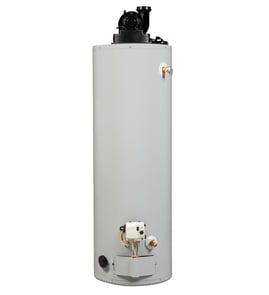



How do I read my water heater model number?
To read your Kenmore gas water heater model number, find the rating plate (data plate) on the tank and copy the MODEL NO. exactly as printed. For this unit, the model number format looks like 153.332421; use that full number when ordering parts or checking specs in the 153.332421 owner's manual.
On this Kenmore water heater, the model number is listed on the rating plate (often called the data plate). The manual’s “Get to know your water heater” diagram identifies the rating plate as a labeled component.
- Look for a sticker or metal plate on the tank jacket.
- Find the line labeled Model No. (or MODEL NUMBER).
- Write it down exactly, including dots and all digits.
- Record the serial number too; it helps identify production details.
- Note the gas type (Natural or Propane) shown on the plate.
Many numbers on the rating plate are technical specs. When you are identifying the unit, the model number is the key item.
| Rating plate item | Use it for | When it matters most |
|---|---|---|
| Model number | Correct parts and documentation | Always |
| Serial number | Service history and identification | Service calls, warranty questions |
| Gas type (Natural/Propane) | Correct gas control and burner parts | Any gas or ignition repair |
| BTU and other specs | Performance reference | Troubleshooting, comparisons |
Kenmore water heater parts are model-specific. Using the exact model number helps match critical components like the gas control valve/thermostat, pilot assembly, and thermocouple so your heater lights, heats, and vents correctly.
Last updated: January 2026
What is the average cost of a 50 gallon gas water heater?
A typical 50-gallon gas water heater averages about $900 to $2,500 installed in the U.S., depending on brand, efficiency, venting changes, and local labor rates. For Kenmore model 153332421, confirm gas supply and venting requirements in the Kenmore 153332421 owner's manual before budgeting for installation work.
- Type of venting: standard atmospheric vent vs. power vent (power vent usually costs more)
- Installation complexity: moving the heater, resizing gas piping, or updating venting
- Local code items: expansion tank, shutoff valves, drip leg, seismic strapping (where required)
- Efficiency level: higher efficiency models typically cost more up front
- Disposal and haul-away: old tank removal fees vary by area
| Cost item | Common range | Notes |
|---|---|---|
| Water heater unit (50-gal gas) | $600 to $1,800 | Brand and efficiency drive this |
| Labor and basic install | $300 to $1,200 | Higher if access is tight |
| Venting or gas line changes | $0 to $1,500+ | Depends on what must be modified |
| Optional add-ons | $50 to $400 | Expansion tank, valves, connectors |
Your Kenmore 153332421 manual emphasizes proper gas supply sizing and following the National Fuel Gas Code (ANSI Z223.1/NFPA 54) for venting and combustion air. These items often affect install cost:
- Gas pipe sizing based on BTU input and total pipe length
- Adequate combustion air and ventilation (avoid corrosive atmospheres)
- Correct vent draft and draft hood setup
- Closed plumbing systems that benefit from an expansion tank
A “cheap” heater can become expensive if the installer has to correct gas pressure, resize piping, or rebuild venting. Planning around gas supply and venting requirements helps prevent delays and surprise charges.
Last updated: January 2026
What year is my Kenmore water heater serial number?
On Kenmore water heater model 153332421, the first two digits of the serial number indicate the year it was manufactured (for example, a serial number starting with 12 was made in 2012). Some serial numbers may start with a single letter before those two digits.
- Find the rating plate label on the water heater (commonly on the side of the tank).
- Write down the full serial number exactly as shown.
- Ignore a leading letter if present.
- Use the first two numbers as the manufacture year.
- Use the remaining characters for factory tracking (they do not change the year).
| Serial number starts with | Manufacture year | Notes |
|---|---|---|
| 08XXXXXXX | 2008 | First two digits are the year |
| A15XXXXXX | 2015 | Leading letter is normal on some units |
| 99XXXXXXX | 1999 | Older units often follow the same pattern |
Knowing the manufacture year helps us match the right Kenmore parts (like a pilot assembly, thermocouple, or gas control valve) and decide whether maintenance items such as the anode rod are due.
Your label location and formatting details are shown in the 153332421 owner’s manual.
Last updated: January 2026
Can you replace just the thermostat on a gas water heater?
Yes, on the Kenmore 153332421 gas water heater the thermostat is built into the gas control valve/thermostat assembly, so you replace the entire gas control valve/thermostat rather than a separate thermostat by itself. Follow the safety and removal steps in the owner's manual.
On many gas water heaters, the temperature control (thermostat) is integrated with the gas valve. That means one part handles both:
- Gas flow control to the pilot and main burner
- Temperature setting (control knob)
- Safety shutoff logic (ECO/temperature limiting system)
- Wiring connections to safety devices (such as a thermal switch)
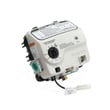
For this model, that integrated part is the american water heaters water heater gas valve and temperature control assembly 100112336.
Replace the gas control valve/thermostat assembly when you see symptoms like:
- Pilot will not stay lit after proper lighting steps
- Burner will not come on even though the pilot is lit
- Temperature control is erratic or will not adjust
- Status light indicates an over-temperature condition and the heater shuts down
- You find a stuck-open pilot valve condition (pilot flame present even with the knob set to OFF)
We recommend using the manual’s procedure because it includes the correct shutoff, draining, and reconnection sequence.
| Task | What you typically do | Why it matters |
|---|---|---|
| Shut down | Turn control knob to OFF; shut off gas supply | Prevents gas release and accidental ignition |
| Drain tank | Drain per the manual before removing the control | Avoids water spill and tank pressure issues |
| Disconnect lines/wires | Remove pilot tube, manifold tube, igniter and thermopile leads | Prevents damage to small tubing and connectors |
| Reinstall and test | Reconnect, leak-test gas fittings, relight per instructions | Confirms safe operation |
On a gas water heater, the thermostat is a safety-critical control. Replacing the correct integrated assembly helps restore reliable temperature control and proper burner operation while keeping built-in safety systems working as designed.
Last updated: January 2026
What is the life expectancy of a Kenmore water heater?
A Kenmore gas water heater like model 153332421 typically lasts 8 to 12 years. Regular maintenance can push it toward the high end, especially keeping combustion air clear and staying on schedule for anode rod and T&P relief valve checks listed in the 153332421 owner's manual.
- Anode rod condition: replacing a depleted anode rod extends tank life.
- Water quality: high conductivity and softened water can wear the anode faster.
- Sediment buildup: reduces efficiency and can overheat the tank bottom.
- Ventilation and combustion air: restricted air intake can cause poor burner performance.
- Leaks and corrosion: small plumbing leaks can accelerate rust around fittings.
The manual calls out specific inspection intervals that directly impact tank life.
| Item | When to do it | Why it matters |
|---|---|---|
| Anode rod inspection | By year 3, then yearly (yearly from the start if water is softened) | Protects the tank from corrosion |
| Temperature and pressure relief valve test | At least once per year | Confirms overpressure protection works |
| Air intake area check | Monthly quick check | Helps the burner run clean and steady |
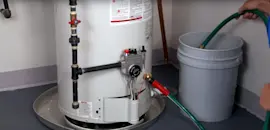
| Tank draining (partial flush) | 1 to 2 times per year | Helps reduce sediment buildup |
- Rust-colored water at the hot tap
- Moisture or corrosion at the tank bottom
- Rumbling or popping sounds during heating
- Pilot problems that keep returning after cleaning and adjustment
- Water temperature swings even after thermostat setting checks
If the tank is not leaking, restoring reliable ignition and stable flame often improves day-to-day operation.
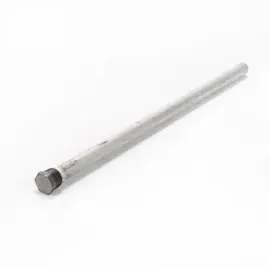
- Anode rod 100109624 (corrosion protection)
- Water heater thermocouple 100112327 (keeps the gas valve open when the pilot is lit)
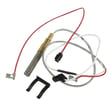
- Water heater pilot assembly 100112330 (pilot flame and ignition reliability)
Once a tank starts leaking, replacement is the practical fix. Staying ahead of anode rod wear and doing the yearly T&P relief valve test helps you get the full expected 8 to 12 years from a Kenmore gas water heater.
Last updated: January 2026
What is the most common problem with gas water heaters?
The most common gas water heater problem is the pilot going out or not staying lit, which stops heating and often traces back to the pilot system (thermocouple, burner, or gas control). On Kenmore model 153332421, restricted combustion air and venting issues can also cause poor recovery and unsafe operation (sooting).
- Pilot will not light or won’t stay lit
- No hot water or slow hot water recovery
- Sooting around the burner area or draft hood
- Condensation that looks like a leak during cold months
- Dripping from the temperature and pressure relief valve
- Confirm combustion air is not blocked: The manual warns not to obstruct the air intake (for example with an insulation blanket). See the 153332421 owner’s manual.
- Inspect venting at least yearly: Look for blockage, deterioration, loose connections, or rust flakes; sooting is not normal and indicates a combustion problem that must be corrected before further use.
- Rule out “false leaks” from condensation: Condensation can drip down the flue and extinguish the pilot; after the tank warms for about 1 to 2 hours, it typically disappears.
If your checks point to the pilot system, these are the most common service parts for this model:
| Symptom | Likely area | Example part for 153332421 |
|---|---|---|
| Pilot won’t stay lit | Pilot system | Water heater thermocouple 100112327 |
| Pilot won’t light, weak flame | Pilot assembly | Water heater pilot assembly 100112330 |
| Temperature control issues | Gas control | American water heaters water heater gas valve and temperature control assembly 100112336 |
Pilot and combustion-air problems do more than reduce hot water; they can lead to sooting and improper venting, which the manual treats as a serious safety condition. Fixing the root cause protects performance, efficiency, and safe operation.
Last updated: January 2026
What are the parts on a gas water heater?
A Kenmore gas water heater like model 153332421 is built around the tank plus a gas burner and safety controls that light, regulate, and vent the flame. Key service parts include the gas control valve/thermostat, pilot assembly, burner components, drain valve, anode rod, and the T&P relief valve (see the 153332421 owner's manual).
- Tank (stores heated water)
- Gas control valve/thermostat (regulates gas flow and water temperature)
- Pilot and ignition system (lights the burner)
- Burner assembly and burner head (creates the main flame)
- Draft hood and venting (moves combustion gases safely out)
- Air intake and flame-arrestor/base-ring filter (supports safe combustion airflow)
- Drain valve (used for draining and flushing)
- Anode rod (helps protect the tank from corrosion)
- Temperature and pressure (T&P) relief valve (safety pressure relief)
The parts list for this model calls out these frequently serviced items:
| Part on the water heater | What it does | Example part for this model |
|---|---|---|
| Pilot assembly | Keeps a stable pilot flame to light the burner | Water heater pilot assembly 100112330 |
| Thermocouple/thermopile | Proves pilot flame so gas can stay on | Water heater thermocouple 100112327 |
| Gas valve and temperature control | Controls gas and temperature settings | American water heaters water heater gas valve and temperature control assembly 100112336 |
| Drain valve | Drains the tank for service/flushing | Water heater drain valve 100108778 |
| T&P relief valve | Safety valve for excess temp/pressure | Water heater temperature and pressure relief valve 100108279 |
| Anode rod | Corrosion protection inside the tank | Anode rod 100109624 |
Knowing the major parts helps you troubleshoot symptoms faster (no hot water, pilot won’t stay lit, leaks, or poor recovery) and order the correct replacement by matching the model number and the exact part description.
- Use the model and serial number from the rating plate
- Confirm your gas type (natural gas vs propane)
- Compare the part description to the parts list in the manual
Last updated: January 2026
Can you replace parts on a hot water heater?
Yes. On the Kenmore 153332421 gas water heater, we replace many service parts (pilot components, thermocouple, burner parts, gas valve, drain valve, and gaskets) to restore reliable ignition, stable water temperature, and safe operation. Always shut off gas and water, and follow the Kenmore 153332421 owner's manual.
These are typical, serviceable items that often solve “no hot water,” “pilot won’t stay lit,” or “leaking” symptoms:
- Pilot and ignition components (pilot assembly, wiring connections)
- Thermocouple or thermopile style flame-sensing parts
- Gas valve and temperature control components
- Burner and combustion air intake parts (when dirty or restricted)
- Drain valve and related fittings
- Seals and gaskets on access doors
| Symptom | Likely part to check | Example model-matched part |
|---|---|---|
| Pilot will not stay lit | Pilot assembly, thermocouple, loose connectors | Water heater pilot assembly 100112330, water heater thermocouple 100112327 |
| Burner will not run or shuts down | Gas valve/temperature control, burner assembly | American water heaters water heater gas valve and temperature control assembly 100112336 |
| Water on floor near heater | Drain valve slightly open or leaking | Water heater drain valve 100108778 |
- Turn the gas control knob to OFF and wait before relighting (many controls require a cool-down period)
- Shut off the cold water supply to the heater
- Let water cool if you will drain the tank
- Keep combustion air openings clear; do not block the base area
- Never apply heat to the heater’s water fittings; some contain nonmetallic parts
Replacing the right part can extend the life of a gas water heater and prevent repeat shutdowns. For example, restricted combustion air or a weak pilot flame can cause nuisance outages, while a small drain valve leak can look like a tank leak.
For diagnostic flash codes and what they mean, use Kenmore gas water heater error codes.
Last updated: January 2026