Error Codes


Do you remove cardboard from the bottom of a Whirlpool refrigerator?
No. On Whirlpool model WRF767SDHV04, the cardboard or fiberboard panel at the bottom rear is a protective cover and airflow guide for the condenser area; it should stay in place during normal use.
Keeping the panel installed helps your refrigerator run correctly and protects key components.
- Directs airflow across the condenser coils for proper cooling efficiency
- Helps keep dust and debris away from wiring and moving parts
- Reduces the chance of accidental damage when cleaning behind the unit
- Can help with normal operating noise control
You typically only remove the panel briefly for service access, then reinstall it.
| Situation | Remove the panel? | What to do |
|---|---|---|
| Routine operation | No | Leave it installed |
| Cleaning behind/under the fridge | Usually no | Vacuum around vents and floor edges |
| Technician-level diagnosis/repair | Sometimes | Remove, service, then reinstall |
| Panel is wet, warped, or falling off | Yes (to inspect) | Fix the cause, then reinstall or replace |
Some packaging materials should be removed, but the fixed rear bottom cover should not.
- If it is screwed in or clipped in place at the rear bottom, it is a cover, leave it.
- If it is loose cardboard, tape, foam blocks, or shipping spacers, remove those.
- If the panel is damaged or missing fasteners, replace the cover or hardware so airflow stays correct.
Removing that cover can reduce airflow over the condenser, which can lead to warmer temperatures, longer run times, and more wear on sealed-system components like the compressor.
For general refrigerator maintenance and odor control tips, use our guide: how to get rid of refrigerator smells.
Last updated: February 2026
Are all French door refrigerators 36 inches wide?
No. Many French door refrigerators are built for a 36-inch cabinet opening, but they also come in other widths (commonly around 30, 33, and 36 inches). For your Whirlpool WRF767SDHV04, confirm the exact overall width and required opening before planning cabinetry.
Most models fall into a few standard size groups:
- 30-inch class: best for tighter kitchens and smaller households
- 33-inch class: a common “in-between” size
- 36-inch class: the most common full-size French door footprint
- Counter-depth vs. standard-depth: depth changes a lot; width may still vary by model
When you see “36-inch French door refrigerator,” it often refers to the recommended opening, not the exact cabinet-to-cabinet appliance width.
| Spec you’re comparing | What it affects | What to watch for |
|---|---|---|
| Overall refrigerator width | Whether it physically fits | Doors and hinges can add clearance needs |
| Recommended opening width | Cabinet cutout planning | May be slightly larger than the box width |
| Door swing clearance | Whether doors open fully | Nearby walls, islands, and handles |
| Depth (counter-depth/standard) | How far it sticks out | Impacts walkways more than width |
Use these quick checks to avoid a tight or unusable install:
- Measure the opening at top, middle, and bottom (older cabinets can be out of square).
- Plan side clearance for door swing and drawer pull-out.
- Confirm clearance for water line routing if you have an ice maker or dispenser.
- Make sure the unit can be moved through doorways and hallways (often the real challenge).
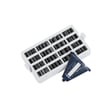
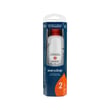
- If odors are a concern after moving or reinstalling, replacing the air filter is a simple first step; see refrigerator air filter W10311524.
A refrigerator that “almost fits” can lead to doors that do not open fully, poor airflow around the cabinet, and installation headaches. Getting the width and clearance right protects cooling performance and day-to-day usability.
Last updated: February 2026
Are all refrigerators 70 inches tall?
No, refrigerators are not all 70 inches tall. Heights vary a lot by style and capacity; many French door and bottom-mount models land near the 68 to 71 inch range, while top-freezer models are often shorter and built-in units are often much taller.
- Top-freezer: about 61 to 67 inches
- Bottom-mount / French door: about 67 to 71 inches
- Side-by-side: about 65 to 71 inches
- Built-in: often 80+ inches
Measure before you shop or order parts so you do not get surprised by cabinet clearance.
- Measure floor to the top of the hinge cover (or highest point)
- Measure floor to the top of the case (some listings use this)
- Check for leveling legs and rollers; they can change height slightly
- Leave airflow clearance above the cabinet opening (commonly 1 inch or more)
- Confirm door swing clearance if the refrigerator sits under cabinets
| Refrigerator type | Common height range | Notes |
|---|---|---|
| Top-freezer | 61 to 67 in. | Often best for low cabinets |
| Bottom-mount / French door | 67 to 71 in. | Many popular models cluster here |
| Built-in | 80+ in. | Designed for tall enclosures |
Even a 1 to 2 inch difference can prevent the refrigerator from fitting under upper cabinets or can reduce ventilation, which can hurt cooling performance and increase compressor run time.
If you are troubleshooting cooling, odors, or airflow after a tight fit, we often start with basic maintenance items like the refrigerator air filter W10311524 and making sure vents are not blocked.
Anchors that can also help with fit-related symptoms:
- How to fix a fridge door seal
- How to align the doors on a french door refrigerator with adjustable rollers video
Last updated: February 2026
Can you remove a bottom freezer drawer?
Yes. On the Whirlpool WRF767SDHV04 bottom-mount refrigerator, we remove the bottom freezer drawer by fully extending it, releasing the drawer from the slide rails (usually with locking tabs or stops), then lifting the drawer front up and pulling it out evenly to avoid bending the rails.
- Unplug the refrigerator or switch off power at the breaker (recommended).
- Remove food and the ice bin so the drawer is lighter.
- Protect the floor with a towel or cardboard.
- Use a helper if the drawer is loaded or hard to handle.
- Open the freezer drawer fully until it stops.
- Remove the upper basket/bin (if equipped) by lifting it up and out.
- Locate the rail locks/stops on the left and right slide rails.
- Release the drawer from the rails:
- If there are locking tabs, press them in (or lift them, depending on the rail style) on both sides.
- If there are stop screws, remove them and keep them together.
- Lift the drawer front slightly, then pull the drawer straight out, keeping both sides even.
- Set the drawer back onto both rails at the same time.
- Push in until the rails engage, then open and close the drawer a few times.
- Confirm the drawer closes flush and does not rub.
| What you see | What it usually means | What we do |
|---|---|---|
| Drawer stops halfway | Rail stops engaged | Release tabs or remove stop screws |
| Drawer feels crooked | One rail advanced more than the other | Pull out, re-level rails, reinstall evenly |
| Drawer won’t close tight | Drawer not seated on rails | Re-seat drawer and verify smooth travel |
Removing the freezer drawer is often the first step for clearing ice buildup, cleaning, or accessing components like the ice maker area. If you are troubleshooting ice production, our common refrigerator ice maker problems and solutions guide helps you narrow down the cause before replacing parts.
Last updated: February 2026