Owner’s manual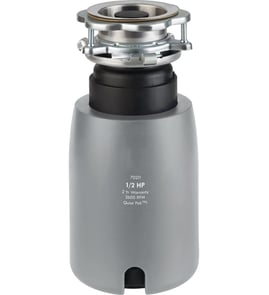

Can you replace a garbage disposal rubber splash guard?
Yes. On the Kenmore 175605721 garbage disposal, you can replace the rubber splash guard (also called an anti-splash baffle) when it’s worn; it helps prevent water and debris from splashing back up through the sink opening. Use the fit and removal details in the owner's manual.
How to tell if the splash guard needs replacement
A worn splash guard usually shows up as one or more of these issues:
- Cracks, tears, or missing rubber “fingers”
- Water splashing upward during operation
- Food particles ejecting back into the sink
- The guard feels stiff, warped, or won’t sit flat
- Increased odor because debris collects around damaged rubber
What to check before you buy a replacement
Some splash guards are removable inserts, while others are part of a sink baffle or mounting assembly. Before ordering, we recommend checking:
- Whether your current guard lifts out from the sink opening
- The sink flange opening size and shape
- Whether the guard is held by a retaining ring or tabs
- Any model-specific notes in the owner's manual
Quick comparison
| Splash guard type | What it looks like | Replacement approach |
|---|---|---|
| Removable insert | Rubber piece that pulls out from the top | Replace the insert with a matching removable guard |
| Integrated baffle | Rubber attached to a flange or internal baffle | Replace the baffle or related mounting component (not just the rubber) |
Basic replacement tips (safe, no-disassembly approach)
We recommend these steps for most removable splash guards:
- Turn off power to the disposer at the switch and breaker
- Lift out the old guard (use gloves; edges can be sharp)
- Clean the sink flange groove where the guard seats
- Press the new guard evenly into place so it sits flat
- Run cold water and test for splash-back control
Why it matters
The splash guard is a simple part, but it reduces mess and helps prevent material and water from being expelled during grinding. Replacing it when worn also helps keep the sink opening cleaner and more comfortable to use.
Last updated: February 2026
Are all garbage disposals universal fit?
Most garbage disposals are not a universal fit. The Kenmore 175605721 is designed to mount to a standard sink drain opening, but the exact fit still depends on your existing mounting hardware, under-sink clearance, and how your drain and dishwasher line are routed; confirm details in the owner's manual.
What is usually “standard” (and what is not)
Most residential disposals are built around a common sink drain opening, but several items vary by brand and model.
- Sink drain opening: commonly a 3-1/2 inch opening
- Mounting system: 3-bolt style vs. proprietary quick-mount styles
- Discharge outlet position: can change how the P-trap lines up
- Overall height and diameter: affects cabinet clearance and bin access
- Electrical hookup: corded plug-in vs. hardwired
Quick fit checklist before you buy
Use this checklist to avoid a mismatch when replacing an existing disposer.
- Measure vertical clearance from sink bottom to cabinet floor
- Note whether your current unit is hardwired or uses a power cord
- Check if you have a dishwasher drain hose connected to the disposer
- Inspect the condition of the sink flange and mounting ring
- Confirm your drain line is clear (a partially blocked line can look like a “bad fit”)
Dishwasher connection: a common “it doesn’t fit” issue
If you connect a built-in dishwasher to the disposer, the dishwasher inlet must be opened correctly. The Kenmore 175605721 manual explains removing the dishwasher knockout plug only when a dishwasher drain is connected; leaving it in place can cause the dishwasher to back up.
| Setup | What you need to verify | What can go wrong |
|---|---|---|
| No dishwasher connected | Knockout plug stays in place | Leak risk if fittings are disturbed unnecessarily |
| Dishwasher connected | Knockout plug removed; hose clamped securely | Dishwasher may overflow or back up if plug is not removed |
Why it matters
A disposer that “almost fits” can still cause leaks, vibration, slow draining, or repeated clogs. Matching the mounting style and plumbing alignment saves time and prevents damage to the sink flange, drain trap, and discharge tube.
Last updated: February 2026
What is the average lifespan of a garbage disposal?
Most garbage disposals last 12 to 15 years with normal household use. For your Kenmore 175605721 garbage disposal, lifespan depends most on what you grind, how often you run it, and whether you avoid grease, harsh chemicals, and hard or fibrous items (all of which accelerate wear).
Typical lifespan and what affects it
A disposal’s service life is mainly driven by motor load, corrosion, and how often jams occur.
- What you put in: grease, large bones, metal, and fibrous foods shorten life
- How you run it: cold water and a short flush after grinding reduce buildup
- Jam frequency: repeated stalls overheat the motor and stress internal components
- Odor and grease buildup: increases clogs and can strain the unit
- Leaks: moisture around the housing or plumbing connections can lead to failure
Use and care tips that extend life
These habits match the safe-use guidance in the Kenmore instructions.
- Run cold water at a moderate to strong flow before switching the disposer on
- Feed waste gradually instead of packing the chamber full
- Let water run at least 15 seconds after grinding to help flush the drain line
- Avoid pouring grease or fat into the disposer or drain
- Skip caustic drain cleaners, solvents, and harsh chemicals
What “end of life” usually looks like
| Symptom | What it often means | What to do next |
|---|---|---|
| Hums but won’t grind | Jam or stuck impeller | Clear jam safely; use the reset if needed |
| Frequent resets/stalls | Motor is overheating or worn | Reduce load; inspect for binding |
| Persistent leaks | Seal, housing, or plumbing issue | Inspect fittings; plan repair or replacement |
| Slow draining | Buildup or partial clog | Flush properly; avoid fibrous waste |
Why it matters
A disposal near the end of its lifespan is more likely to jam, leak, or clog your drain line. Following the operating steps and “don’t” list helps you get the full 12 to 15 years and reduces the chance of damage to plumbing.
For model-specific operating and safety details (including jam-clearing and what not to grind), use the owner's manual.
Last updated: February 2026
Why don't plumbers like garbage disposals?
Plumbers often dislike garbage disposals because they increase the chances of drain clogs, leaks, and jam-related service calls. Even with a Kenmore 175605721 disposal, certain foods and materials can bind up, build sludge in the trap, or block the drain line if they are ground or flushed incorrectly.
What typically causes the problems
Many “disposal problems” are really plumbing problems caused by what goes into the unit and how it is used.
- Grease and fat cool in the pipes and create buildup that traps debris
- Fibrous foods (corn husks, artichokes, celery-like fibers) can wrap and clog
- Starchy scraps (potato peels) can turn into paste and restrict flow
- Coffee grounds and eggshells can accumulate in the trap and branch lines
- Large hard items (bones, metal, glass) can jam the grind chamber and damage components
What we recommend for Kenmore 175605721 day-to-day use
Using the disposal the way the manual describes reduces clogs and odor, and it also protects the motor.
- Run cold water at a moderate to strong flow before switching the disposer on
- Feed scraps gradually instead of packing the chamber full
- Keep water running while grinding, then flush for at least 15 seconds after turning it off
- Avoid hot water while actively grinding food waste (hot water can soften fats and move them into the drain where they later solidify)
- Periodically grind small ice pieces or small fruit pits (where appropriate) to help scour the chamber
For the full do and don’t list (including items to avoid and safe cleaning steps), use the owner's manual.
Quick “OK vs. avoid” guide
| Put in the disposal | Keep out of the disposal |
|---|---|
| Small soft food scraps | Grease, fat, and oily liquids |
| Citrus peels (in moderation) | Corn husks, artichokes, other very fibrous waste |
| Cold water flush after use | Large bones, metal, glass, plastic |
| Ice (small amounts) | Caustic drain cleaners and harsh chemicals |
Why it matters
Most plumbers see the downstream effects: slow drains, recurring clogs, and leaks at the disposer or trap. Following the correct cold-water, gradual-feed, and post-flush routine helps keep the drain line clear and reduces odor-causing buildup.
Last updated: February 2026
Can you buy parts for a garbage disposal?
Yes. You can buy replacement parts for your Kenmore garbage disposal model 175605721; common service items include the sink stopper, mounting assembly pieces, and the anti-splash baffle (splash guard). Use the 175605721 owner's manual to match the part name to what you see on your disposer.
Common garbage disposal parts people replace
These are the most common wear or service items on disposers like Kenmore 175605721:
- Sink stopper (helps block the opening and reduce splash)
- Anti-splash baffle (splash guard; helps prevent water and debris from being expelled)
- Mounting assembly parts (mounting ring, screws, gaskets)
- Sink flange and seals (often involved in leaks at the sink opening)
- Dishwasher drain connection parts (only if your setup uses a dishwasher inlet)
Quick checks before ordering parts
Many symptoms that look like a “bad part” are caused by a jam, a clog, or a tripped reset.
- Turn off power at the switch or breaker before inspecting
- If it hums, clear a jam using the self-service wrench fitting or a long wooden handle
- Remove objects with tongs or pliers, not your hands
- Run cold water first; keep it running for at least 15 seconds after grinding to flush the drain line
- Avoid grease, fibrous waste (corn husks, artichokes), and harsh chemicals
Symptom-to-fix guide
| Symptom | Most likely focus | What to do next |
|---|---|---|
| Splashing up during use | Anti-splash baffle | Replace if worn, stiff, or deformed |
| Drips at the sink opening | Sink flange seal or mounting | Re-seat or replace seals and mounting parts |
| Loud rattling | Foreign object in grind chamber | Remove object; inspect baffle for damage |
| Slow draining | Drain trap or drain line | Clear the clog; reduce fibrous scraps |
Why it matters
Using the correct Kenmore 175605721 parts keeps the disposer securely mounted, reduces leaks and splash-out, and helps it grind and flush food waste safely.
Last updated: February 2026