 Owner’s manual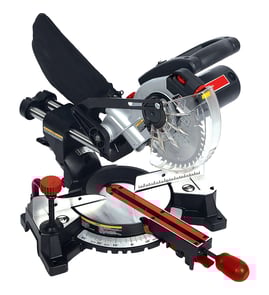

Are Dewalt Mitre saws any good?
Yes. Dewalt miter saws are a solid choice for accurate, repeatable cuts and jobsite durability; for the Dewalt DWS709 miter saw specifically, good results come from keeping the blade sharp, the fence and bevel stops aligned, and the pivot points clean and lightly lubricated per the owner's manual.
What “good” looks like on a miter saw
A miter saw is performing well when it consistently hits your layout lines and stays square without constant re-adjustment.
- Cuts are square at 90 degrees and true at common miters (45 degrees left/right)
- Bevel and miter scales return to the same stop points repeatedly
- The saw starts smoothly without excessive vibration
- The blade tracks straight without burning or wandering
- The guard moves freely and returns fully every time
Quick checks to confirm your DWS709 is cutting accurately
These checks take a few minutes and tell you whether the saw needs setup, a blade, or maintenance.
| Symptom | Most common cause | What to do first |
|---|---|---|
| Cut is not square at 90 degrees | Fence or miter detent out of alignment | Verify fence is straight, then re-square the miter setting |
| Miter is off at 45 degrees | Detent plate or stop needs adjustment | Re-check detents and calibrate stops |
| Tear-out or rough edges | Dull blade or wrong tooth count | Install a sharp blade matched to the material |
| Burning on hardwood | Dull blade or feeding too slowly | Replace blade, increase feed rate slightly |
Why it matters
A well-tuned miter saw saves material and time. When the fence, stops, and blade are set correctly, you get tighter joints in trim and molding, cleaner framing cuts, and fewer do-overs.
Tips that make any Dewalt miter saw perform better
- Use the right blade for the job (higher tooth count for trim, lower for framing)
- Keep the table and fence faces clean so stock sits flat
- Support long boards to prevent twisting during the cut
- Let the blade reach full speed before entering the workpiece
- Periodically check squareness after transporting the saw
Last updated: February 2026
What is a 709?
On the Dewalt DWS709 miter saw, “709” is the model number that identifies the saw family so you can match the correct parts, diagrams, and specifications. It is not related to IRS Form 709; for this tool, it simply means the DWS709 saw.
Where you’ll see “DWS709” on the saw
Use the model number exactly as printed when you’re looking up parts or documentation.
- Rating plate or label on the saw body (often near the motor housing or base)
- Packaging and purchase paperwork
- The cover and model listing inside the owner's manual
- Online parts diagrams and parts lists for DWS709
DWS709 vs. “Type 20” (why both matter)
Dewalt often uses a model number plus a “Type” number to identify a specific production version. When ordering parts, matching both helps ensure fit.
| Identifier | Example | What it tells you |
|---|---|---|
| Model number | DWS709 | The saw model family |
| Type number | TYPE 20 | The specific version of that model |
Why it matters for parts and repairs
Using the correct model and type prevents common ordering mistakes, especially for items like a switch, motor brushes, power cord, blade guard components, or fence and table hardware.
Quick checklist before you order parts
- Confirm the label says DWS709
- Confirm the label also shows TYPE 20
- Compare the part name in the diagram to what you’re replacing
- Check whether left and right parts are different (guards, fences, handles)
- Use the exploded view to verify fasteners and small hardware
If you meant “709” in a different context
If you’re seeing “709” on a blade, accessory, or a separate label, treat it as a product or batch identifier and still use DWS709 TYPE 20 for the saw itself when selecting parts.
Last updated: February 2026
What is the average lifespan of DWS709?
A Dewalt DWS709 miter saw typically lasts 10 to 15 years with normal DIY or light jobsite use. Lifespan depends most on motor load, dust control, and keeping the blade, pivot points, and fence aligned per the [DWS709 owner's manual].
What affects lifespan the most
- Cutting load: forcing cuts, dull blades, and thick hardwoods increase motor wear
- Dust exposure: fine dust shortens switch, bearings, and motor life
- Power quality: long undersized extension cords cause voltage drop and heat
- Maintenance: cleaning, lubrication (where specified), and fastener checks prevent premature wear
- Storage and transport: impacts can knock the miter detent plate, fence, or bevel stops out of alignment
Practical maintenance that adds years
- Unplug the saw; blow out dust from vents and moving areas after heavy use
- Replace or sharpen blades early; a sharp blade reduces motor strain
- Check fence squareness and bevel/miter stops; re-calibrate when cuts drift
- Inspect the power cord and strain relief; repair damage before it becomes intermittent
- Use dust collection when possible and keep the slide rails clean
Typical lifespan by usage pattern
| Usage pattern | Typical lifespan | What usually fails first |
|---|---|---|
| Occasional DIY (weekends) | 12 to 15 years | blade, brushes (if applicable), switch |
| Regular DIY (monthly projects) | 10 to 12 years | bearings, switch, alignment wear |
| Light jobsite (frequent transport) | 7 to 10 years | rails, detents, cord, bearings |
Why it matters
Knowing the expected lifespan helps you decide whether to tune up alignment, improve dust control, or plan for key wear items (blade, cord, switch) before a failure affects cut accuracy and safety.
Last updated: March 2026