


How do I know if my heat pump control board is bad?
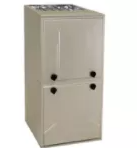
If your Icp PGF354140K00A1 package gas/electric unit has power but won’t start, won’t respond to the thermostat, or runs the blower or outdoor section at the wrong times, the control board is a top suspect. We confirm it by checking for correct input power, correct low-voltage signals, and failed outputs to components.
Common signs the control board is failing
- No response to thermostat calls (no heat, no cool, no fan) even though power is present
- Erratic cycling: starts and stops rapidly, or runs at odd times
- Blower runs constantly or never runs when it should
- Burnt smell, discoloration, corrosion, or visibly damaged solder joints on the board
- Repeated safety lockouts that reset temporarily after power cycling
- Multiple components not energizing (inducer, gas valve, contactor, blower) even though they test good
Quick checks we use before blaming the board
Turn off power at the disconnect and breaker before opening panels.
- Verify line voltage is present at the unit and at the transformer primary
- Verify 24 VAC at the transformer secondary
- Confirm thermostat signals at the control terminals (typically R to W/Y/G depending on the call)
- Inspect wiring harness plugs for loose pins, heat damage, or rubbed-through insulation
- Check safety switches (limit, rollout, pressure switch) for an open condition that would stop operation
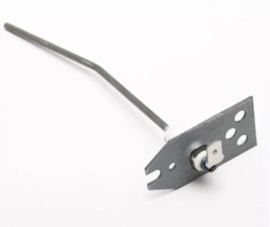
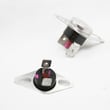
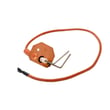
If the unit is overheating and shutting down, a failed limit circuit can look like a “bad board.” For this model, the furnace temperature limit switch 1013102 is one of the key safeties to check.
What “bad board” looks like in testing
| What we test | Normal result | Board-failure clue |
|---|---|---|
| 24 VAC supply to board | Stable 24 VAC | Drops out with no cause found |
| Thermostat call input | Signal present | Signal present but no action |
| Output to a load (blower/contactor/gas valve) | Output energizes on call | No output even though safeties are closed |
Why it matters
A control board is the traffic director for heating and cooling. Replacing it without confirming power, safeties, and wiring can waste time and money, and it can mask the real issue (like an open limit switch, damaged wire, or failing blower motor).
Last updated: February 2026
How much is a combined heating and cooling system?
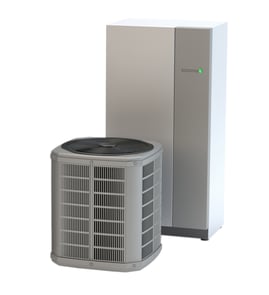
A combined heating and cooling system (like an Icp package gas/electric unit similar to model PGF354140K00A1) typically costs about $8,000 to $18,000 installed, depending on capacity, efficiency rating, ductwork condition, and local labor rates. Equipment-only pricing is usually a smaller portion of the total.
What drives the total installed price
- System type: package gas/electric vs split system (furnace + AC)
- Size (tonnage/BTU): larger homes need larger equipment
- Efficiency: higher SEER2/EER2 and AFUE usually costs more up front
- Ductwork and venting: repairs, sealing, or resizing can add significant cost
- Electrical and gas work: disconnects, breakers, gas line changes, condensate drain
- Permits and commissioning: required in many areas for safe operation
Typical cost ranges (U.S.)
| Scenario | Typical installed range | Notes |
|---|---|---|
| Like-for-like replacement (existing ductwork OK) | $8,000 to $13,000 | Most common when swapping an older package unit |
| Replacement plus ductwork repairs or upgrades | $11,000 to $18,000 | Sealing, returns, plenums, or major duct fixes |
| Higher-efficiency upgrade with added electrical/gas work | $14,000 to $20,000+ | Often includes multiple scope items beyond the unit |
Why it matters
The “system price” is rarely just the unit. Installation scope (ductwork, venting, electrical, permits, and setup) determines comfort, safety, and long-term operating cost as much as the equipment brand or model.
Parts vs full system replacement
If you are troubleshooting an existing PGF354140K00A1 unit, replacing a failed component can be far cheaper than replacing the whole system. Common service-related parts on this model include the furnace temperature limit switch 1013102 (overheat safety) and the pcb 1177656 (control board).
Last updated: February 2026
What is the $5000 AC rule?
The $5000 AC rule is a quick repair vs. replace guideline: multiply your air conditioner’s age (in years) by the estimated repair cost; if the result is over $5,000, replacement is usually the better value. For an Icp package unit like model PGF354140K00A1, also weigh reliability and efficiency.
How to use the rule (step-by-step)
- Find the system age in years (use the manufacture date on the data plate).
- Get a repair estimate that includes parts and labor.
- Multiply: age × repair cost.
- Compare the result to $5,000.
- If you are near the threshold, factor in comfort, downtime risk, and energy use.
Quick examples
| System age | Repair estimate | Age × cost | Typical decision |
|---|---|---|---|
| 8 years | $400 | $3,200 | Repair often makes sense |
| 12 years | $600 | $7,200 | Replacement often makes sense |
| 15 years | $300 | $4,500 | Repair can make sense if the unit is otherwise solid |
What the rule misses (important for package gas/electric units)
This rule is only a starting point. On a heating and cooling combined unit, one failure can point to broader wear.
- Safety and overheating protection: If you have repeated overheating or nuisance shutdowns, the furnace limit circuit needs attention. A common related part is the furnace temperature limit switch 1013102.
- Electrical control issues: Intermittent operation can involve controls such as the pcb 1177656 or a switch 1173822.
- Airflow problems: Weak airflow can overheat the furnace and reduce cooling performance; the indoor blower assembly (for example, blower 1085571) is a common checkpoint.
Why it matters
Using a simple formula helps prevent sinking money into an older system with rising breakdown risk. For model PGF354140K00A1, pairing the rule with basic troubleshooting (airflow, controls, and safety switches) leads to a more reliable decision.
Last updated: February 2026
Is it worth upgrading from 14 seer to 16 seer?
Upgrading from a 14 SEER to a 16 SEER system is worth it when your Icp PGF354140K00A1 package gas/electric unit runs cooling a lot; 16 SEER typically uses about 12% to 15% less electricity for the same cooling, which can lower summer operating costs and improve comfort.
What you gain with 16 SEER
- Lower cooling energy use (higher seasonal efficiency)
- Better temperature consistency (often with staged or variable operation)
- Improved humidity control in many installations
- Quieter operation in many newer designs
- Potentially higher resale appeal in some markets
Quick payback check (simple way to decide)
Use this rule of thumb: the more hours you cool each season and the higher your electric rate, the faster 16 SEER pays back.
| If your home is in a... | Typical cooling use | Upgrade value |
|---|---|---|
| Mild climate | Low | Usually small |
| Mixed climate | Medium | Often moderate |
| Hot climate | High | Often strong |
When 14 SEER is the better choice
- You cool only a few weeks per year
- Your current system is otherwise in good shape and properly sized
- The installed price difference is large compared to expected savings
- Ductwork issues (leaks, poor airflow) are the real efficiency problem
Why it matters for a package unit like PGF354140K00A1
With package gas/electric units, real-world efficiency depends heavily on airflow, duct sealing, and correct charge. If airflow is restricted, even a higher-SEER upgrade will not deliver its full benefit. Before upgrading, we recommend checking basics like blower performance and safety controls; for example, a tripping limit can point to overheating from low airflow (see furnace temperature limit switch 1013102).
Practical next steps
- Compare installed cost difference versus expected annual savings
- Confirm your current system size matches the home load (oversizing reduces comfort)
- Inspect and seal duct leaks; verify supply and return are not blocked
- Make sure filters are changed regularly and coils are kept clean
- If you are troubleshooting airflow or cycling issues first, start with electrical testing basics (see how to use a multimeter to test electrical parts video)
Last updated: February 2026