



Is an air handler the same as a fan coil?
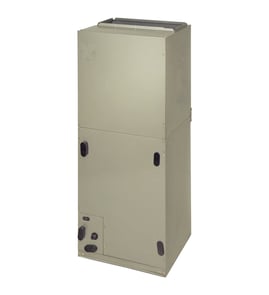
Yes. In most residential HVAC setups, an air handler and a fan coil refer to the same basic indoor unit: a blower (fan) that moves air across an evaporator coil for cooling and, when equipped, a heat source for heating. For Carrier model FC4CNF042000AAAA, you will often see both terms used interchangeably.
What each term usually means
Both names point to the indoor section that conditions and circulates air through your ductwork.
- Air handler: Common umbrella term for the indoor unit that contains the blower and coil.
- Fan coil: Highlights the two key components, the fan and the coil.
- Fan coil unit (FCU): Another way contractors may label the same equipment.
- Indoor blower section: A functional description you may see on service notes.
When the terms are not interchangeable
In some systems, people use the words differently depending on what is included in the cabinet.
| Term used | Typically includes | Common pairing |
|---|---|---|
| Air handler | Blower + evaporator coil; may include electric heat strips | Split-system AC or heat pump |
| Fan coil | Blower + coil; often paired with a boiler or chiller loop in some buildings | Hydronic systems |
Why it matters for parts and troubleshooting
Using the right term helps you land on the correct parts list and diagnose the right section of the system.
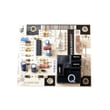
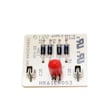
- If the blower will not run, you may be looking at the central air conditioner air handler fan control board HK61EA006 or wiring.
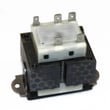
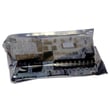
- If you have no 24-volt control power, the central air conditioner air handler transformer HT01CN241 is a common check point.
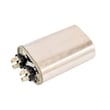
- If the motor hums but will not start, a run capacitor (when used) can be involved.
Quick safety and diagnosis tips
- Turn off power at the breaker before opening panels.
- Confirm the thermostat is calling for cooling or fan.
- Check for a tripped float switch or clogged condensate drain (common no-run cause).
- Use a meter correctly when checking voltage; see how to use a multimeter to test electrical parts video.
Last updated: February 2026
How much does a carrier 4 ton AC cost?
A Carrier 4-ton central air conditioner typically costs about $3,500 to $15,000 installed, with the biggest price drivers being efficiency (SEER2 rating), whether you choose single-stage vs variable-speed equipment, and how much ductwork or electrical work your home needs.
What changes the price the most
- Equipment efficiency and features: higher SEER2 and variable-speed systems cost more up front.
- Installation complexity: long line sets, difficult access, crane lifts, or tight attic installs raise labor.
- Ductwork condition: repairs, resizing, sealing, or adding returns can add significant cost.
- Electrical upgrades: new disconnect, breaker, or wiring changes can increase the total.
- Indoor unit match: pairing the outdoor AC with the correct indoor coil or fan coil affects both price and performance.
How your air handler (fan coil) fits into the total
Your indoor unit model FC4CNF042000AAAA is a Carrier fan coil (air handler). If the air handler is staying in place, the project cost is often lower. If it needs repair or replacement, that can add to the installed price.
Common air-handler related add-ons include:
- Replacing a failed control board such as the central air conditioner air handler fan control board HK61EA006
- Replacing a weak transformer such as the central air conditioner air handler transformer HT01CN241
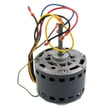
- Replacing a failing blower motor such as the furnace blower fan motor HC41AE197
Typical cost components (quick breakdown)
| Cost item | What it covers | Typical impact on total |
|---|---|---|
| Outdoor AC unit | Condenser, compressor, controls | Medium to high |
| Indoor coil or fan coil | Coil, cabinet, blower section | Medium |
| Labor and materials | Refrigerant work, brazing, evacuation, startup | High |
| Ductwork and airflow | Sealing, repairs, balancing | Low to high |
| Electrical and permits | Code items, disconnect, inspection | Low to medium |
Why it matters
A “4-ton” system is sized for a specific cooling load and airflow. Paying for correct sizing and a clean, code-compliant install usually delivers better comfort, lower humidity, and fewer breakdowns than simply buying the cheapest equipment.
Last updated: February 2026
How big is a 4 ton air handler?
A “4 ton” air handler refers to cooling capacity (about 48,000 BTU), not a standard cabinet size. For a Carrier fan coil like model FC4CNF042000AAAA, most 4-ton air handlers are roughly 21 to 24 inches wide, 50 to 60 inches tall, and 21 to 24 inches deep, but the exact dimensions depend on the specific cabinet and installation orientation.
Typical 4-ton air handler size ranges
Most residential 4-ton fan coils fall into these common ranges:
- Width: 21 to 24 inches
- Height: 50 to 60 inches
- Depth: 21 to 24 inches
- Service clearance: plan for at least 24 inches in front of the access panel
- Duct connection size: varies by plenum and airflow setup
What changes the physical size (even at 4 tons)
Two “4-ton” units can be different sizes because of:
- Cabinet style (multi-position vs. dedicated vertical)
- Blower design (ECM vs. PSC motor, housing size)
- Electric heat kit (if installed, it can change required clearances and wiring space)
- Coil configuration (A-coil vs. slab style)
- Drain pan and trap routing (space needed for condensate management)
Quick planning table (what to measure)
| What to check | Where to measure | Why it matters |
|---|---|---|
| Cabinet width | Outside left to right | Fit between framing or in a closet |
| Cabinet height | Floor to top of cabinet | Fit under ceiling or platform |
| Cabinet depth | Front panel to back | Door clearance and duct alignment |
| Access clearance | In front of service panel | Room to service blower, controls, wiring |
Why it matters
Sizing the cabinet correctly prevents installation problems like blocked return airflow, crushed duct transitions, and poor service access. It also helps avoid condensate drain issues that can happen when the unit is forced into a tight space.
Related parts that affect fit and serviceability
If you are troubleshooting airflow or planning a replacement, these model-specific parts often come up during service:
- Furnace blower fan motor HC41AE197 (blower assembly service)
- Central air conditioner air handler transformer HT01CN241 (24-volt control power)
- Central air conditioner air handler fan control board HK61EA006 (fan operation and control)
Last updated: February 2026
Where is the filter on the Carrier FC4CNF042000AAAA?
On the Carrier FC4CNF042000AAAA fan coil (air handler), the air filter is typically located at the return-air side of the system, either behind a return grille in the living space or in a filter slot at the air handler cabinet. We check both locations because many installations do not place the filter inside the blower compartment.
Most common filter locations to check
- Return grille filter: a large grille on a wall or ceiling; the filter sits directly behind it.
- Filter rack or slot at the air handler: usually where the return duct connects to the FC4CNF042000AAAA cabinet.
- Return plenum filter: a slot in the ductwork within a few feet of the air handler.
- No filter at the unit: some setups rely only on a central return grille filter.
How to find it safely
- Turn the thermostat OFF (and if possible, shut off power at the air handler switch or breaker).
- Trace the return duct (the larger duct) to where it meets the air handler.
- Look for a thin access slot/door or a removable cover where a filter could slide in.
- If you have a return grille, open it and check for a filter behind it.
What to do once you find the filter
- Match the size printed on the filter frame (for example, 16x25x1).
- Install with the airflow arrow pointing toward the blower (toward the air handler).
- Replace disposable filters about every 1 to 3 months in typical conditions.
| If you see this | It usually means | What to do |
|---|---|---|
| Filter behind a wall/ceiling grille | Filter is at the central return | Replace it there; no filter may be at the unit |
| A narrow slot near the return duct connection | Filter rack at the air handler | Slide filter out and replace same size |
| No slot and no grille filter | Filter may be in return ductwork | Look for a small filter door in the return plenum |
Why it matters
A missing or clogged filter can restrict airflow, which can cause weak heating/cooling, icing at the coil, higher energy use, and extra strain on the blower motor.
If you are troubleshooting airflow or blower operation on this model, the furnace blower fan motor HC41AE197 and the central air conditioner air handler fan control board HK61EA006 are two common components involved in air movement and fan control.
Last updated: February 2026