Error Codes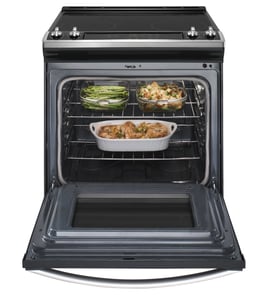



What is the life expectancy of a Bosch oven?
Most Bosch ovens, including the Bosch HES245U freestanding range, typically last 10 to 15 years with normal home use and basic maintenance. Heat stress, heavy self-clean use, and worn door sealing parts can shorten lifespan; timely repairs usually extend it.
- Average home use: 10 to 15 years
- Heavy use (daily high-heat cooking): often closer to 8 to 12 years
- Light use and good care: can exceed 15 years
Common factors that reduce oven life:
- Running frequent self-clean cycles (high heat stresses wiring and electronics)
- Poor door sealing that lets heat escape
- Overheating from blocked venting or damaged air channels
- Loose electrical connections at the power hookup
If your oven still heats but performance is slipping, these model-matched parts are often involved:
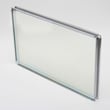
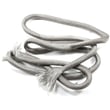
- Door gasket 00491569 (helps the oven hold temperature and protects controls from excess heat)
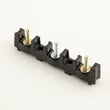
- Oven sensor 00619630 (helps regulate temperature accurately)
- Lamp assembly 00415045 (restores interior lighting for safer use)
| Symptom | What it often points to | Example part for HES245U |
|---|---|---|
| Oven runs hot or cold | Temperature sensing issue | Oven sensor |
| Long preheat, uneven baking | Heat loss or airflow issue | Door gasket, air channel |
| Door doesn’t close firmly | Hinge or gasket wear | Oven hinge, door gasket |
A range that holds temperature correctly and seals well puts less strain on heating components and wiring. Fixing small issues early (like a weak seal or inaccurate sensing) often prevents bigger failures later.
Last updated: January 2026
What is a common problem of the electric oven?
A very common problem on a Bosch electric oven like model HES245U is incorrect or uneven heating (food takes too long, browns unevenly, or the oven never reaches set temperature). The most frequent causes are a failing temperature sensor, a heating element issue, or heat loss from a worn door seal.
- Oven preheats slowly or never reaches the set temperature
- Food is undercooked on one rack and overcooked on another
- Temperature swings widely during baking
- Broil works but bake seems weak (or the opposite)
- Oven light does not work (separate issue, but often noticed during troubleshooting)
If your HES245U is not heating correctly, these parts are common suspects:
- Sensor 00619630 (tells the control how hot the oven is)
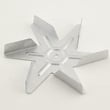
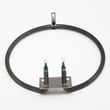
- Heater element 00436632 (convection heating circuit on many ranges)
- Door gasket 00491569 (prevents heat from leaking around the door)
- Confirm the range has full power (a range typically needs 240V; a tripped breaker can leave you with partial power).
- Inspect the door seal for gaps, tears, or areas that are flattened.
- If the oven heats but is consistently off by a large amount, suspect the oven temperature sensor first.
- If you see arcing, burning smell, or visible damage, stop using the oven and repair the issue before further cooking.
| Symptom | Most likely cause | What to do next |
|---|---|---|
| Oven won’t reach temp | Sensor out of range, element not heating | Test sensor resistance; inspect element |
| Uneven baking | Convection heat issue, door leak | Check convection element and door gasket |
| Heat escapes around door | Worn seal, hinge alignment | Inspect gasket; check door closes firmly |
| Oven light out | Lamp assembly failed | Replace the lamp assembly |
When the oven temperature is inaccurate, cooking times and food safety are affected, and the range can overwork components. Fixing the root cause (sensor, element, or door seal) restores stable temperatures and more consistent baking results.
Last updated: January 2026
Is it cheaper to repair or replace an oven?
It’s usually cheaper to repair a Bosch freestanding range like model HES245U when the unit is under about 10 to 15 years old and the repair total stays well below the cost of a comparable new range. Replacement makes more sense when repair costs approach about half the price of a new unit or multiple major parts are failing.
- Choose repair when the problem is isolated (one failed part) and the oven otherwise heats evenly.
- Choose replace when you have repeated breakdowns (heating, controls, door, wiring) within a year.
- Choose replace if the oven has poor temperature control even after sensor or element checks.
- Choose repair if the fix is a common wear item (door gasket, hinge, lamp) and labor is reasonable.
- Choose replace if you see heat damage, burning smell, or recurring electrical issues.
| Scenario | What it usually means | Best value choice |
|---|---|---|
| One mid-priced part plus 1 service call | Single failure, rest of range is solid | Repair |
| Two or more significant parts in one visit | Multiple systems aging at once | Replace |
| Door won’t close or seal, but heating is fine | Heat loss and longer cook times | Repair |
| Temperature swings and long preheat times | Possible sensor, element, or airflow issue | Repair first, then reassess |
If your issue matches one of these, repair is commonly cost-effective because it’s targeted and predictable:
- Worn door seal: door gasket 00491569
- Door alignment or spring tension issues: oven hinge 00491538
- Oven light not working (after verifying power is off): lamp assembly 00415045
- Inaccurate oven temperature (after basic checks): sensor 00619630
A properly repaired oven holds temperature better, seals heat correctly, and avoids longer bake times that can make cooking inconsistent. Replacing too early can cost more than fixing a single failed component.
Last updated: January 2026