 Owner’s manual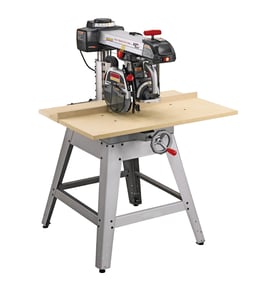

Are radial arm saws illegal?
Radial arm saws are not illegal to own or use in the U.S., including the Craftsman 113198410 10-inch deluxe electronic radial saw. They are considered higher-risk than many modern saw types, so safe setup, guarding, and operating technique matter.
What’s actually “allowed” vs. what’s regulated
Radial arm saw legality usually gets confused with workplace safety rules.
- Ownership and home use: Legal.
- Workplace use: Allowed, but employers must follow applicable safety requirements (guarding, training, safe procedures).
- Local rules: Some job sites or schools may restrict certain tools by policy (that is not the same as a law).
Key safety checks we recommend for a radial arm saw
Before you cut, confirm the saw is set up to reduce kickback and climbing.
- Verify the upper and lower blade guards are installed and move freely.
- Use the correct blade type; many users choose a blade intended for radial arm saw or sliding miter saw use.
- Keep the arm and carriage adjusted so there is no side-to-side play.
- Lock the yoke and bevel settings before cutting.
- Use a solid fence and keep the table flat and secure.
- Stand slightly to the side of the cut path; keep hands out of the line of cut.
Common operations and risk level
| Operation | Typical risk on a radial arm saw | Notes |
|---|---|---|
| Crosscutting | Lower | Most common use; keep the carriage controlled. |
| Ripping | Higher | Requires correct anti-kickback setup and technique. |
| Dadoing | Medium | Use proper dado set and guarding practices. |
Why it matters
Radial arm saws can “climb” toward the operator during certain cuts if the blade, feed direction, or adjustments are wrong. Keeping guards in place and the carriage properly adjusted reduces the chance of sudden movement and kickback.
Where to confirm model-specific setup and adjustments
For the Craftsman 113198410, use the 113198410 owner's manual for the correct guard configuration, alignment steps, and operating instructions.
Last updated: February 2026
When did Craftsman stop making radial arm saws?
Craftsman radial arm saw production largely ended in the mid-1990s; most owners and parts references place the end of the main production run around 1995. For your Craftsman model 113198410 (10-inch deluxe electronic radial saw), the best way to confirm the exact era and original specifications is to check the owner's manual.
What we can say with confidence
Radial arm saws were most common in home shops from the late 1950s through the 1980s, and Craftsman-branded models like 113198410 are typically associated with that long production era, with the category tapering off by the mid-1990s.
- Most Craftsman radial arm saw model families were sold for decades, with revisions over time.
- The “stop making them” date is usually tied to when the last major retail run ended (commonly cited as the mid-1990s).
- Individual model numbers can overlap years due to carryover inventory and regional sales.
- Manuals often include key identifiers (features, wiring diagram, adjustments) that help date the saw.
How to narrow down the year for model 113198410
Use these practical checks to pin down the timeframe more precisely.
- Look for a date code or serial tag on the arm, column, or motor housing.
- Compare your switch style, guard style, and yoke markings to the diagrams in the manual.
- Check whether your saw is labeled “electronic” speed control; that feature helps narrow the era.
- Match the wiring schematic in the manual to what is on your saw before ordering electrical parts.
Quick dating clues (typical)
| Clue on the saw | What it usually indicates |
|---|---|
| Metal ID plate with older Craftsman styling | Earlier production era |
| “Electronic” control labeling | Later-era revisions |
| Modern warning label formats | Later production |
Why it matters
Knowing the approximate production era helps us match the correct parts diagrams, wiring schematic, and adjustment procedures so your saw cuts accurately and runs safely.
Last updated: February 2026
Can I use a dado blade on a radial arm saw?
Yes, you can use a dado blade on a Craftsman 113198410 radial arm saw, but we only recommend doing it if your saw is specifically set up for dadoing and you follow the exact guarding, arbor, and operating instructions. Dado work on a radial arm saw demands tighter setup and safer technique than standard crosscuts.
What must be true before you try it
- The arbor length and arbor nut fully secure the entire dado stack (no partial threads engaged).
- The blade guard and anti-kickback features (if equipped) can be installed and used correctly for the cut.
- The saw is aligned (arm, yoke, and fence) so the carriage tracks straight and does not “climb.”
- The workpiece is fully supported and clamped when practical.
- You use the correct rotation direction and feed technique for a radial arm saw.
Safer setup and operating tips for dado cuts
- Unplug the saw before changing blades or adjusting the guard.
- Use the minimum dado width needed; avoid overly wide stacks.
- Set depth with the arm locked and the table/fence secure.
- Make test cuts in scrap to confirm depth and width before cutting your project piece.
- Keep the carriage travel smooth; never force the cut.
Quick comparison: radial arm saw dado vs. table saw dado
| Topic | Radial arm saw | Table saw |
|---|---|---|
| Feed direction | Carriage moves through the cut | Workpiece moves through the cut |
| Common risk | Self-feeding or “climb” tendency | Kickback from stock movement |
| Best practice | Extra attention to alignment and control | Extra attention to fence, riving/guarding |
Why it matters
A dado stack removes a lot of material quickly. On a radial arm saw, that higher cutting load can amplify any alignment issue or technique mistake, which increases the chance of the saw grabbing and pulling through the cut.
Where to confirm your exact configuration
For the Craftsman 113198410, use the owner's manual to verify approved blade types, maximum dado width (if specified), guard setup, and the correct operating procedure for non-through cuts.
Last updated: February 2026
Why did they stop making radial arm saws?
Radial arm saws became far less common because most woodworkers shifted to tools that are simpler to set up and easier to use safely for everyday cuts, especially sliding compound miter saws and table saws. For a Craftsman 113198410 10-inch deluxe electronic radial saw, safe setup and guarding are critical to getting good results.
What changed in the market
Radial arm saws can do a lot (crosscuts, miters, bevels, some dado work), but newer tools often do those same jobs with less adjustment and less chance of the saw “self-feeding” toward the operator.
- Sliding compound miter saws took over most crosscut and miter work
- Table saws became the go-to for ripping with better control and common safety add-ons
- Many users did not keep radial arm saws perfectly aligned, which hurts accuracy
- More guarding and alignment complexity made them less appealing for casual DIY use
Safety and usability factors (what matters most)
A radial arm saw is operator-facing; the blade can climb or pull through the cut if technique, blade choice, or setup is off. That risk, plus the learning curve, pushed demand down over time.
| Task | Radial arm saw | Common replacement today |
|---|---|---|
| Crosscutting boards | Powerful, versatile, but setup-sensitive | Sliding compound miter saw |
| Ripping | Possible, but higher technique demands | Table saw |
| Repetitive cut accuracy | Good when tuned | Often easier to repeat on a miter saw |
If you own the Craftsman 113198410, how to use it confidently
We recommend treating alignment and guarding as routine maintenance, not a one-time setup.
- Verify arm and yoke locks hold firmly before cutting
- Use the correct blade type for the cut (crosscut vs. rip)
- Keep the fence straight and securely fastened
- Confirm the return spring and carriage travel feel smooth (no binding)
- Recheck squareness after moving the saw or changing setups
For model-specific adjustments, alignment steps, and operating guidance, use the owner's manual.
Why it matters
Most “radial arm saw problems” come from setup drift, worn mechanical parts, or using the wrong blade for the operation. When the saw is tuned and used correctly, it can still be a precise, capable shop tool.
Last updated: February 2026
Are radial arm saws worth anything?
Yes. A Craftsman radial arm saw like model 113198410 is usually worth something if it’s complete, runs smoothly, and has tight, accurate adjustments; most local resale prices land in the $50 to $300 range, with higher prices for exceptional condition, accessories, and a clean, rust-free arm and column. For model-specific setup and adjustments, use the owner's manual.
What drives the value (and what buyers check)
- Completeness: blade guard, anti-kickback parts, table boards, fence, yoke and carriage hardware
- Mechanical condition: arm travel is smooth, carriage bearings are not sloppy, column locks hold
- Accuracy: saw can be tuned to cut square and stay square after locking
- Motor health: starts without excessive sparking, reaches speed quickly, no burning smell
- Cosmetics and rust: surface rust is common; heavy pitting lowers value
- Included extras: dado head (where allowed), molding head (often avoided), extra tables, stand
Quick pricing guide (typical local-market ranges)
| Condition of the saw | What it usually means | Typical value |
|---|---|---|
| Non-running or missing key parts | Project or parts-only | $0 to $75 |
| Running but needs tune-up | Common for older saws | $75 to $175 |
| Clean, complete, tuned | Ready to use safely | $175 to $300 |
| Collector-grade, exceptional | Uncommon for many Craftsman units | $300+ |
How we recommend estimating your saw’s value
- Confirm the exact model number (113198410) on the ID plate.
- Inspect the table and fence; badly cut-up tables are normal, but missing hardware matters.
- Check for play by grabbing the motor carriage and gently trying to wiggle it; looseness lowers value.
- Test key locks (arm lock, bevel lock, miter lock, column lock) to ensure they hold firmly.
- Do a basic crosscut test on scrap wood; burning, wandering, or chatter suggests alignment or bearing issues.
Why it matters
Radial arm saws can be very capable for crosscuts and dados, but their resale value depends heavily on safe, repeatable accuracy. A saw that locks solidly and cuts square is worth more because it saves setup time and reduces risky workarounds.
Last updated: February 2026