


Should a 25 year old furnace be replaced?
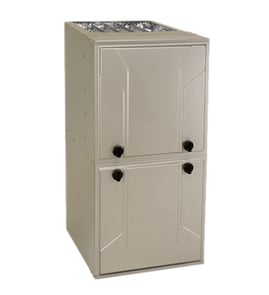
Yes. A 25-year-old Icp NUGK100DH08 condensing upflow gas furnace is at the end of a typical furnace lifespan (15 to 25 years), so replacement is the practical choice for reliability and efficiency, especially if you are facing repeated repairs or comfort problems.
Quick replacement decision checklist
Replace now if you have any of these:
- Frequent service calls or multiple parts replaced in the last 2 to 3 seasons
- Trouble keeping steady heat (short cycling, uneven temperatures, weak airflow)
- Rising heating costs with no change in thermostat settings
- Noisy operation from the blower or inducer area
- Corrosion, water staining, or condensate drainage issues around the furnace
Repair vs replace: a simple rule of thumb
If a major component fails on a 25-year-old furnace, replacement usually makes more sense than investing in another large repair.
| Situation | What it usually means | Typical next step |
|---|---|---|
| Small electrical part fails (like a run capacitor) | Lower-cost repair | Repair if the rest of the system is stable |
| Blower motor or inducer assembly fails | High-cost repair on an aging unit | Replace furnace (or get a firm quote comparison) |
| Limit switch trips repeatedly | Often airflow or overheating related | Diagnose airflow first; replace if problems persist |
Parts that commonly drive the decision
On older furnaces, these parts can be the tipping point because they are higher-cost or point to broader wear:
- Furnace blower fan motor 613209 (main circulating blower motor)
- Furnace blower 1011350 (inducer vent motor assembly)
- Limit switch 1013102 (overheat safety switch)
- Furnace fan control relay 1000742 (controls blower operation)
Why it matters
At 25 years, the risk of an in-season breakdown goes up and efficiency is typically lower than modern condensing furnaces. Replacing proactively helps avoid emergency no-heat situations and can reduce operating cost over time.
Ordering parts while you decide
If you are keeping the furnace running short-term, you can order replacement parts for NUGK100DH08 from the parts list for this model, or search by model number on Sears PartsDirect.
Last updated: February 2026
What tonnage is a 100,000 BTU furnace?
A 100,000 BTU furnace (like an Icp NUGK100DH08 condensing upflow gas furnace) is typically paired with about 4 tons of air conditioning capacity. In HVAC terms, “tonnage” is mainly an air conditioner or heat pump size; furnaces are sized in BTUs for heating.
Quick conversion (BTU to tons)
Air conditioner tonnage is based on cooling output:
- 1 ton of cooling = 12,000 BTU/hr
- 100,000 BTU/hr ÷ 12,000 = 8.3 tons (this is a math conversion, not a normal furnace-to-AC match)
- In real systems, a 100,000 BTU furnace commonly supports 3 to 5 tons of cooling, with 4 tons being a frequent match
| Item | What it measures | Typical unit |
|---|---|---|
| Furnace | Heating capacity | BTU/hr |
| Air conditioner / heat pump | Cooling capacity | Tons |
Why the “8.3 tons” number is misleading
A furnace’s 100,000 BTU rating is about heat input/output for heating, while AC tonnage is cooling capacity. The correct match depends on your home’s cooling load and the furnace blower’s airflow capability (roughly 350 to 450 CFM per ton).
What to use to size it correctly
We size cooling tonnage to the home, then confirm the furnace can move the required airflow.
- Use a load calculation (Manual J) to pick AC tonnage
- Confirm blower airflow target (CFM) for the selected tonnage
- Check duct size and static pressure (duct restrictions can limit airflow)
- Match the indoor coil and outdoor unit to the selected tonnage
Parts that affect airflow (and tonnage performance)
If the system is “tonnage matched” on paper but struggles in real life, airflow parts are often involved. For the NUGK100DH08, common airflow-related parts include:
- Furnace blower fan motor 613209 (drives the circulating blower)
- Furnace blower fan wheel 600587 (moves air through the duct system)
- Capacitor 12907 (helps the motor start and run properly)
Why it matters
An oversized or undersized cooling match can cause humidity problems, short cycling, noise, and higher energy use. Getting the tonnage right, then ensuring proper airflow, is what makes the system comfortable and efficient.
You can order replacement parts for your Icp NUGK100DH08 from the parts list for this model, or search by model number on Sears PartsDirect.
Last updated: February 2026
How much does it cost to install a 100,000 BTU furnace?
Installing a 100,000 BTU gas furnace typically costs about $4,000 to $9,000 installed in the U.S., depending on efficiency level, venting changes, ductwork condition, and local labor rates. For an Icp condensing upflow gas furnace like model NUGK100DH08, the biggest cost swings usually come from venting, condensate drain work, and any code-required upgrades.
What drives the installed price
These items usually explain why two “100,000 BTU” installs can be thousands apart:
- Furnace efficiency and type: condensing (high-efficiency) installs often need PVC venting and condensate management.
- Venting and combustion air: new intake/exhaust routing, roof or sidewall termination, and clearances.
- Condensate drain and neutralizer: routing to a drain, pump needs, and adding a neutralizer when required.
- Ductwork and airflow corrections: undersized returns, restrictive filters, or leaky ducts.
- Electrical and controls: new disconnect, wiring cleanup, thermostat upgrades.
- Permits and inspections: varies widely by area.
Typical cost ranges (quick guide)
| Scenario | What’s included | Typical installed range |
|---|---|---|
| Straight swap | Similar furnace, minimal vent/drain changes | $4,000 to $6,000 |
| High-efficiency upgrade | New PVC venting, condensate drain work | $6,000 to $9,000 |
| Complex install | Ductwork fixes, major vent reroute, added accessories | $8,000 to $12,000 |
Why it matters for a 100,000 BTU furnace
A 100,000 BTU furnace can be the right size, but airflow and venting details determine comfort, noise, reliability, and safety. If airflow is restricted, the furnace can overheat and trip safeties such as a limit switch.
Parts that commonly come up during service (not always needed for install)
Installers often inspect or replace wear items during troubleshooting or a “no-heat” call:
- Limit switch 1013102 (overheat safety that can shut burners off)
- Furnace fan control relay 1000742 (controls blower operation on many systems)
- Capacitor 12907 (supports motor starting/running on certain blower setups)
- Neutralizer 612827 (helps treat condensate on condensing furnaces)
If you are pricing parts or planning a repair on NUGK100DH08, you can order from the parts list for this model, or search by model number on Sears PartsDirect.
Last updated: February 2026
Why is my furnace turning on but not igniting?
If your Icp NUGK100DH08 furnace powers up (inducer or blower runs) but the burners never light, the usual causes are gas supply problems, a dirty flame sensor, a failed igniter, or a safety switch opening (pressure switch or high-limit). Start with safe checks, then focus on ignition and airflow.
Safe checks we recommend first
- Set the thermostat to HEAT and raise the set temperature above room temperature.
- Confirm the furnace service switch is ON and the breaker is not tripped.
- Verify the gas shutoff valve is fully open (handle parallel to the pipe).
- Replace a clogged air filter; restricted airflow can open the high-limit and stop ignition.
- Check intake and exhaust pipes for blockage (snow, leaves, ice) on a condensing upflow furnace.
What the ignition sequence points to
Most furnaces follow this order: inducer starts, pressure switch proves draft, igniter heats, gas valve opens, flame lights, flame sensor proves flame. Use what you see to narrow the cause.
| What you observe | Most likely cause | What to do next |
|---|---|---|
| Igniter never glows | Igniter or control issue | Have the igniter circuit tested (power off before inspection) |
| Igniter glows, no flame | Gas supply, gas valve, or draft proving issue | Confirm gas is on; clear venting; technician test of gas valve and safeties |
| Flame lights then shuts off in seconds | Dirty flame sensor | Clean the flame sensor; replace if symptoms continue |
| Heats briefly then shuts down and retries | High-limit opening from low airflow | Replace filter, open registers, check blower performance |
Model-related parts that can contribute
Ignition failures are often triggered by overheating or poor airflow.
- If the unit heats briefly then shuts down, check the limit circuit; the limit switch 1013102 is the temperature safety that opens on overheating.
- If airflow is weak or the blower is noisy, inspect the blower assembly; a failing furnace blower fan motor 613209 or damaged furnace blower fan wheel 600587 can lead to limit trips.
Why it matters
Repeated failed ignition attempts can cause lockout and no heat. Fixing airflow and venting issues also prevents overheating that can damage controls and shorten furnace life.
To order model-matched parts for NUGK100DH08, use the parts list for this furnace; for broader searches by model number, use Sears PartsDirect.
Last updated: February 2026
What is the most common part to fail on a furnace?
On an Icp condensing upflow gas furnace like model NUGK100DH08, the most commonly replaced failure items are ignition components and airflow safety parts; in real-world “no heat” calls, a worn igniter, a weak run capacitor, or a tripping limit switch are frequent culprits. Use symptoms and basic checks to pinpoint the failed part before ordering.
Most common failure points (what fails and what it looks like)
- Ignition system (igniter/flame sensing): inducer runs but burners do not light, repeated retries
- Run capacitor: motor hums, slow start, intermittent blower or inducer operation
- Limit switch: burners light then shut off, short cycling, overheating symptoms
- Fan control relay: blower timing issues, blower not running when it should
- Condensate handling on condensing furnaces: water backups, pressure switch trips, shutdowns (often tied to drain/neutralizer restrictions)
Quick checks we recommend before replacing parts
- Confirm thermostat is calling for heat and the furnace has power
- Check and replace a dirty air filter; restricted airflow commonly triggers limit trips
- Watch the startup sequence: inducer, ignition attempt, flame, then blower
- Look for water around the furnace base or drain line restrictions (condensing models)
- If you use a meter, follow safe testing practices; see how to use a multimeter to test electrical parts video
Common “symptom to part” guide for NUGK100DH08
| Symptom | Most likely area | Example part on this model page |
|---|---|---|
| Motor struggles to start or hums | Run capacitor | Capacitor 12907 |
| Burners shut off quickly, then retry | High-limit circuit/overheat | Limit switch 1013102 |
| Blower timing is erratic or blower will not run | Blower control | Furnace fan control relay 1000742 |
| Water-related shutdowns on a condensing furnace | Condensate drain/neutralizer restriction | Neutralizer 612827 |
Why it matters
Furnaces fail for different reasons, but “most common” repairs usually come down to parts that cycle often (ignition and motors) or parts that shut the system down for safety (limits and controls). Matching the symptom to the correct component prevents repeat breakdowns and unnecessary parts returns.
You can order replacement parts for your NUGK100DH08 from the parts list for this model, or search by model number on Sears PartsDirect.
Last updated: February 2026