Owner’s manual
 Error Codes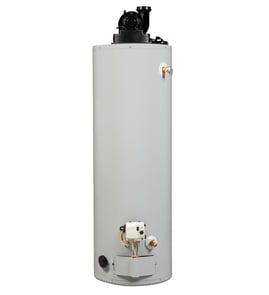




How do I read my water heater model number?
To read the model number on your Kenmore gas water heater, look for the rating plate (label) on the tank and copy the model number and serial number exactly as printed. For this unit, the model number you’ll use for parts and service is 1533311402.
Where to find the model number on model 1533311402
Most Kenmore gas water heaters place the rating plate on the outside of the tank. In the diagram, it’s identified as the rating plate.
- Check the side of the tank near the gas control valve/thermostat area
- Look for a label that includes Model No. and Serial No.
- Write the characters exactly (numbers and any punctuation)
- Take a clear photo of the label for future reference
- Keep the information with your paperwork and 1533311402 owner's manual
What information to copy (and what to ignore)
When ordering parts or scheduling service, the key items are the model and serial number, plus the gas type.
- Model number
- Serial number
- Type of gas (natural or propane)
- Part description (what you need replaced)
- Any status light flashes or error indications (if equipped)
Quick reference
| You see on the label | Use it for | Why it matters |
|---|---|---|
| Model number | Parts lookup | Ensures correct fit and compatibility |
| Serial number | Service history | Helps identify production details |
| Gas type | Safety and correct parts | Prevents installing the wrong gas components |
Why it matters
Kenmore water heater parts like the pilot assembly, thermocouple, and gas control valve can vary by model series. Using the exact model number (1533311402) prevents ordering the wrong part and reduces downtime.
Last updated: January 2026
What is the life expectancy of a Kenmore water heater?
Most Kenmore gas water heaters, including model 1533311402, typically last 8 to 12 years. You can often extend tank life with routine maintenance like anode rod inspections and annual temperature and pressure relief valve checks outlined in the 1533311402 owner's manual.
What affects water heater lifespan most
- Water quality: Hard or aggressive water speeds up corrosion inside the tank.
- Anode rod condition: A depleted anode rod allows the tank to corrode faster.
- Maintenance frequency: Regular checks reduce premature failures.
- Installation location: Water heaters eventually leak, so proper drainage protection matters.
- Operating conditions: Higher temperature settings and heavy usage increase wear.
Maintenance schedule we recommend for 1533311402
The manual calls out specific intervals that directly impact service life.
| Item | How often | Why it matters |
|---|---|---|
| Anode rod inspection | Within 3 years, then yearly | Replacing a depleted anode rod can extend tank life |
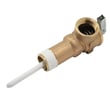
| T and P relief valve test | At least once a year | Confirms the safety valve operates correctly |
| Visual leak and venting check | Monthly | Catches small leaks and venting issues early |
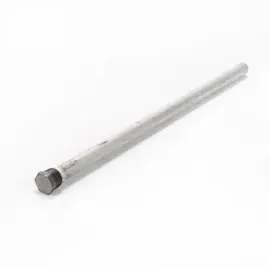
If your anode rod is due, using the correct replacement for this model helps protect the tank; see the water heater anode rod 100109434 and the water heater secondary anode 100300397 if your unit uses a secondary rod.
Signs it is near end of life
- Water pooling under the tank or rust streaks on the jacket
- Rumbling or popping noises that persist after routine care
- Hot water runs out faster than it used to
- Frequent pilot outages or burner problems (separate from tank life)
- Discolored hot water that returns after flushing
Why it matters
Once the steel tank starts leaking from internal corrosion, replacement is the practical fix. Staying ahead of anode rod wear is the most effective way to get the full expected lifespan from a Kenmore gas water heater.
Last updated: January 2026
What is the average cost of a 50 gallon gas water heater?
A 50-gallon gas water heater typically costs about $800 to $2,500 installed, depending on brand, efficiency, venting changes, and local labor rates. For Kenmore model 1533311402, your total can land toward the higher end if gas control, venting, or code-required upgrades are needed.
What drives the price most
- Type of replacement: standard atmospheric vent vs. power-vent or high-efficiency
- Labor and location: access (garage vs. tight closet), stairs, and haul-away
- Venting changes: new vent pipe, draft hood, or chimney liner work
- Gas line work: shutoff valve, sediment trap, or piping updates
- Code upgrades: expansion tank on closed systems, drip pan, seismic straps (where required)
Typical cost breakdown (installed)
| Cost item | Common range | Notes |
|---|---|---|
| 50-gallon gas water heater (unit) | $600 to $1,800 | Higher for high-efficiency or power-vent models |
| Installation labor | $400 to $1,200 | More if access is difficult or same-day emergency |
| Materials and upgrades | $100 to $800 | Venting, gas fittings, shutoff, expansion tank, pan |
| Permits (where required) | $50 to $300 | Varies by city and county |
Model-specific notes for Kenmore 1533311402
Your 1533311402 is a 50-gallon natural gas model (per the 1533311402 owner's manual). When budgeting, plan for common service items that can affect performance and replacement decisions:
- American water heaters water heater gas control valve 100112337 (gas control valve/thermostat)
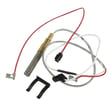
- Water heater pilot assembly 100112330 (pilot and tubing assembly)
- Water heater thermocouple 100112327 (flame-sensing safety component)
- Water heater vent draft hood 100111362 (draft hood used with atmospheric venting)
Why it matters
A “cheap” installed price often excludes venting changes and safety upgrades. Getting the right venting and gas control setup helps prevent nuisance shutdowns, poor combustion, and inconsistent hot water.
Last updated: January 2026
What is the most common problem with a gas hot water heater?
On the Kenmore gas water heater model 1533311402, the most common issue we see is reduced performance caused by mineral sediment and airflow or venting problems that interfere with proper combustion. Sediment can slow hot water recovery, and restricted combustion air can make the burner run poorly or shut down.
Quick checks we recommend first
- Confirm the heater is venting correctly; draft should pull into the draft hood while the burner is firing.
- If the unit seems to be “leaking” right after a refill or heavy hot water use, allow 1 to 2 hours for the tank to warm up; it may be normal condensation.
- Check for slow recovery symptoms (hot water runs out quickly, long reheat times).
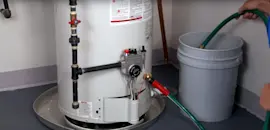
- Inspect the base area for lint and dust buildup that can restrict combustion air.
- If you smell sulfur or “rotten egg” odor, focus on anode rod related water chemistry issues.
What “most common” looks like (symptom to likely cause)
| Symptom | Most likely cause | What to do next |
|---|---|---|
| Slow hot water recovery | Restricted combustion air, blocked venting, or sediment | Clean air intake areas; flush tank; verify venting |
| Sizzling or frying noise, water droplets | Condensation during cold fill or heavy use | Wait 1 to 2 hours; then re-check for true leaks |
| Pilot goes out | Excessive condensation dripping onto burner, or ignition components failing | Address venting/condensation; inspect ignition parts |
| Drip from T&P relief valve | High water pressure or thermal expansion | Check pressure/expansion control; inspect valve |
Parts that commonly come up during diagnosis
These parts are often involved when combustion, pilot, or recovery problems show up:
- Water heater pilot assembly 100112330 (pilot ignition and flame sensing)
- Water heater thermocouple 100112327 (proves pilot flame to keep gas valve open)
- Water heater air intake screen 100111332 (helps prevent lint and dust restriction)
Why it matters
Gas water heaters depend on clean combustion air and proper venting to heat efficiently and safely. When airflow is restricted or sediment builds up, you get slower recovery, nuisance shutdowns, and symptoms that can look like leaks (condensation).
Where to confirm model-specific procedures
Use the 1533311402 manual for the exact venting checks, cleaning guidance, and the troubleshooting chart for slow recovery, condensation, and relief valve dripping.
Last updated: January 2026