Owner’s manual
 Error Codes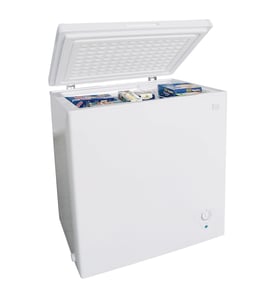

Where is the model number on a Kenmore chest freezer?
On a Kenmore chest freezer like model KLFC019MWD, the model number is printed on the appliance’s rating label (model and serial tag). You’ll typically find that label inside the cabinet near the top edge, or on an exterior side or back panel; check the KLFC019MWD owner's manual for the exact label location callouts.
Look for a paper or foil label with model number and serial number. Check these spots:
- Inside the freezer cabinet on a side wall (often near the upper rim)
- Inside near the lid opening, along the top edge of the liner
- Exterior back panel near the compressor area
- Exterior side panel near the rear bottom corner
- Near the hinge area (inside or just under the lid)
We recommend writing down the full model number exactly as shown (letters, numbers, and any dashes).
| What to capture | Example | Why we need it |
|---|---|---|
| Model number | KLFC019MWD | Matches the correct parts diagrams and lists |
| Serial number | (varies) | Helps confirm production run and compatible revisions |
| Electrical info | Volts/amps | Useful for troubleshooting power and start issues |
The model number is the fastest way to match the correct Kenmore chest freezer parts and diagrams. Even small differences in a model series can change items like the thermostat control, lid gasket, hinges, or wiring harness routing.
Once you have the model number, use the parts list for KLFC019MWD first; if you are searching other Kenmore models or cross-referencing diagrams, you can also search by model number on Sears PartsDirect.
Last updated: February 2026
How much does a deep freeze typically cost?
A deep freezer (including chest freezers like the Kenmore KLFC019MWD) typically costs about $220 to $2,000+, with many household models landing in the $450 to $1,340 range depending on capacity (cubic feet), chest vs. upright design, and features like manual defrost, interior lighting, and temperature alarms.
Prices vary most by size and type.
- Small (compact) chest freezers: lowest entry price; best for apartments or overflow storage
- Mid-size chest freezers: most common value range for families
- Large chest freezers: higher cost; more floor space required
- Upright freezers: often cost more than chest models with similar capacity
- Garage-ready or feature-heavy models: higher price due to controls, alarms, and insulation
| Freezer type | Common household price range | Notes |
|---|---|---|
| Chest freezer | $350 to $800 | Usually the best cost per cubic foot |
| Upright freezer | $450 to $1,100+ | Easier organization; often higher upfront cost |
| Large or premium units | $1,100 to $2,000+ | More capacity and features; higher operating cost potential |
These factors usually change the price more than brand name alone:
- Capacity (cubic feet): bigger costs more
- Defrost style: manual defrost often costs less than frost-free
- Temperature control: basic dial vs. electronic control
- Convenience features: baskets, interior light, lock, alarm
- Efficiency and insulation: better insulation can cost more upfront
- Finish and build: upgraded exterior and hinges can add cost
The cheapest freezer is not always the lowest-cost option long term. Matching capacity to your storage needs and choosing the right feature set helps you avoid wasted space, higher energy use, and food loss from temperature swings.
- Confirm your freezer’s features and operating guidance in the owner's manual
- If you are shopping for replacement parts by model number, start with the parts list for KLFC019MWD, or search by model on Sears PartsDirect
- If you are troubleshooting electrical issues before buying parts, use a meter and follow safe testing practices (see how to use a multimeter to test electrical parts video)
Last updated: February 2026
What can cause a chest freezer to stop working?
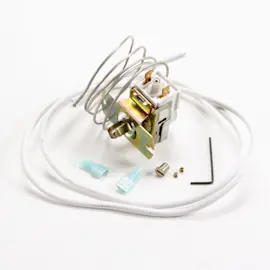
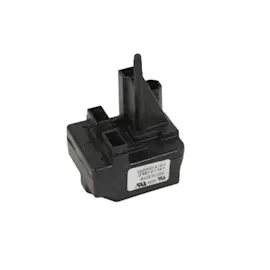
A Kenmore chest freezer like model KLFC019MWD can stop working because it is not getting steady power, airflow is restricted, the temperature control is set incorrectly, or a key start/cooling component (start relay, compressor, or thermostat) is failing. Use the checks below to pinpoint the cause.
- Confirm the outlet has power (try a lamp); reset the breaker or GFCI if tripped.
- Make sure the control is set to a colder setting; wait 12 to 24 hours after changes.
- Check the lid closes fully and the gasket seals all the way around.
- Avoid overpacking; leave space so cold air can circulate.
- Look for heavy frost buildup; excessive frost can block airflow and reduce cooling.
- Verify the freezer is in a suitable location with ventilation space around it.
If the freezer is completely dead (no sound, no cooling), focus on power and controls. If it runs but will not freeze, focus on airflow, frost, and the sealed system.
| Symptom | What it usually points to | What we recommend doing |
|---|---|---|
| No lights/sound, no cooling | Power supply issue, control issue | Test outlet, cord, and breaker; then check control setting |
| Clicking every few minutes | Start relay or compressor start problem | Unplug, let it sit 10 minutes, retry; plan to test start components |
| Runs constantly, weak cooling | Dirty condenser area, poor airflow, lid not sealing | Improve ventilation, reduce load, check gasket seal |
| Frost wall or heavy ice | Door seal leak or long door openings | Defrost fully; confirm gasket contact all around |
When basic checks do not solve it, testing helps you avoid guesswork.
- Unplug the freezer before removing panels.
- Use a multimeter to check continuity on suspect parts (thermostat/control, overload, start relay).
- Inspect wiring and connectors for loose, burned, or damaged terminals.
For model-specific safety notes and access guidance, follow the KLFC019MWD owner's manual. For tools and safe testing basics, we recommend how to use a multimeter to test electrical parts video.
A freezer that is short-cycling, running hot, or not sealing can spoil food quickly and can also stress the compressor. Catching airflow, frost, or power issues early often prevents bigger repairs.
If you need replacement parts for your Kenmore KLFC019MWD, start with the model-based parts list, or search by model number on Sears PartsDirect.
Last updated: February 2026
Is there a reset button on chest freezers?
Most chest freezers, including Kenmore model KLFC019MWD, do not have a dedicated “reset” button. The practical reset is a power reset: unplug the freezer (or switch off the breaker) for about 30 seconds, then restore power and allow time for the control and compressor to restart.
- Unplug the freezer from the wall outlet (preferred), or turn the circuit breaker off.
- Wait 30 seconds.
- Plug it back in (or turn the breaker on).
- Set the temperature control back to your normal setting.
- Wait 10 to 20 minutes for the compressor to start; full temperature recovery can take several hours.
A power reset helps when the control is “stuck,” but it will not fix a failed component. Check these common causes:
- No power at the outlet (tripped breaker, loose plug, bad receptacle)
- Temperature control set too warm
- Door not sealing (warm air leaks can keep temps unstable)
- Heavy frost buildup restricting airflow (manual defrost models)
- Internal electrical issue (start device, wiring, control)
For wiring and control details specific to your freezer, use the KLFC019MWD owner's manual.
| Symptom | What it usually means | What to do first |
|---|---|---|
| No lights, no sound | Power supply issue | Check outlet, breaker, cord |
| Hums/clicks but won’t start | Start components or compressor protection | Power reset; then inspect for overheating |
| Runs constantly | Warm room, door leak, frost, heavy load | Check door seal; reduce warm load |
| Light blinks or control acts odd | Control needs reset | Unplug 30 seconds |
A chest freezer compressor has built-in protection that can delay restart after a power interruption. Doing a short power reset and then waiting a few minutes prevents unnecessary repeat cycling and helps you separate a simple control glitch from a real cooling or electrical problem.
If you need to look up diagrams or order replacement parts by model number, start with the parts list for KLFC019MWD and search on Sears PartsDirect.
Last updated: February 2026
What is the average lifespan of a chest freezer?
A chest freezer typically lasts 16 years. For a Kenmore chest freezer like model KLFC019MWD, normal life expectancy is 10 to 20 years when it is kept clean, the lid seal stays tight, and airflow around the cabinet is not blocked; see the KLFC019MWD owner's manual for care and operating guidance.
Most chest freezers fall into this range when used for normal household storage:
- Average: about 16 years
- Common range: 10 to 20 years
- Often lasts longer when: the lid is opened less often and the freezer is kept in a stable, cool, dry location
These factors have the biggest impact on compressor and sealed-system wear, temperature stability, and frost buildup:
- Heat and poor ventilation (garage heat, tight enclosure, blocked vents)
- Dirty condenser area (dust reduces heat transfer and raises run time)
- Damaged or dirty lid gasket (warm air leaks cause heavy frost and long run times)
- Overloading or poor air circulation inside (warm spots, longer recovery)
- Power issues (frequent outages or low voltage can stress the compressor)
Use this routine to push your freezer toward the high end of the lifespan range:
- Vacuum dust from accessible ventilation and exterior surfaces
- Wipe the lid gasket clean; confirm the lid closes evenly
- Defrost if frost buildup is thick enough to reduce space or lid sealing
- Keep a few inches of clearance around the cabinet for airflow
- Verify the temperature is holding steady after loading groceries
| What you do | What it helps prevent | Result |
|---|---|---|
| Keep airflow around the freezer | Overheating and long run times | Longer compressor life |
| Keep the lid seal clean and tight | Frost and temperature swings | Better efficiency |
| Defrost when needed | Ice restricting space and sealing | More stable temps |
| Avoid hot locations | Excessive cycling | Less wear |
A chest freezer that runs longer than necessary uses more electricity and builds frost faster. Keeping the gasket sealing well and the cabinet ventilated reduces run time, protects the compressor, and helps food stay consistently frozen.
For replacement parts and model lookups, start with the parts list for KLFC019MWD or search by model on Sears PartsDirect.
Last updated: February 2026