 Owner’s manual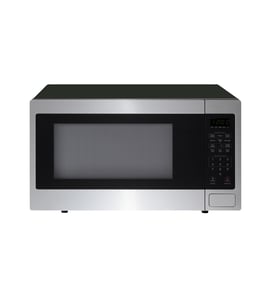



Can you put stuff on top of a countertop microwave?
Yes, you can place light items on top of a Kenmore countertop microwave model 72166222500, but only if they do not block ventilation and do not add enough weight to dent the cabinet. This model needs open space around it for proper airflow, especially at the top.
What we recommend for model 72166222500
The manual calls for at least 4 inches of clearance at the left, right, top, and rear for proper ventilation. Use that as your rule: anything stored on top must not reduce that airflow. See the 72166222500 owner's manual.
- Keep the top vents and side vents clear at all times
- Store only lightweight, non-melting items (paper towels are usually fine)
- Avoid anything that can slide off (glass, heavy jars, metal pans)
- Do not place items that trap heat (thick cloths, trays with lips)
- Do not cover or block any openings
Quick “OK vs not OK” guide
| Item on top | Usually OK? | Why |
|---|---|---|
| Paper towels or napkins | Yes | Light and breathable if vents stay clear |
| Microwave cover (stored, not used) | Yes | Light, but keep vents open |
| Cookbooks, mail, plastic containers | Sometimes | Can block vents or warp from heat |
| Small appliances (air fryer, toaster) | No | Too heavy and can trap heat |
| Anything with liquid (vase, bottles) | No | Spill risk into vents and controls |
Why it matters
Countertop microwaves pull cooling air through inlet and outlet openings. Blocking airflow can overheat internal components (like the thermostat, cooling fan, or wiring) and shorten the life of the microwave.
If you need more counter space
- Move the microwave to a cart or shelf that still allows ventilation clearance
- Use a non-slip mat only if it does not cover vents and does not trap heat
- Keep the cord routed so it cannot be pulled or pinched
Last updated: January 2026
How much clearance for a countertop microwave?
For the Kenmore 72166222500 countertop microwave, we recommend leaving at least 4 inches of clearance on the left, right, top, and rear so air can flow for proper ventilation. This spacing helps prevent overheating and protects internal components.
Recommended clearances (Kenmore 72166222500)
- Left side: 4 inches minimum
- Right side: 4 inches minimum
- Top: 4 inches minimum
- Rear: 4 inches minimum
- Front: keep the door area unobstructed so the unit can vent and the door can open fully
For the exact placement notes and safety warnings, follow the 72166222500 owner's manual.
Quick placement checklist
- Put the microwave on a level, stable countertop.
- Keep vents and openings unblocked (blocking airflow can damage the microwave).
- Do not place it over a range, cooktop, or other heat-producing appliance.
- This model is not designed for built-in use.
- Keep it away from tight cabinets or shelves unless the clearances above are maintained.
Why clearance matters
Countertop microwaves pull in cooling air and exhaust warm air through vent openings. When the sides, top, or rear are too close to a wall or cabinet, heat builds up, which can shorten the life of electrical parts and cause nuisance shutdowns.
Clearance at a glance
| Area around microwave | Minimum space |
|---|---|
| Left side | 4 in. |
| Right side | 4 in. |
| Top | 4 in. |
| Rear | 4 in. |
Last updated: January 2026
Do countertop microwaves need venting?
Countertop microwaves like Kenmore model 72166222500 do not need external ducting, but they do need open airflow for cooling. Our guidance is to keep the unit’s intake and exhaust vents unblocked and maintain the clearances listed in the 72166222500 owner's manual so the microwave can vent heat and steam safely.
What “venting” means for a countertop microwave
A countertop microwave vents internally through built-in openings (typically on the rear, side, or bottom). You do not connect it to a wall vent like many over-the-range microwaves.
Clearance and placement guidelines (model-specific)
For the Kenmore 72166222500, the manual calls for at least 4 inches of space on the left, right, top, and rear for proper ventilation.
- Keep at least 4 inches of clearance on all required sides
- Do not place the microwave in a tight cabinet unless those clearances are maintained
- Do not cover vents with liners, towels, or shelf paper
- Do not place it over a range, cooktop, or other heat-producing appliance
- Keep the unit on a level, stable surface
Quick checklist: is your microwave “breathing” correctly?
Use this quick check if the microwave feels hot on the outside or shuts off mid-cycle.
| Check | What to look for | What to do |
|---|---|---|
| Side/top/rear clearance | Less than 4 inches | Reposition to restore clearance |
| Vent openings | Blocked by wall, cabinet, or clutter | Move items away from vents |
| Heat source nearby | Next to oven, cooktop, toaster oven | Relocate microwave |
| Steam during cooking | Steam from exhaust vent | Normal operation |
Why it matters
Proper airflow prevents overheating, nuisance shutdowns, and premature failure of internal components like thermostats and switches. It also helps the microwave vent normal cooking steam the way it was designed to.
Last updated: January 2026
What is the standard depth of a countertop microwave?
For countertop microwaves, the most common overall depth is about 15 to 18 inches. For the Kenmore 72166222500, the 72166222500 owner's manual lists an overall depth of 16 1/2 inches, which is right in that standard range.
Standard depth ranges (what you’ll usually see)
Most countertop microwaves fall into a few common depth bands:
- Compact models: about 12 to 15 inches deep
- Mid-size models: about 15 to 18 inches deep
- Larger countertop models: about 18 to 20 inches deep
- Extra clearance needed: add 4 inches behind and around the unit for ventilation
Kenmore 72166222500 dimensions (manual spec)
Here are the overall dimensions from the specifications section:
| Measurement | Kenmore 72166222500 overall size |
|---|---|
| Width | 19 inches |
| Height | 11 1/4 inches |
| Depth | 16 1/2 inches |
How to measure depth the right way
Depth can look “wrong” if you measure different points. We recommend:
- Measure from the back of the cabinet to the front-most point (often the door handle)
- Confirm whether you’re measuring overall depth or cavity depth
- Leave space so the rear and side vents are not blocked
- Avoid pushing the microwave tight against a wall or backsplash
Why it matters
Depth affects more than fit. Proper clearance helps airflow for the cooling fan and prevents overheating issues that can lead to nuisance shutdowns or poor cooking performance.
Last updated: January 2026


