Owner’s manual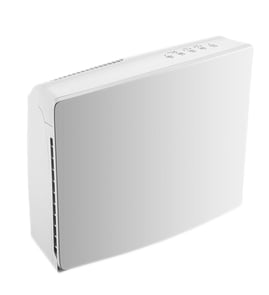

What are the main parts of an air purifier?
The main parts of the Kenmore air cleaner model 25185150900 are the filters (a carbon pre-filter and a True HEPA filter), the fan and motor that move air through the unit, and the housing and controls that direct airflow and run features like sensors.
Most air purifiers share the same core building blocks; this Kenmore unit is designed around a multi-stage cleaning path:
- Carbon pre-filter: catches larger particles (dust, pet hair, lint) and helps absorb odors
- True HEPA filter: captures very small airborne particles (down to 0.3 microns) for allergen and smoke control
- Fan and motor assembly: pulls room air in and pushes cleaned air back out
- Front panel and filter frame: holds filters in the correct position and seals the airflow path
- Control panel and indicators: power, fan speeds, and the CHECK FILTER reminder
- Sensors and feature electronics (model-dependent): air quality sensor and light sensor (dims lights and can lower fan speed in a dark room)
| Stage | What it does | What you typically maintain |
|---|---|---|
| Pre-filtration | Traps larger debris and reduces odors | Replace about every 3 months for best performance |
| HEPA filtration | Captures fine particles like smoke, dust, and pollen | Replace when the CHECK FILTER light turns on |
| Air movement | Circulates air through the filters | Keep intake and outlet clear; clean exterior vents |
If any one of these parts is missing, installed incorrectly, or overdue for replacement, airflow drops and cleaning performance falls quickly. Correct filter fit and airflow direction are especially important after a filter change.
- Turn the unit off and unplug it before opening the front panel
- Install the True HEPA filter with the airflow arrow pointing toward the back of the unit
- Reinstall the plastic frame snugly so air cannot bypass the filters
- Replace the carbon pre-filter on a regular schedule (commonly every 3 months)
- Reset the filter reminder after a HEPA change (the manual shows the reset method)
For diagrams, feature descriptions, and filter replacement steps specific to this unit, use the owner's manual.
Last updated: February 2026
Are all air purifier filters washable?
No. For the Kenmore air cleaner model 25185150900, the True HEPA filter and carbon pre-filter are not washable; washing them reduces performance and can damage the filter media. Follow the cleaning and replacement instructions in the owner's manual.
Most air purifiers use a mix of filter types. Only filters specifically labeled washable or permanent should be rinsed.
- Washable filter (if equipped): typically a mesh or foam pre-filter; rinse and fully dry before reinstalling
- True HEPA filter: replace (do not wash)
- Carbon pre-filter: replace (do not wash)
- Electrostatic or “permanent” filter (some models): may be washable, but only if the manual says so
Your manual is explicit: do not wash and reuse the True HEPA filter or the carbon pre-filter.
- Turn the unit off and unplug it
- Remove the front panel carefully (it should come off without forcing)
- Remove the carbon pre-filter and plastic frame
- Remove and discard the True HEPA filter
- Install the new True HEPA filter with the airflow arrow pointing toward the back
- Reinstall the frame and carbon pre-filter, then reinstall the front panel
- Reset the filter indicator (the manual describes using the reset hole/button)
| Filter type | Usually washable? | What to do instead |
|---|---|---|
| Mesh/foam pre-filter | Often | Rinse, dry completely, reinstall |
| True HEPA filter | No | Replace on schedule or when airflow drops |
| Carbon pre-filter | No | Replace when odors return or per schedule |
| “Permanent” electrostatic (varies) | Sometimes | Follow the manual’s instructions exactly |
Washing a HEPA or carbon filter can collapse the fibers or saturate the carbon, which reduces particle capture, increases odor breakthrough, and can restrict airflow (making the fan work harder).
Last updated: February 2026
How to reset filter life on Kenmore air purifier?
To reset the filter life on your Kenmore 25185150900 air cleaner, press the RESET FILTER control after you replace the filter so the CHECK FILTER light turns off and the unit starts tracking the new filter’s life.
- Turn the air cleaner off, then plug it back in.
- Turn the unit on.
- Locate the RESET FILTER hole/button on the control panel.
- Gently insert a paperclip into the RESET FILTER hole.
- Press and hold 3 to 5 seconds until you hear a beep.
- Confirm the CHECK FILTER indicator is cleared.
For diagrams and control locations, use the owner's manual.
Some Kenmore air cleaners use a pinhole reset (paperclip) instead of a standard push button.
| Reset style | What it looks like | How to reset |
|---|---|---|
| Pinhole reset | Small hole labeled RESET FILTER | Press with a paperclip for 3 to 5 seconds until a beep |
| Standard button | Labeled Filter Reset or Reset Filter | Press and hold about 3 seconds (if equipped) |
Resetting the filter indicator keeps the CHECK FILTER light accurate, so you replace the True HEPA filter and carbon pre-filter on time for better airflow, odor control, and overall air cleaning performance.
- True HEPA filter: replace when CHECK FILTER comes on (often about yearly in normal use)
- Carbon pre-filter: replace about every 3 months for best performance
- Heavy smoke, pets, or high dust: expect more frequent changes
Last updated: February 2026
What is the 2 3 rule for air purifiers?
The 2/3 rule is a quick sizing guideline: choose an air purifier with a Smoke CADR that is at least two-thirds of your room’s square footage (based on an 8-foot ceiling). For your Kenmore 25185150900 air cleaner, use this rule to pick the right room size and get effective air changes.
- Measure the room’s square footage (length x width).
- Multiply by 0.67 (two-thirds).
- Look for a Smoke CADR at or above that number.
- 120 sq. ft. room: 120 x 0.67 = 80 Smoke CADR
- 200 sq. ft. room: 200 x 0.67 = 134 Smoke CADR
- 300 sq. ft. room: 300 x 0.67 = 200 Smoke CADR
| Room size (sq. ft.) | Minimum Smoke CADR (2/3 rule) |
|---|---|
| 120 | 80 |
| 200 | 134 |
| 300 | 200 |
We recommend choosing a higher CADR (or using a higher fan speed) when you want faster cleanup or you have heavier pollutants.
- Ceilings higher than 8 feet
- Wildfire smoke or frequent cooking smoke
- Multiple pets, heavy dander, or litter odors
- Open floor plans where air mixes between rooms
- You plan to run the unit on lower, quieter speeds most of the time
This model uses automatic operation with an air quality sensor that can increase fan speed when pollutants are detected, plus multi-stage filtration (carbon pre-filter for larger particles and odors, and a True HEPA filter for fine particles). Correct sizing helps the sensor and fan speeds keep up with real-world air loads. For placement and setup details (including keeping the unit about 2 feet from walls for airflow), follow the owner's manual.
Last updated: February 2026
How much CADR is good for an air purifier?
A “good” CADR depends on your room size and the pollutant you care about most (smoke, dust, or pollen). For the Kenmore 25185150900 air cleaner family, the manual shows CADR values ranging from about 98 up to 343, which covers small to large room needs; match CADR to your space for faster cleaning.
Use these practical targets when comparing air purifiers:
- Small rooms (up to ~150 sq ft): CADR 100 to 150
- Medium rooms (~150 to 300 sq ft): CADR 150 to 240
- Large rooms (~300 to 450 sq ft): CADR 240 to 350+
- If smoke is your main issue, prioritize the smoke CADR first
- Higher CADR generally means faster air changes and quicker odor and allergen reduction
The owner's manual lists different CADR ratings (smoke/dust/pollen) for models in this series. Here is the range shown:
| CADR type | Lower end shown | Higher end shown | What it means |
|---|---|---|---|
| Smoke | 98 | 291 | Smoke clears slowest; higher is better for wildfire or cigarette smoke |
| Dust | 98 | 298 | Helps with visible dust and general particulate |
| Pollen | 103 | 343 | Helps most with seasonal allergies and airborne pollen |
- Start with your room square footage (length x width)
- Choose a CADR that fits the room size targets above
- If you run the unit on Auto, the air quality sensor can adjust fan speed as air quality changes
- Plan on regular filter maintenance; a loaded filter reduces real-world airflow and performance
CADR is the simplest way to compare how quickly an air purifier can remove common particles. A higher CADR can mean fewer allergy symptoms and faster smoke and odor cleanup, especially when paired with a fan-and-filter system like the Kenmore unit described in the manual.
Last updated: February 2026